What’s Puldikassa? Zooks Shops at Estonian Supermarket Rimi.

Tere!

Would you prefer a checkout with a cashier or self-checkout (SCO) when you buy groceries at a supermarket? Some of my Japanese friends don’t  like the SCO thought it’s quite convenient.

(Well, as I moved to Kyoto from Wakayama, my hometown, I thought “Why don’t they have SCOs though here’s way more urban!” There is one shopping centre which was not close to my flat had some SCOs but the closest shopping centre which had an enough big supermarket didn’t have them. I don’t think I have seen SCOs anywhere but at the former shopping centre.)

On the other hand, supermarkets in Estonia seem to have both types usually. You have to go to the regular checkouts if you want to pay in cash, for example, at Rimi, Selver and Prisma but at Maxima some SCOs can accept both cash and cards.

When it comes to huge supermarkets such as Hyper Rimi, they have another type of checkouts with which it seems to possible to steal the products in addition to those two types of checkouts.


Seriously, it seems it’s possible steal products at a supermarket.


In Estonian it’s called “puldikassa”. “Pult” means “remote” and “kassa” implies “checkout”  in Estonian, which are connected and became “puldikassa” (remote checkout).

As for the former term, I searched the meaning online so probably only its nuance is correct but still I believe that it’s enough understandable.

This is because the machine itself works as a checkout.

In order to use this remote checkout, you must have an account in Rimi. (If you have one, you can get discounts and get “money” that you can use at Rimi so why not register? There’s an article about it on my older website but it’s all in Japanese so just please ask me if you want to know more. The issuing fee is only 1€ as of 2018 or 2019.)  

Since I have Rimi’s card, I tried the “puldikassa”! In the beginning you may wonder how to use it but once you used it, you’d get used to it. However, probably some of you don’t want to look like a foreign weirdo because of the unfamiliar system that has an introduction in a non-understandable language so I intentionally went to the supermarket to be a weirdo who was wondering how to use it. The texts below are my outcomes of the challenge and how to.


1. Unlock the puldikassa

There is a box that keeps the remote checkouts locked at the entrance of Rimi and a small screen like a TV beside the box. First of all, you need to swipe or tap your Rimi card with the card reader attached the screen or under the screen.
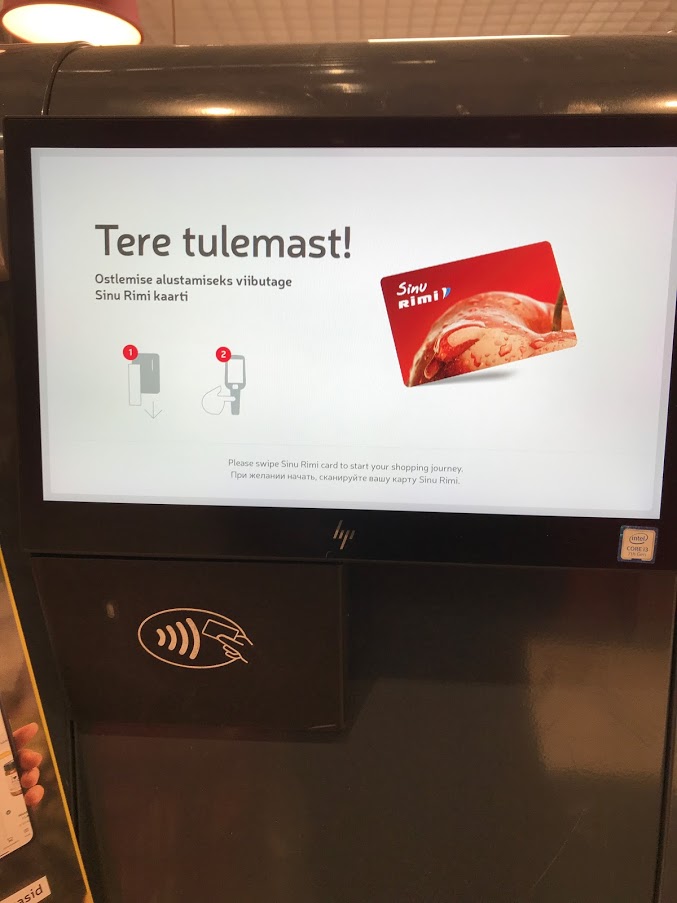
It seems from time to time the screen doesn’t read the card information by swiping so I recommend you to tap it. (Yeah, I already experienced.)

2. Get your puldikassa

After tapping (swiping) your Rimi card, find the puldikassa that has your name from the box. When the puldikassa is locked it shows Rimi’s red logo and once it’s unlocked it turns a white screen having your name on. Also the individual box that unlocked the puldikassa has a green light so it’s pretty easy to find your machine.

3. Scan the products

Alright, now let’s scan what you want to buy. Take the product and scan the barcode that is attached to the product.
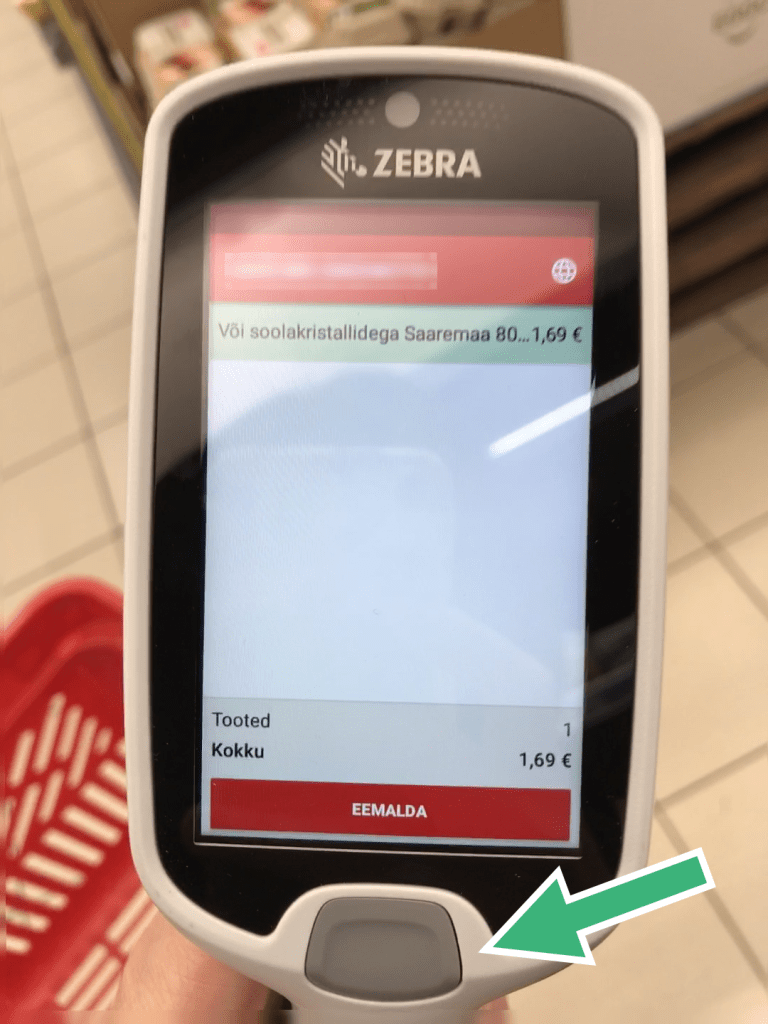
To read the barcode press the button of the puldikassa and light up the barcode.

Something like these but not completely the same things.

When I was working in Japan I once in a while used similar checkouts that had red lights. So I expected the same thing with the puldikassa, but it had a white light. Perhaps because that red light is actually said to be harmful for humans.
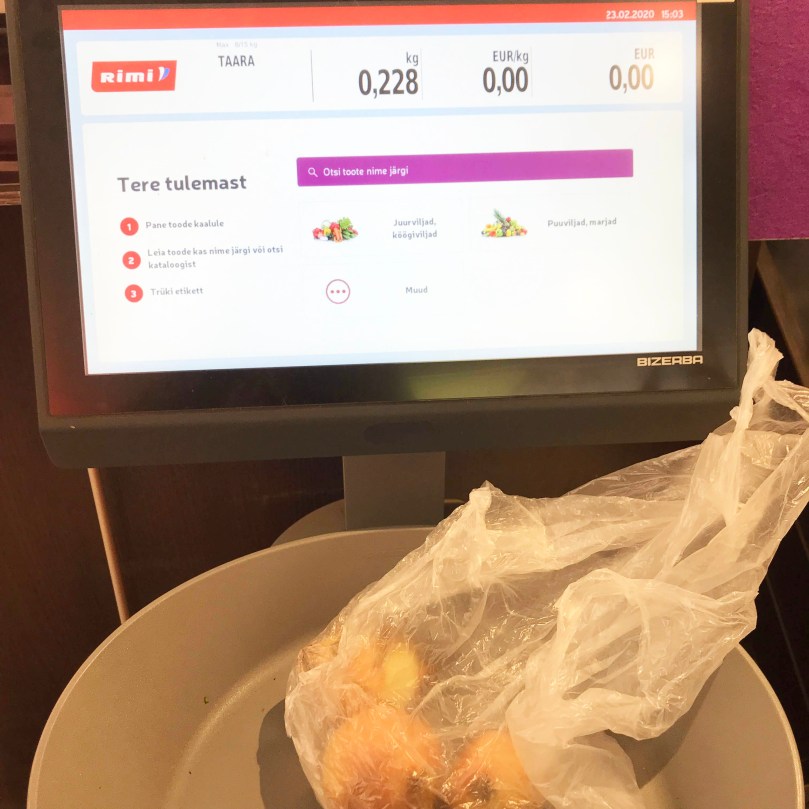
It has pictures so even though it’s in Estonian you don’t have be worried about anything.

By the way, although it is normal to buy vegetables and fruits based on their weights in Europe but in Japan everything has the same size so they have only fixed prices. If you’re unfamiliar with weighing the products, no worries. Just prepare for or take a small bag and put one type of vegetables or fruits as many as you wish in the bag.
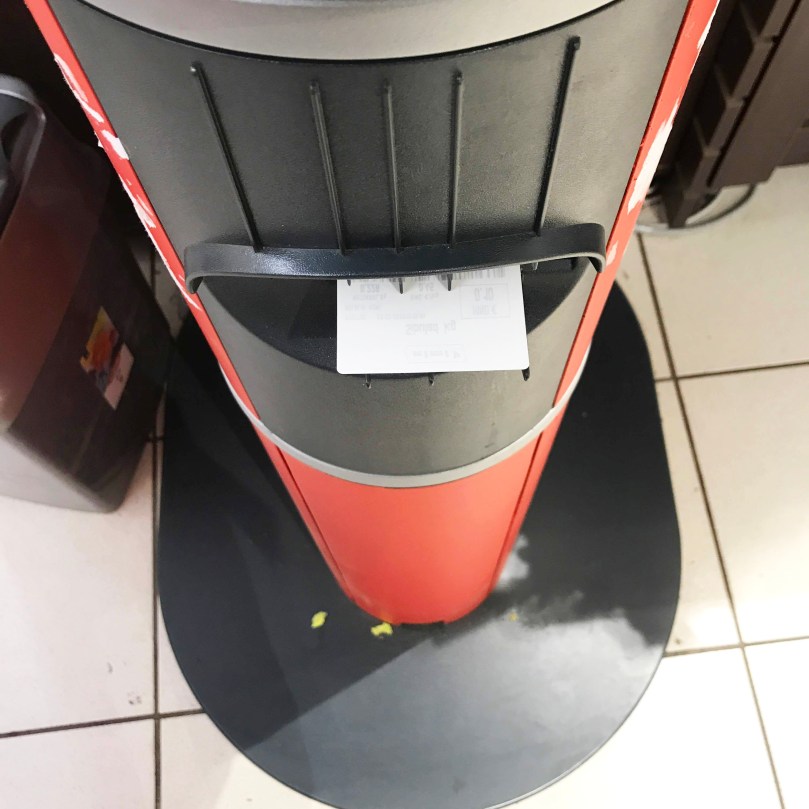
It produced the barcode sticker.

Then, place the bag on the scale in the vegetable and fruit section at Rimi and choose the right product from the screen and then the scale gives you a barcode sticker. Finally read the barcode and that’s it.
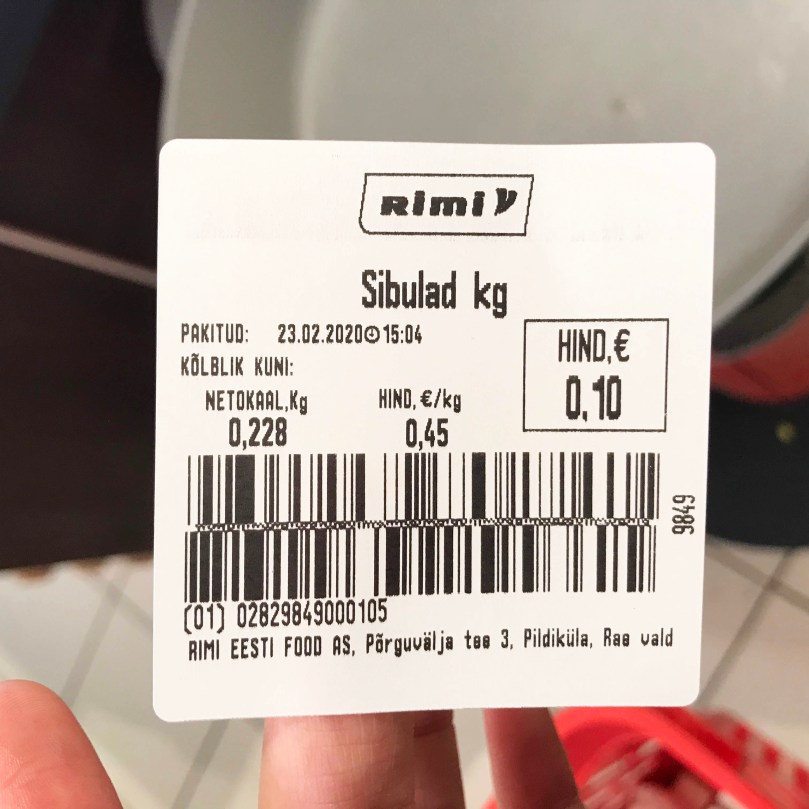
Onions 230g 10 cents.


4. Pay for the products read with the puldikassa

If you’re done with your shopping, go to the checkout area that is not the regular checkout with a cashier or the regular SCO but the most simple checkout section. There is another box that you can place your puldikassa after scanning all the products that you want to buy.

Just put it there and the box automatically locks yours. (Any empty box is okay.)
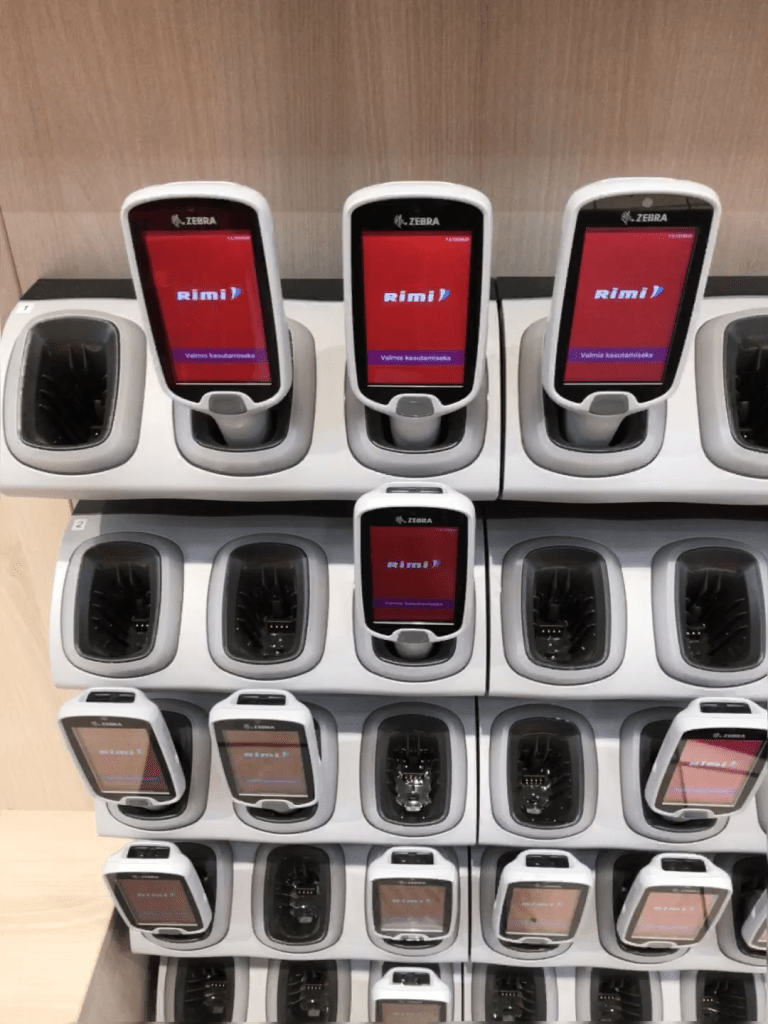
Then go to one of the checkout point available (with green light). At the checkout point, tap your Rimi card on the credit card reader.
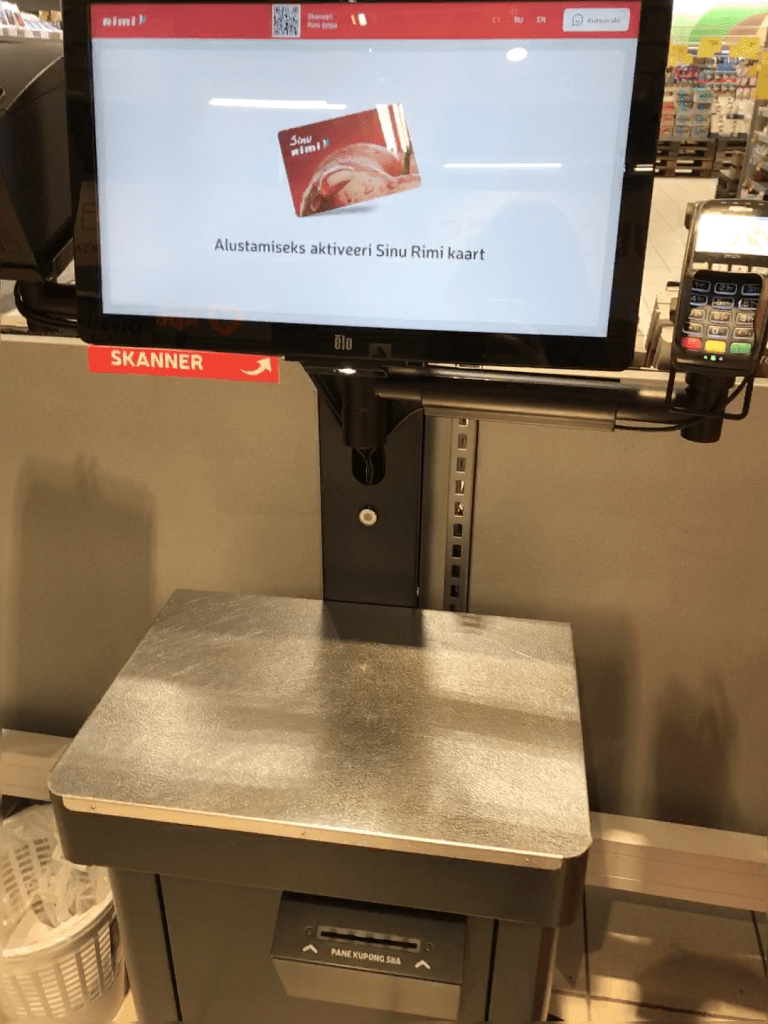
If you have used Rimi’s SCO machines, it may sound more familiar with you. After reading the Rimi card, the screen asks you whether you scanned all the products with the puldikassa so just go to the next step.

Then it turns the payment screen so pay by card. Be careful, you cannot use cash. If you have vouchers maybe you can use them only at the regular checkouts with the cashiers. (I’m not 100% sure about it so better to go to avoid troubles.

After the payment, keep or dispose or leave (!) the receipt and put the products that you bought in your bag. (If you don’t have your own bag you still can buy a bag with the puldikassa, no worries. I personally have never bought any bags in any occasion.) Finally you can leave Rimi with what you bought.


Easy-peasy-lemon squeezy, wasn’t it?


By the way, I recently noticed that (as far as I know) you can choose whether you will get the paper receipt or not. There is a tick box of unnecessity of the paper receipt on the right side of the screen at the regular SCO machines, so if you tick there you can dedicate to save resources.

If you’re worried about your budget management, I think it better to get the paper one. However, if you use banks such as Swedbank or N26, depending on your setting you are notified by the app when the money was used so it totally depends on your specifics and lifestyle.

In my opinion, the puldikassa is useful when I don’t have many things to buy. Given that there are lots of products in your basket, I think the regular checkouts with the cashiers or SCOs are better. In the order of my  preference, I like:

  1. the regular SCOs
  2. the remote checkouts (puldikassa)
  3. the regular checkouts with cashiers.

As I usually have lots of things to buy, I feel some kind of pressure from the behind if I choose the regular checkouts with cashiers and I personally don’t want to communicate strangers so I prefer the regular SCOs. (This is a very good system for those who have a communication disorder.)

Oh, but I have worked as a seller at the event merchandising for around five years in Japan. Work is work, private life is private life. I was probably just good at switching the modes in a sense.

If you come to Estonia, go to Hyper Rimi, get Rimi card and try the puldikassa. The puldikassa has English and the clerks help you if necessary.

Aitäh! 🙂
Zooks Changes Flight on easyJet: How to.

Tere!

You may remember that I had to change the date to ride on Flixbus and flights on Ryanair because COVID-19 has made all the events such as a concert and trips in March postponed. There is the third transport that I was supposed to use for my planned trips: easyJet, a British LCC.

Before Estonia got panicked owing to COVID-19, I roughly checked if I could change the flight on easyJet and figured out that it seemed possible to do without any change fee unlike Ryanair at that time. However, I hadn’t got any email about it so I wasn’t sure and didn’t do anything. (I was so suspicious.)

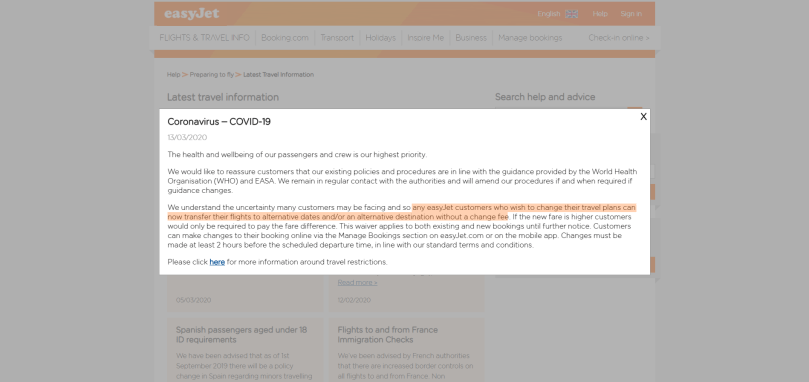
Then, on Friday the 13th when Estonia got panicked, I checked easyJet’s website again and found the announcement regarding flights due to COVID-19. To summarise what they said, any passengers had rights to change their flights without any change fee and need to pay the difference in case the postponed date tickets are more expensive, which is applicable up to two hours before the flights.


Sounds so good.


So this time I’m talking about how to change the flights on easyJet. There was nothing that big so the article is way shorter than the ones as for Flixbus or Ryanair.


1) You know, access it

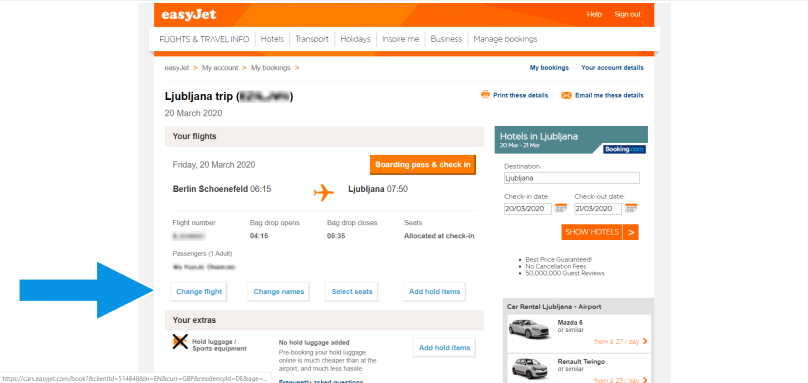
First of all access easyJet’s website and log in there. You cannot proceed anything without logging in. After logging in, you will see the information regarding the flight/s that you have booked so click “Change flight” below the information.


2) Search alternative flight/s

Next, search the alternative flight. This UI is not really good because you need to select the date not from the calendar form but from the pulldown form. Anyways, once you selected the destination and date of the alternative flight, click ”SEARCH NEW FLIGHTS” and go next.


3) Pay for the difference

It would be amazing if you found the best flight for you at once but as repeated in the previous articles I was supposed to travel in multiple countries so I had to consider the overall and total fees and the available flight dates on both Ryanair and easyJet. This means I had to go back to the previous page on easyJet several times as the UI on easyJet was really bad!

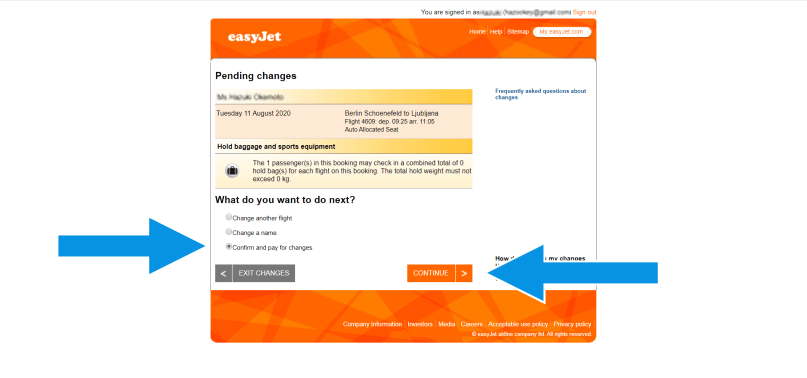
On easyJet’s website you have to change the date by repeating going back to the previous page. That was quite irritating. Besides, you finally can see the price by clicking “CONTINUE” in this step. Ryanair is the better for sure in terms of UI. (Yeah it’s my occupational side effect in a sense.)


4) Finish the change process

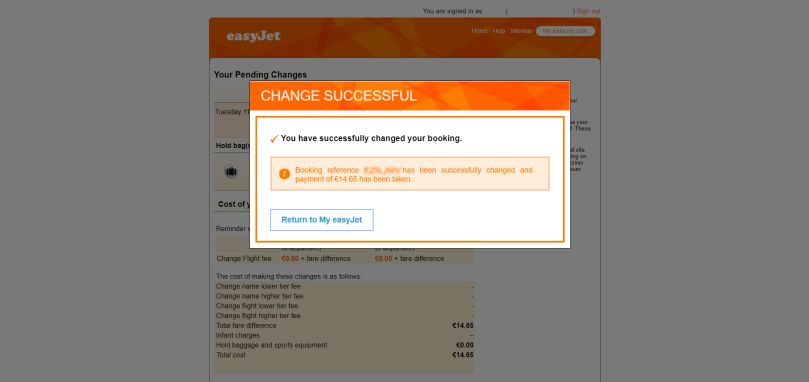
After confirming the alternative flights and getting ready to pay, you can pay by card like always. The image below is after the payment.

Considering the unnecessity of the help (centre), easyJet was easier to use but taking into account the flight change, Ryanair was more user-friendly.

Anyways the route for my trip in August was almost determined. All I will have to do is to rebook the buses and and accommodations!

Aitäh! 🙂

Zooks Contacts, Changes Bookings on Ryanair: How to.

Tere!

Previously I talked about how to change the booking on Flixbus. As mentioned there, I planed to ride on Flixbus day after the day that I was supposed to attend the concert in Stockholm, Sweden from the nearest bus stop of the hostel to Stockholm Arlanda airport.

However, COVID-19 made the concert postponed, accordingly to which I had to change the flights and the booking dates of the hostel. The last necessary change was the booking on Flixbus. Then I changed the date of the ride on Flixbus. Strictly speaking, as also described in the article, they treated my ticket as cancellation and then gave me a voucher code valid for one year.

It’ll be implemented in August so I still haven’t “rebook” the ride on Flixbus as of today (22/March) but anyways everything was alright because I could change the rest of the necessary steps. Moreover, when COVID-19 made whole Europe in panic, I summarised my personal news in another article, I said that I was supposed to travel in some countries after travelling Sweden.

Thus, there have been subsequent cancellations and changes of flights and bookings of accommodations since COVID-19 affected all the plans in March. This time I summarise how to ask for help and change flights on Ryanair that I was supposed to use after travelling in Sweden.

Table of Contents
★ Ryanair’s help centre
1) Search anyways
2) Contact them!
3) “Let’s chat”
4) Need a human support?
5) Be patient

★ How to change the flights on Ryanair
1) Open My Bookings
2) Choose flight to change from “Upcoming trips”
3) Change the booking
4) Change the itinerary itself
5) Choose the flight/s
6) Select the date (destination)
7) Pay the difference


★ Ryanair’s help centre

Ryanair’s help centre has a chat support, which is open at 6am (GMT) but I couldn’t connect any agents for a while even though I accessed the website at 6am (8am in Estonia), which is probably because of every government’s announcement and subsequent cancellations of flights by COVID-19.

For the reason above, I tried to access Ryanair’s help centre on Friday afternoon, 13th of March again. Ryanair’s help centre is similar to Flixbus, which makes the customers to solve the problems by themselves first but perhaps many of you would miss or lose yourself on Ryanair’s website.


1) Search anyways

As mentioned you might miss Ryanair’s help centre so let’s go to the website anyways. If you don’t go, nothing will start. (Obviously.)


2) Contact them!

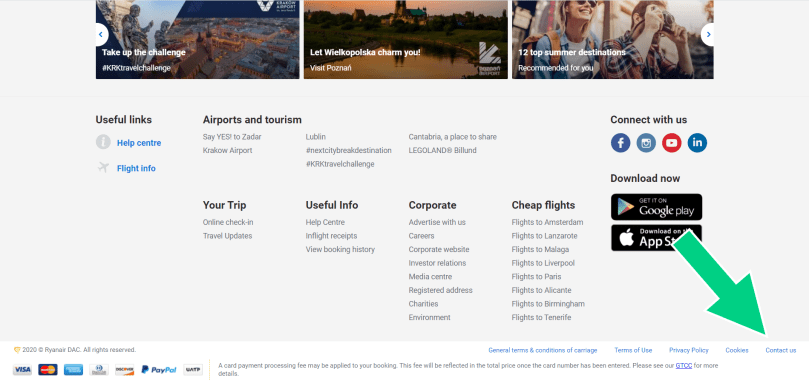
Once you accessed Ryanair’s website, scroll down the screen. Then you’ll see “Contact us” in really teeny-tiny letters so click it.


3) “Let’s chat”

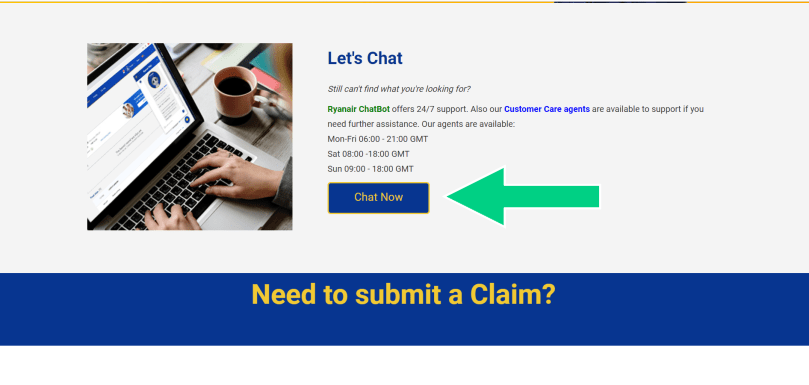
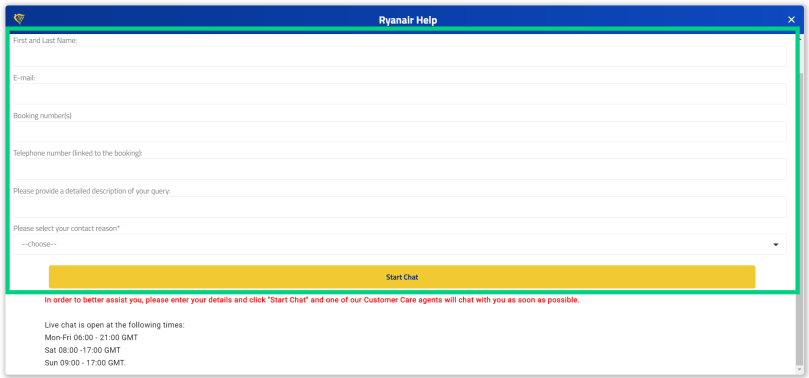
After clicking it, you will see the button “Chat Now” in the section of “Let’s chat” so click it. If you read the description properly, you will understand; it does not mean that you will be connected with the agents immediately after “starting” the chat.

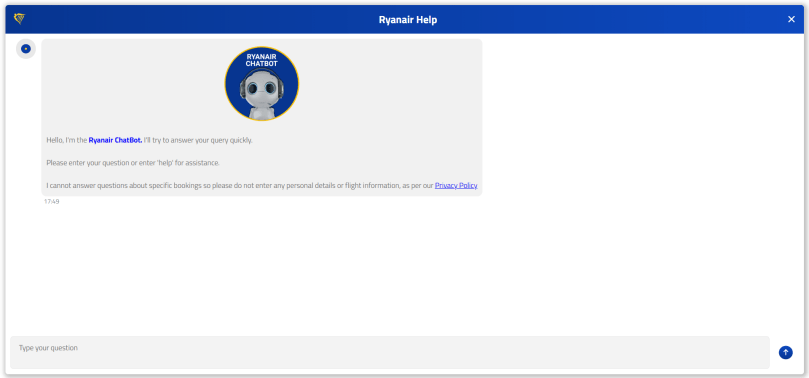
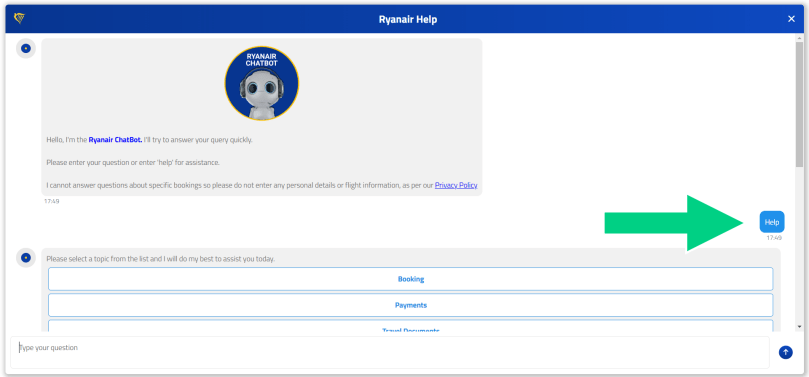
The chat bot will answer you so let’s try if it can solve your problem by entering some word or asking questions. Given that chat bot is meaningless even after entering the word or nothing happens, type “Help”.


4) Need a human support?

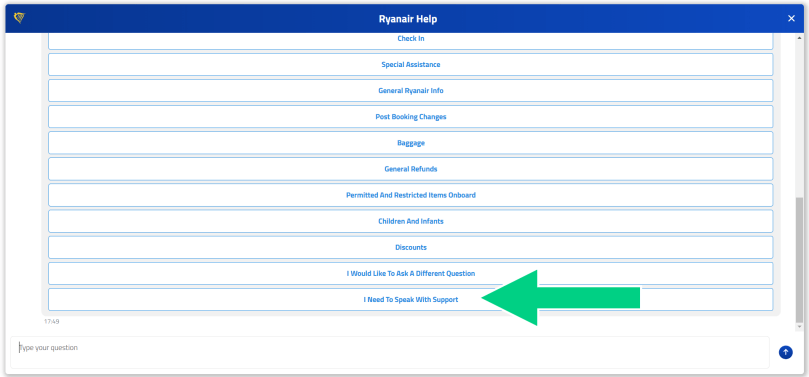
Once you entered “Help” in Ryanair’s chat bot, it shows multiple options for you so try and find the most suitable one for your need. If you couldn’t find any help there, scroll down the chat and select ”I Need To Speak with Support”.


5) Be patient

After selecting it, you will be required to enter some necessary information and then added to the support “queue”. In comparison to Flixbus, you don’t know how many people are queueing in front of you on Ryanair. Therefore, I couldn’t make any progress even though I spent the whole morning and didn’t know the situation at all.

However, I successfully could get connected with some agent in the afternoon so I asked them, who said that they charge all the passengers in case we wanted to cancel or change the flights as usual because there was no change in terms of the flights to and from Germany as of the afternoon on the 13th.

On the other hand, British Airways already announced that they cancelled or would do something for the flights to and from Germany as of then but Ryanair cancelled flights a few countries including Italy.

(By the way you can access Ryanair’s help centre mentioned above from here.)

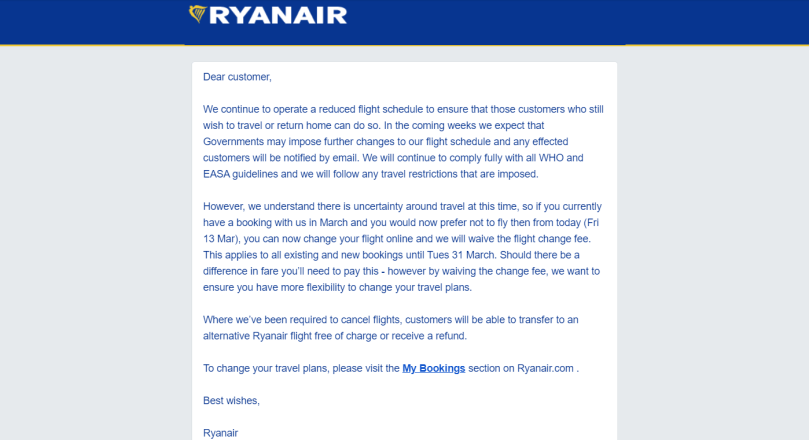
Next day, Saturday, on the 14th of March, I got an email from Ryanair, where they would not charge the passengers in March for changing the flights without any changing fee. In case the alternative tickets that the passengers would choose are more expensive the ones that they had, they needed to pay for the differences.

Therefore, the next section is about how to change the flights on Ryanair.


★ How to change the flights on Ryanair

Once you’ve decided to change the flights on Ryanair, go to Ryanair’s website and log in so as to change the flights. (On Ryanair’s website you also may choose Facebook or Google to log in.)


1) Open My Bookings

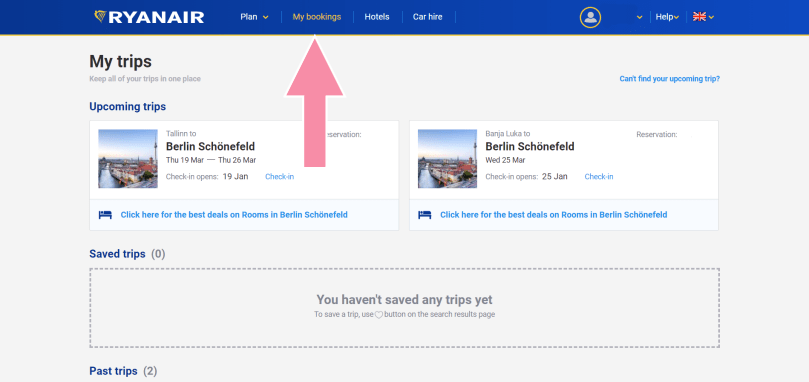
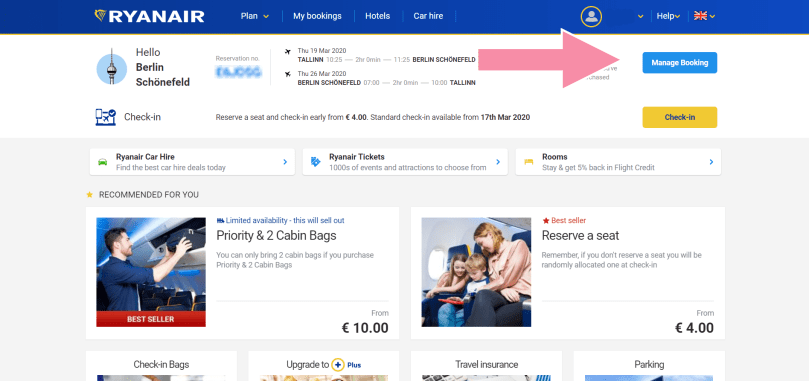
After logging in, the screen already should be My Bookings, which is correct. It’s like the image above and if it shows your flights, everything is alright.


2) Choose flight to change from “Upcoming trips”

On the top of My Bookings you see your flights as “Upcoming flights”. If you click the flight that you want to change, you will go next.

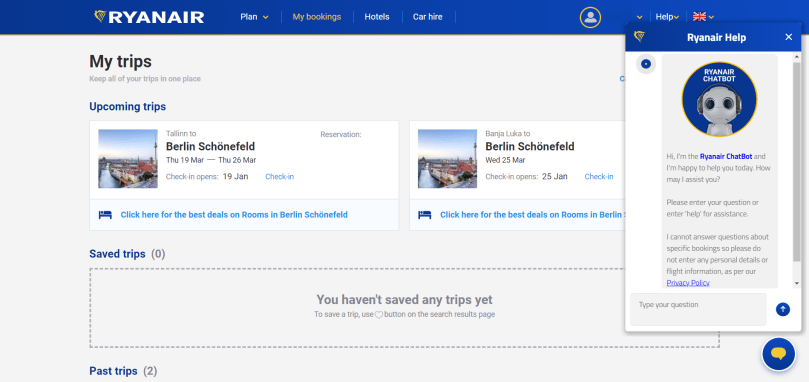
Once you logged in, you also can easily ask the chat bot for help.


3) Change the booking

I selected the flight from Tallinn to Berlin here because I had three flights and two trips in total. To change your flight booking, click “Manage Booking” on the top right corner of the screen.


4) Change the itinerary itself

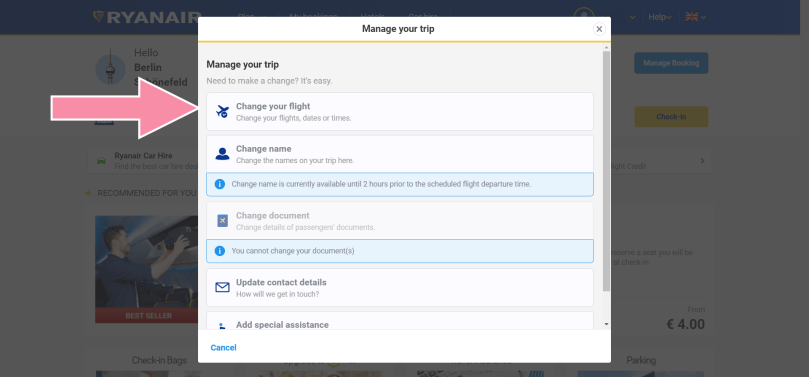
If you click “Manage Booking”, you will see the options that you can make changes with so select “Change your flight”.


5) Choose the flight/s

I bought a round trip ticket for Tallinn and Berlin so here it shows two tick boxes for each so that I could make changes for each flight. I ticked both boxes since I wanted to have all the flights in March in summer but in case you want to change one of the flights of the round trip, you can tick just one of them. After that, click “Select” and go next.


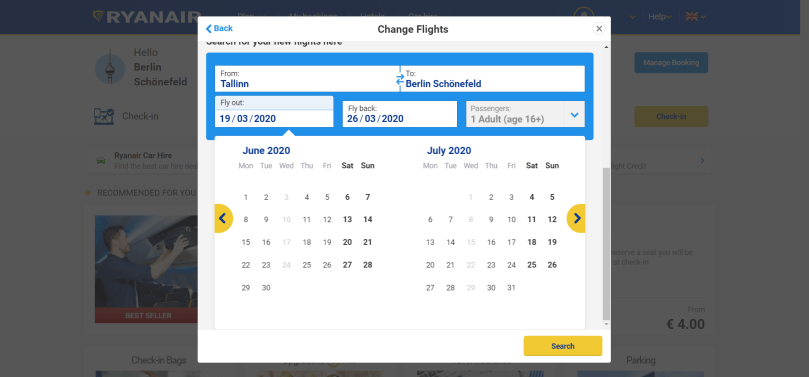
6) Select the date (destination)

Furthermore, you may change both or either flight date and/or destination but as for the destination I cannot 100% guarantee if you can change because I changed only the flight dates. As mentioned earlier, since I had multiple flights for one trip on another airline (easyJet) too so I changed the flights between Tallinn and Berlin, taking into account the prices of another flight on Ryanair or on easyJet that I was also supposed to use.


7) Pay the difference

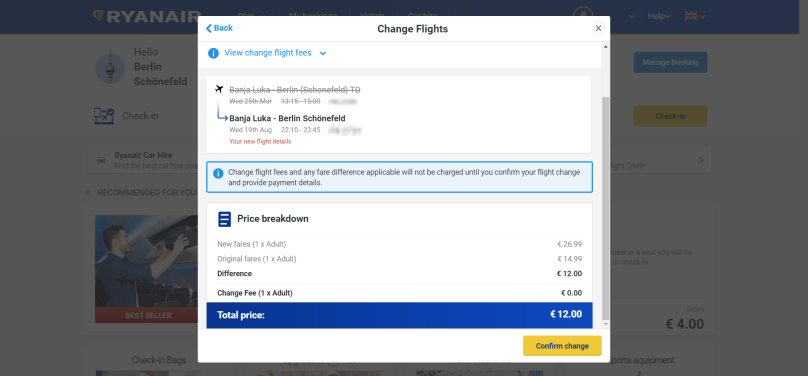
Once you decided the flights, the last thing you need to do is pay. Usually Ryanair charges you some as a change fee but I paid for the difference between the prices of the new flights and the flights that I was supposed to take without any change fee as said due to COVID-19.

It’s easy isn’t it?

It’s true that it was actually hard to rebook flights because I had multiples but I did the right thing on the previous night – to wait a bit longer until Ryanair announced something. It’s good to be patient.

Now I’m super looking forward to the trips in summer. Really.

Aitäh! 🙂

Zooks Changes Booking with Flixbus: How to.

Tere!

Previously I wrote an article about personal news because of COVID-19 which has made entire Europe in panic and led subsequent cancellation and changes/rebooking of flights and accommodation, postponements of events and an “advice” of remote work, which has happened since the 12th of March.

As mentioned in the article, I was supposed to go to a concert in Stockholm, Sweden on the weekend of the 13th and go to travel by using the annual leave for about one week from the 19th.

Moreover, as also (kind of) described in the article, I decided to summarise how to cancel or change the flight or bus dates because the article got too long.

I, however, wrote how to change the flights with air Baltic that was supposed to be used for the trip to Sweden in the article. (This is because actually it wasn’t like a method so to speak.) This time I summarise how to change the booking with Flixbus, a German transport brand.


1) Access the website

You can’t start anything without accessing Flixbus’s website. However, there is no chatbot or chat functionality to ask agents for help in Flixbus’s website screen.

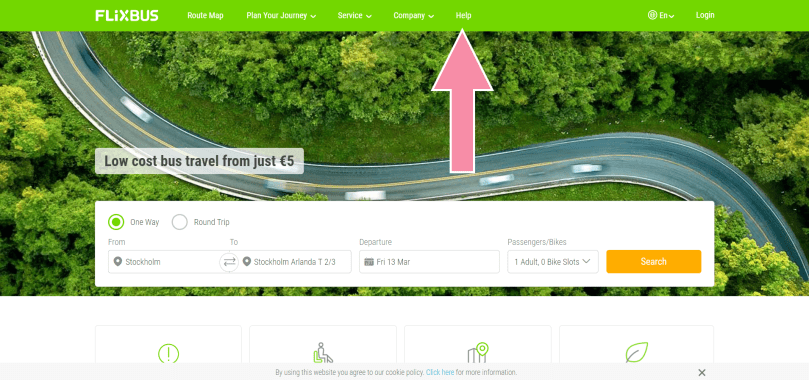
On Flixbus’s website you are required to search the help by yourself and if you finally can chat with the agent it’s not helpful but the way to find the clues to solve the problems can easily be found. When accessing the website, click “Help” from the bar in the header.


2) Choose the category of the help

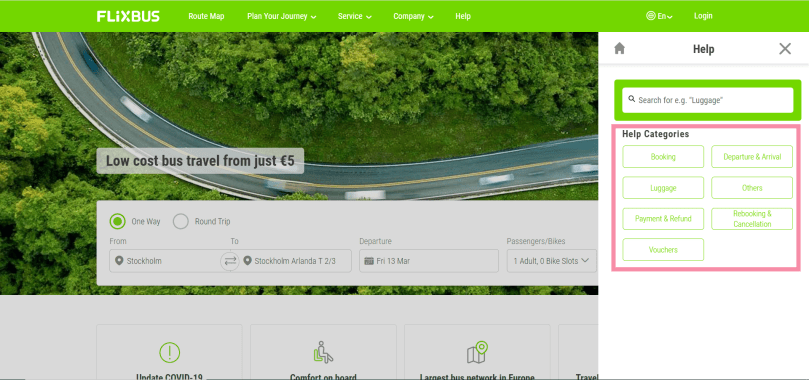
As clicking “Help”, you will see the category of the help so choose the right one depending on your need.

Here as an example I chose “Booking”. Then it shows the same questions probably as yours and you will see the relevant articles by scrolling down. 


3) Chat with the help agent

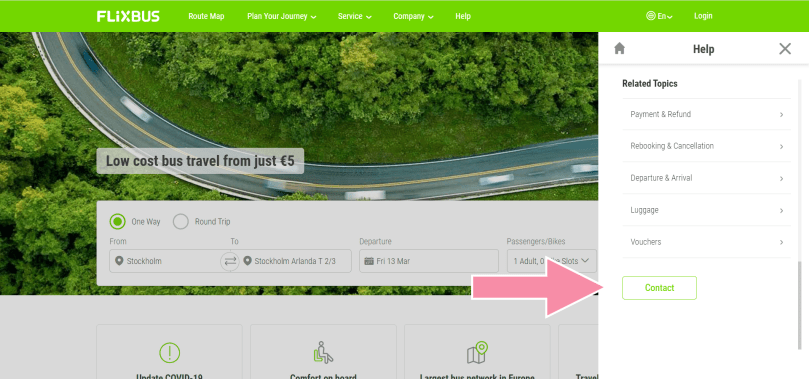
In case you couldn’t find any answers to solve your problem, click “Contact” below the relevant articles. Here finally you are given an opportunity to chat the help agent.


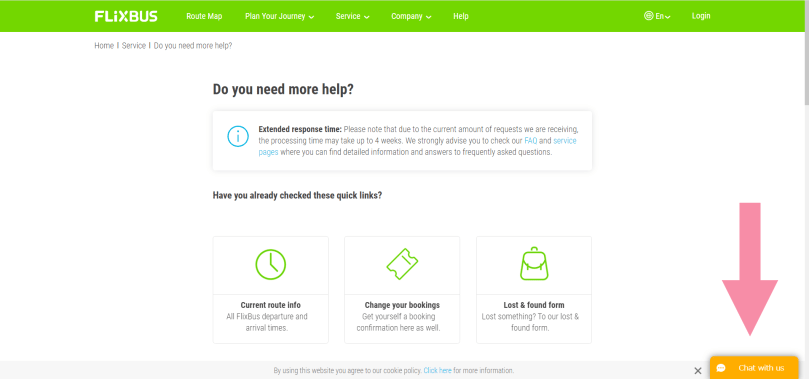
4) Make sure the agent available

After clicking “Contact”, you need to make sure if the help agent is really available before starting the chat. If your screen has the icon in orange, it means there are agents, one of who can handle your problem. On the other hand, if it’s in grey, it means there is no agent available so you cannot go forward no matter how many times you click there.

Besides, it’s probably a lunch time for one hour from 1pm of Central European (German) Time and the icon would be in grey so it may not be wise to try and find the agent during this time from my personal experience.


5) Enter the necessary infomartion

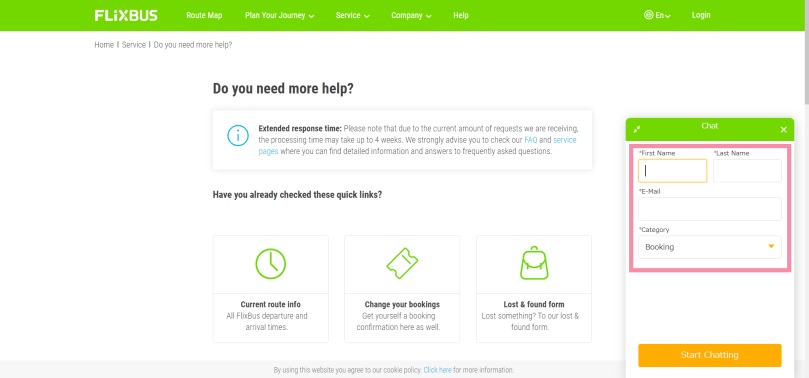
Fill out the items with asterisks (“*”).


Which is every item though.


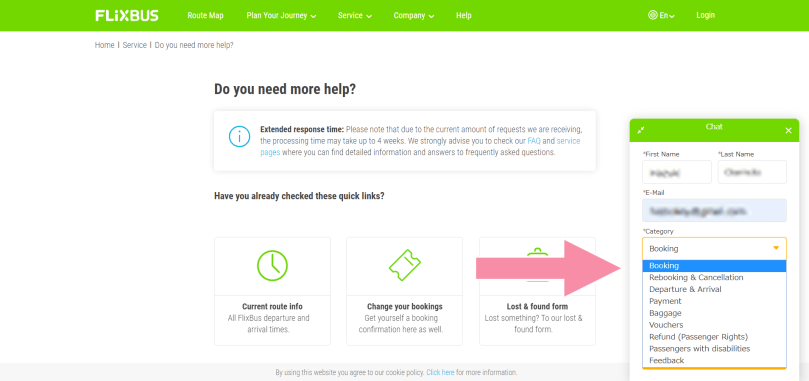
You can choose the category of the help that you need from the pulldown box of “Category” in the form to fill out so choose the right one. After entering all the items and selecting the category, start the chat with the preparation of the reference (booking) number in case you have already bought Flixbus’s ticket/s. (Flixbus’s ticket reference/booking number starts with the hash “#” and several digits. You can find it on both the confirmation email and the ticket PDF file itself.)


6) Be patient

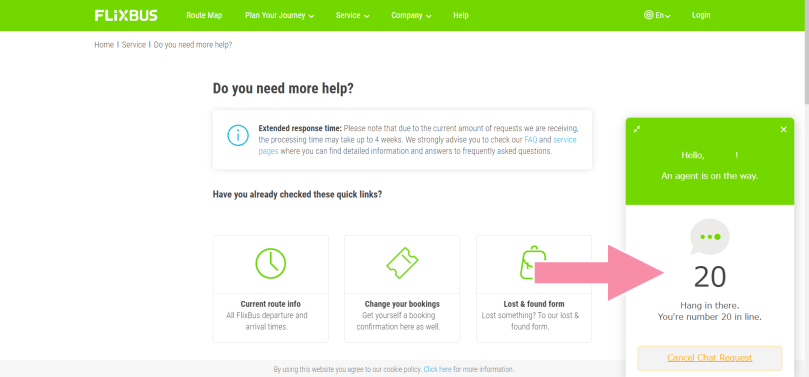
Furthermore, it doesn’t mean that the chat immediately starts right after you clicked the button. Imagine the post offices in Estonia or probably banks in general. Usually they can’t accept the customers right away. Yep, you need the waiting number. (It’s called reference number technically speaking but it’s confusing here if using it.)

Flixbus’s chat support has a similar system. Once you click the start chat button, you will see the number. As people “in front of” you finish their business, your number gets smaller. I personally recommend you not to go back to the previous page and fill out the form again but to patiently wait. (If you want to do, please do. That’s not my business :P)

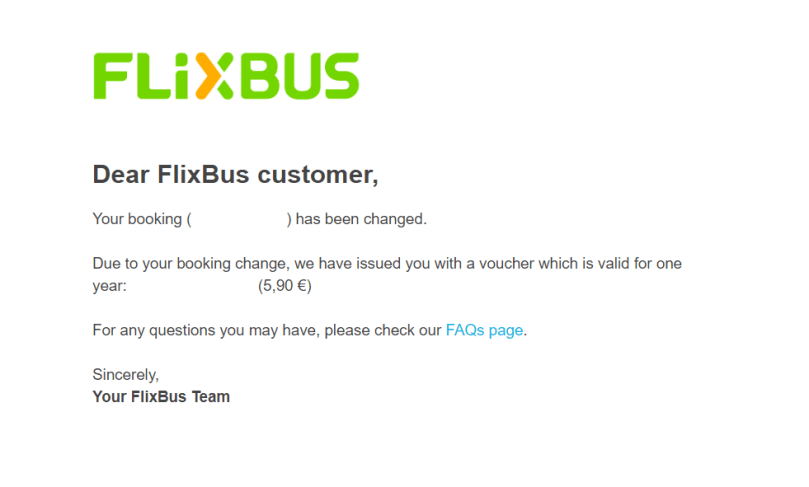
Thanks to the chat support of Flixbus, I successfully postponed the date of the ride on Flixbus in Stockholm. Given that you cancel your ride on Flixbus, there will be a cancellation fee but they issued me a voucher valid for one year after treating my ticket as a cancelled one since my case was a change of the date of the ride.

The reason why I said “with the preparation of the reference (booking) number” is because the helping process will be easily and quickly done if you prepared your own booking numbers in advance.

Also it’s easier for the support agents to assist the customers if their preparation is sufficient. Provided that they know the booking number, it’s also less time and/or energy-consuming for them to check the customers’ email addresses and the overall support is done quickly. Therefore it reduces the time that the next customers have to wait for and their negative feelings such as frustration. Just try to pay attention in your daily life.

And that’s all about how to change the ride date with Flixbus!

Aitäh! 🙂

Zooks Concludes Agreement to Spend Comfortable(?) Life in Estonia.

Tere!

As previously mentioned in the an article about moving to the third flat in Estonia, I have two flatmates now: one Hong Kong guy and one Lithuanian girl. In my opinion we’ve been good.

So far I don’t have any complaints (except for the fact that the Hong Kong flatmate revealed what would happen to one of the main characters in “Supernatural”). Anyways, he made a welcome dinner and we talked about ourselves and the flat on my first weekend here.


How are they like?

Humanity and personalities are very crucial since lacks of these may cause issues but I rather wanted to know more about the flat rather than the people to be honest. After introducing ourselves, we talked about the rules in the flat but


Jesus here’s real Sheldon.


Do you know “The Big Bang Theory”?

It’s an American comedy show which lasts until the 11th season (though each episode takes only 20 minutes or so). One of the protagonists of this show is named Sheldon, who is a genius physicist and shares a flat with another protagonist Leonard who is also a physicist. Leonard has concluded a roommate agreement that consists of tens of pages made by Sheldon.

Alright, let’s get back to the topic: my Hong Kong flatmate. After the talk about ourselves, he opened the Word file with his laptop and showed “Flatmate Agreement” like the “Roommate Agreement” that Sheldon made for Leonard.

The differences between ours and Sheldon’s are the volume of the agreement and unnecessity of signature.

We agreed orally and he shared the file of the flatmate agreement with us.

For those who are currently fighting with your flatmates or who are planning to share a flat with someone unknown, you may use or refer to our flatmate agreement to spend a peaceful life. I uploaded it in PDF so please find and download the file at the end of this article.

So, in terms of the flatmate agreement, what exactly did we talk about and agree to? Basically these are rules/tips to keep our flat clean and socialisation among us.


1) Secrets to keep the flat clean

Bathroom

・Avoid SLAMMING the door/toilet cover after use
→ I guess this is because this Hong Kong flatmate’s room is just in front of the bathroom. lol The Lithuanian flatmate and I don’t mind that much but it doesn’t mean we were resistant to do this, so we don’t slam but just close the door.

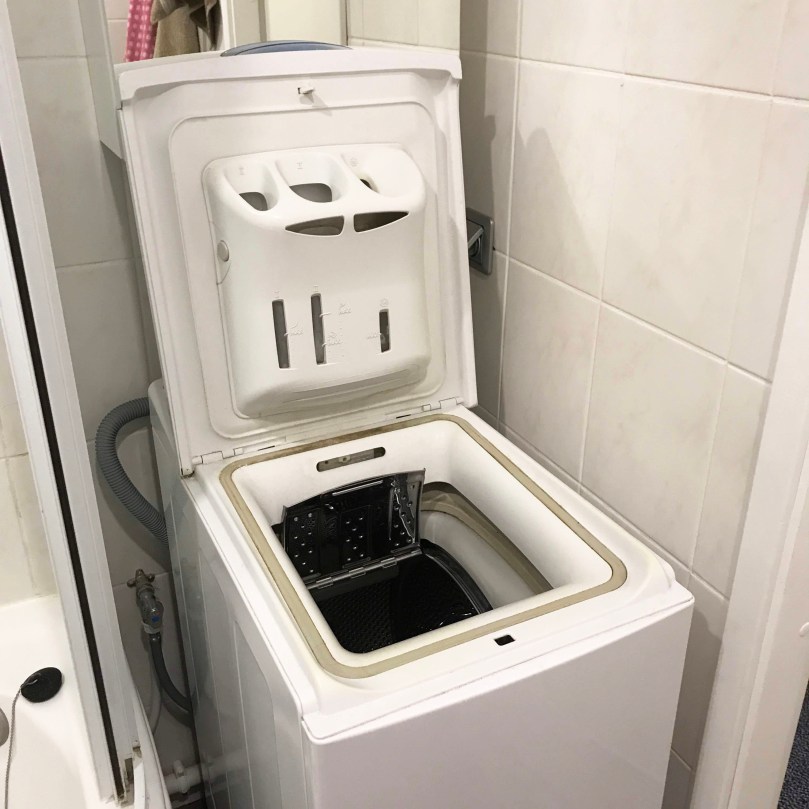
It’s written “Be careful, the inside is hot!” or something like that in Russian (according to the Hong Kong flatmate).

・Use it (the bathroom) for maximum 30 mins
→ This one was made considering the “congestion” of the shower use but both the Hong Kong flatmate and Lithuanian flatmate take showers in the morning and I do before going to bed so it wasn’t problematic. (Besides the Hong Kong flatmate wakes up at 5.30 every morning and the Lithuanian flatmate does at 9 am. After that they seem to take showers so it’s also not problematic even for them.)

It’s also a rule to open the washing machine for at least one hour after the use because of the humidity inside.

・Clean the toilet bowl THOROUGHLY after use every time
→ Actually this doesn’t happen that often. I just flush normally as long as there is no significant dirt. However, it is true that we can always keep the clean toilet if we deal with our own dirts right after the use.

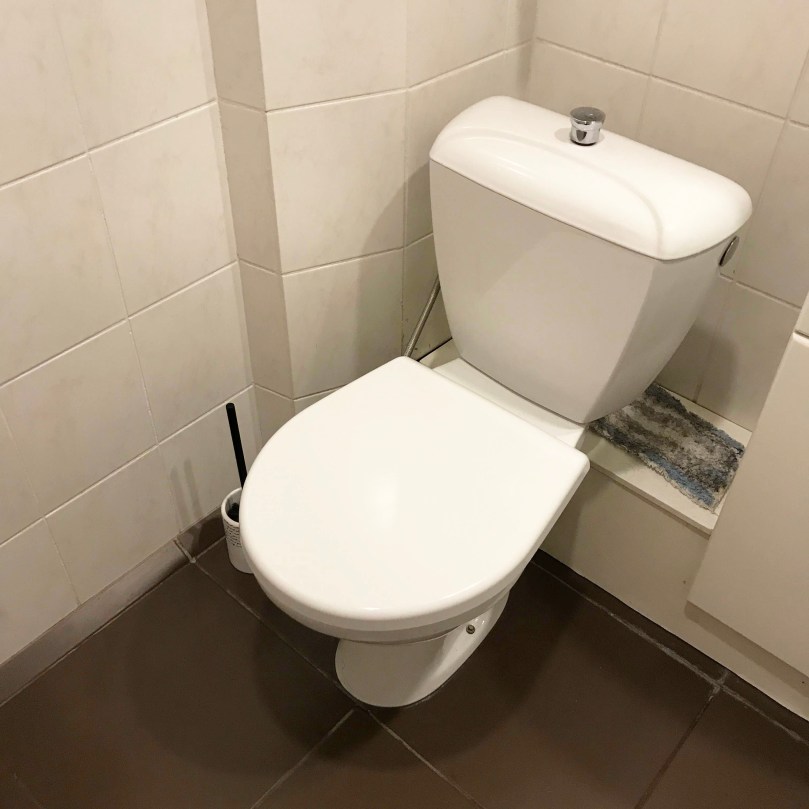
How to flush: pull the silver thing on the toilet.

・Take away personal items after use EVERY TIME (except towels) 
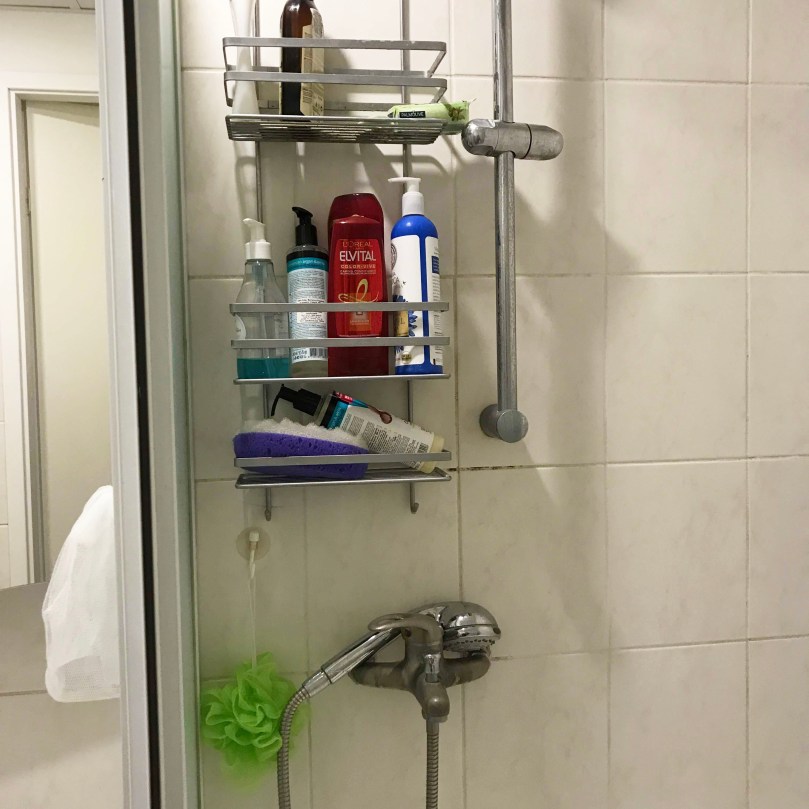
→ There are shelves in the bathroom so I keep mine such as a toothbrush there. Also there are towel hooks on the wall. That’s why this item says “except for towels” but I personally have one face wash headband that I bought in Disney Sea last October. My previous one was Elmo from USJ where my mam bought for me. I’d used it for a quite long time.

・Clean all the hairs of the tub after showering
→ This a common sense and yet there are the certain number of people who do not have the ability to do this. (Yeah, I experienced already. It happened in the first flat in Estonia, and everytime after the German or Italian girls used the showers their hair was literally everywhere. It was disgusting and shocking even though I’m a girl too.)

It’s exceptional if there are spaces to place the stuff. In other words, don’t put personal belongings anywhere which are not racks or shelves. 


Kitchen

・Clean all areas (stove, sink, table) IMMEDIATELY after use except emergencies (flatmates must be alerted)
→ There is also no wonder but what I personally do is to put my stuff aside not to bother the flatmates’ cooking. 

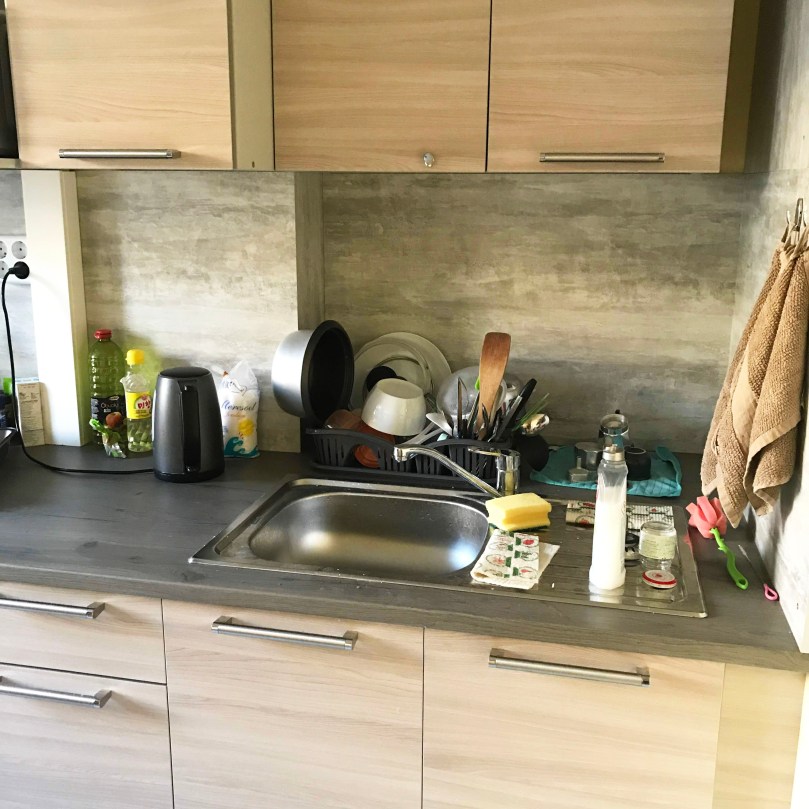
There are stoves on the left of this area and the kitchen is quite spacious. It’s really pleasant for me like a person who likes cooking.

・Never switch the stove to the maximum heat for a long time
→ This rule was made because they experienced to have a pot with too boiled stuff but I believe that it’s because the one who cooked was just not good at the kitchen management/cooking rather than the heating system was too strong… I agreed though, because still I can cook with lower heat.

・Store leftover properly with a cover 
→


Wait, if we store foods without any cover in the fridge, they would get super dry.


Corridor

・Both inner and outer doors must always be closed
→ Our house entrance has two doors and if we keep the inside door open, there’s no space for the Hong Kong flatmate when he leaves his room. So this is also irrelevant for my and the Lithuanian flatmate’s lives but keeping it close would not cause any annoys among us.

・Boots must be put on the upper side of the shoe rack
→


First of all, boots cannot be fitted in the lower case.


・Other shoes (e.g. slippers, sneakers etc.) must be placed on the lower side
→ We concluded this flatmate agreement quite recently, that is, in winter. We also agreed that it’d be better to keep the shoes on the rack depending on the season. Come to think of it, where did I put my other shoes…

・Always empty the corridor
→ My room slippers are not exceptional but it doesn’t mean that I have complaints about it. I just take them off in my room as I leave. That’s it.


Weekly cleaning

・Everyone takes turn per week
→ Someone has to be in charge of cleaning the flat once three weeks (obviously because we are three of us here). It may sound like something big since one tenant has to clean the whole flat but also it’s confusing and troublesome to manage the cleaning schedule if all of us clean the flat dividing into three parts, which may get more troublesome when someone cannot handle it for some reasons (as far as I experienced) so this is actually the best way.

・The person-in-charge has to buy all necessary detergents
→ Well, we have different time tables every day so it’s not always possible for someone in charge of cleaning the flat to buy necessary things. Therefore, actually someone who has time to go shopping buys and later on the rest of us pay back. I think this is the best way so that we can be financially equal.

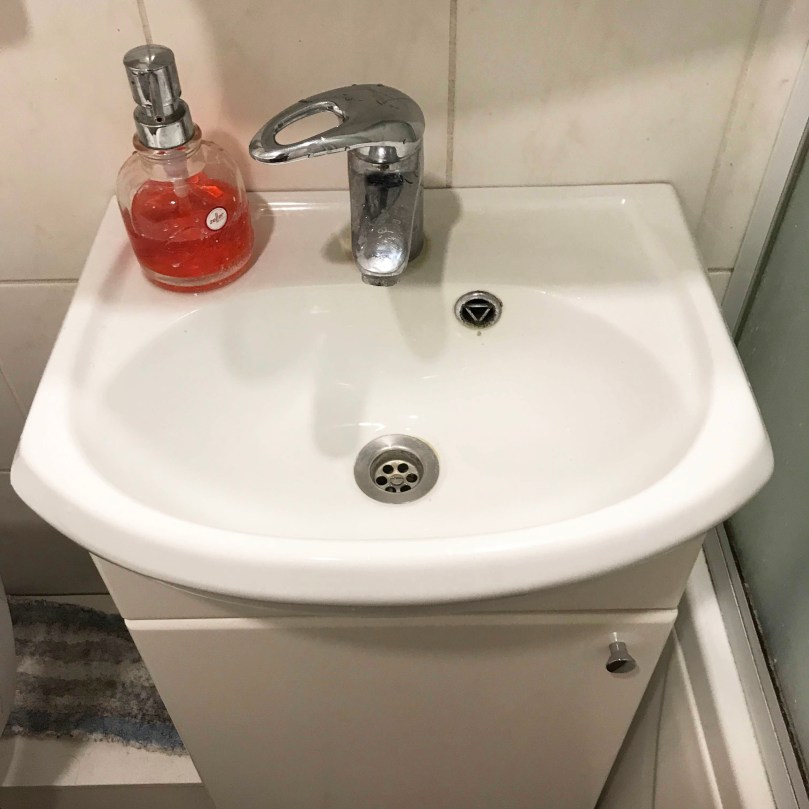
This sink is really small so I always use water from the shower when washing the face in the morning.


2) Socialising

Active hours

・Be quiet before 7am & after 11pm
→ I don’t think this is our flat-specific rule. In Estonia (or in Europe? in Ireland where it may have been the same), there are active hours. (It might be 7 am to 10 pm in public like a supermarket.)
This is to avoid the neighbour issues. It didn’t surprise me but because of my work I once in a while have to make calls in the early morning to New Zealand which has a 10 or 11-hour time difference with Estonia. (I try to tell my flatmates beforehand but it’s not always possible so I apologise in my mind.)

・Family calls can be made not more than 30 mins agreed by other flatmates
→ Our Lithuanian flatmate often talks with her husband who is in Lithuania but I’ve never been bothered due to this so I really don’t mind. I can sleep anywhere and don’t talk with my family. If I talk with my friends in Japan, it takes at least one hour though.


Internal

・Everyone takes turn to cook for the rest twice a month to ensure sufficient internal communication on a regular basis
→ The aim is to communicate with three of us. (I would have disagreed if the flatmates had been like the tenants in my previous flat.) It may sound too much for some people but the frequency is low and is nearly once a month.
The other day was my turn and I was lazy to think of what to cook so I cooked onigiri (rice balls) and nikujaga (like a stew with meat and potatoes and vegetables). Then I swore to myself: I would never ever buy Rimi’s soy sauce again. It just made the food in black without enough taste of soy sauce. Rimi has Kikkoman’s soy sauce, which is a proper Japanese brand and not cheap but it ensures that we can have the proper taste of soy sauce.


External

・Individual guests must stay at the host’s own room without interrupting shared area
→ Common sense, isn’t it. However I do know that there are some number of people who do not, again, have any ability to do this. Can you guess how many times the Indian tenant’s guest in the previous flat took my food from the fridge and use my stuff even though I kept them separately or marked as mine?


・The presence of individual guests of the opposite sex (of the host) must be informed in this flat prior to his/her arrival 
→ This item was made in case one of us brought their date or partner. lol However we actually let the others know when same-sex friends or someone will come to visit. It’s still better than nothing.

・The presence of groups (>1 person) should only be accepted when there is an unanimous agreement in the flat
→ Yeah it’s gonna be noisy when there are too many people in the small place… In the first flat in Estonia when there was a huge party which around 50 guests came, I was just shutting myself in my room, being annoyed.

…Okay, that’s it. Does it seem too much for you? Some items (or maybe all?) of this flatmate agreement have my comments but so far we have lived peacefully. It may be kind of sad for my flatmates because having my own time is really important to me but they may learn that the world has such a person.

If you want to see or get our flatmate agreement, you can download below. 

Aitäh! 🙂

Vastlapäev! Zooks Makes Estonian Sweets (Vastla)kukkel.

Tere!

There is a “holiday” that I celebrate (?) every year since I spent one year as an exchange student in Ireland, which is

“Pancake Tuesday” (Shrove Tuesday).

It’s always Tuesday as you might know. If you google “Pancake Tuesday 2020” or something like that you’ll get the specific date.

I used the word “celebrate” but it doesn’t mean they or we do something very ultimately special. In addition, I’m a Buddhist. (Apparently Pancake Tuesday isn’t a culture from our country.) As its name suggests, however, we/they eat pancakes.

They were selling pancakes at the restaurant (I mean, school restaurant) of DCU (Dublin City University) in Ireland. I really loved and still can never forget how tasty the pancakes with lemon and sugar were!

By the way, in Ireland “pancakes” normally look like crepes. Some people (especially the Japanese) may imagine fluffy huge pancakes like Hawaiian pancakes when hearing the word. I thought that too so I asked one of my Irish friends who was with me at that time and he said:


Because it’s a cake made in a pan


Totally makes sense.

Since then, I always eat pancakes on Tuesday around in the end of February. Even in Estonia too.


BUT!


In Estonia it’s different. Technically speaking this “Estonian” culture came from Sweden but anyways “Pancake Tuesday” doesn’t exist in Estonia but still they have  “Shrove Tuesday”, which means they don’t eat pancakes on this day and is called “Vastlapäev” in Estonian.

As mentioned earlier, this “Estonian” culture is said to have come from Sweden so there’s an alternative dessert replacing with pancakes, which you would often see at cafes in Estonia around from the beginning of February and it’s called “semla” in Swedish. In Estonian, however, it’s called


Vastlakukkel.


It seems that the dessert which they have on Shrove Tuesday is vastlakukkel and in regular days is just kukkel. Maybe. Not sure. Just my linguistic guess. But still you can get one if you say “kukkel” at a cafe or bakery. They would understand.

This year, in 2020, I made some resolutions which brush up my skills, one of which is “to make sweets that I have never made yet” so I decided to enjoy both cultures (Irish and Estonian Tuesdays) and make both pancakes and kukkel for this year’s Pancake/Shrove Tuesday.


1. Upgraded my regular (?) pancakes

I’m pretty sure almost all of you wouldn’t get surprised but flour products in Estonia are cheap from my point of view because Japan has a rice culture and the flour products are pretty expensive. We have a variety of cake flour products, okonomiyaki flour and takoyaki flour like cup cake flour or pound cake flour available in Estonia. We also have Japanese pancake flour called “hotcake”.

Anyways, who cares about the Japanese pancake flour here. This time I bought Vilma’s pancake/crepe flour. Usually you don’t need Google translate for the flour products in Estonia because they have image procedures on the side of the package, which are quite understandable. Vilma’s pancake flour is not exceptional.

If you buy this product, as seen on the side of the package, flour : water = 1 : 2 so I made pancakes with flour 100g + water 200ml. It’s a crepe dough but it doesn’t require the time to rest. Instant cooking.

After mixing the flour and water, just heat the pan and put some oil and then the dough. If the pan is enough warm the dough instantly gets bubbles on its surface so just turn over the pancake. You may fail to get a perfect pancake slice at the first time but it doesn’t affect its taste.

Of course if you eat it with nothing, it just tastes like the dough.

In the old town in Tallinn, there is a pancake restaurant called “Kompressor”, whose pancake with mushrooms and cheese are so tasty. Creamy. So tasty!


Then


One day I talked about this pancake to my Estonian friend and she told me that it’s easy to cook this sauce. She told me the recipe so I made it for my special pancakes for this year’s Pancake Tuesday.

Ingredients (Possibly for two)

  • Small onion x1
  • Relatively big mushrooms x3
  • Sour cream 250g
  • Butter (as much as you wish)
  • Salt (as much as you wish)
  • Pepper (as much as you wish)
  • Dill (as much as you wish)

How to

  1. Mince the onion and slice the mushrooms around 5mm thick.
  2. Heat the milk pan (over medium heat) and put some butter.
  3. Add the minced onion before the butter gets burnt.
  4. After the onion gets half cooked, add the mushrooms and fry altogether.
  5. As everything was enough cooked, heat the pan over low heat and add the sour cream. 
  6. Pay attention not to burn the cream and add the salt, pepper and dill (which you may exclude) and stir it.
  7. If you think it too creamy you may add some water or if you think it less creamy than you expected you may add some cheese.


This is it.

It’s easy isn’t it?

In some countries like Japan it may be hard to find sour cream though…

By the way, the cream would get separated in the end if you heat the pan too much so be careful. Heating the leftover in the microwave oven is also not recommended (as I experienced) not for the taste but for the looking. It’s better to have it with pancakes right after cooking.


2. Made Estonian sweets, vastlakukkel !

And!

As mentioned earlier, I wanted to celebrate (?) Estonian pancake Tuesday called Vastlapäev so I made vastlakukkel! I referred to this recipe. It’s in English and since I made some changes according to ingredients available in Estonia, I’m introducing my recipe. (It takes time and there are lots of procedures but it’s not that difficult. Though it may not enough convincing because I like baking sweets….)

Ingredients

  • Buns
    • Milk 500ml
    • Dried yeast 25g
    • Regular flour 800g (divide into half and sift them before the use)
    • Sugar 3 Tbsp
    • Salt 1 tsp
    • Grounded cardamom seeds 1 tsp
    • Butter (or baking margarin) 200g
    • Egg x2
  • Filling
    • Heavy cream 400ml
    • Sugar 40g 
    • Lemon juice 2 tsp

How to

  • Buns
    1. Take all the ingredients out from the fridge one hour before starting making dough.
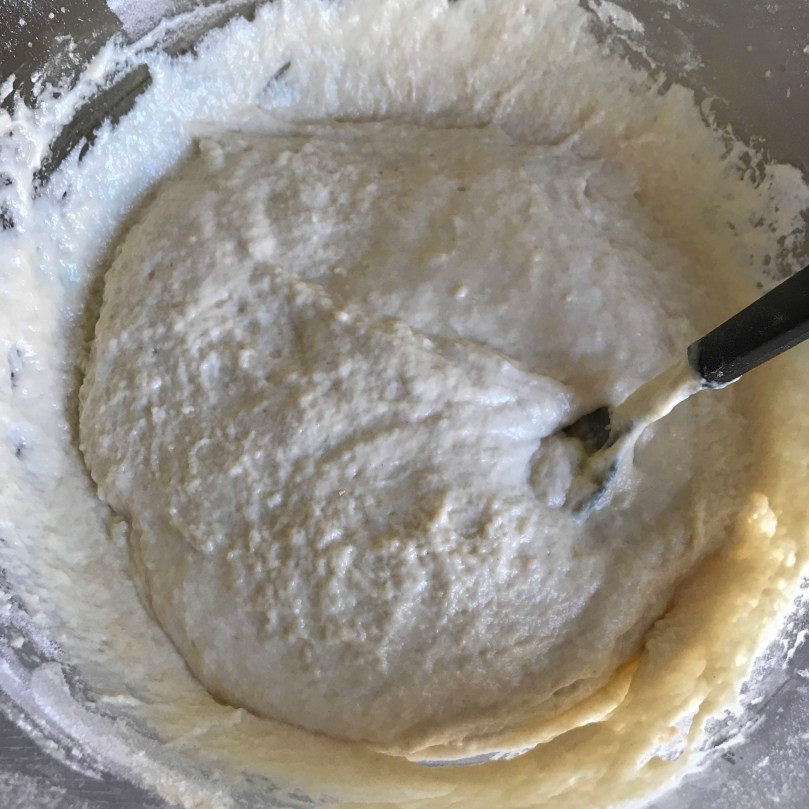
    2. Put the yeast in a bowl and add the milk little by little stirring it with a wooden spoon or spatula. (The yeast that I bought had an explanation of how to use so I heated the milk in the microwave a bit. As for the wooden spoon or spatula, I don’t know the reason.)
    3. Add sugar and the half of the flour (400g) and mix it. (Personally the rubber spatula was better than the regular spoon.)
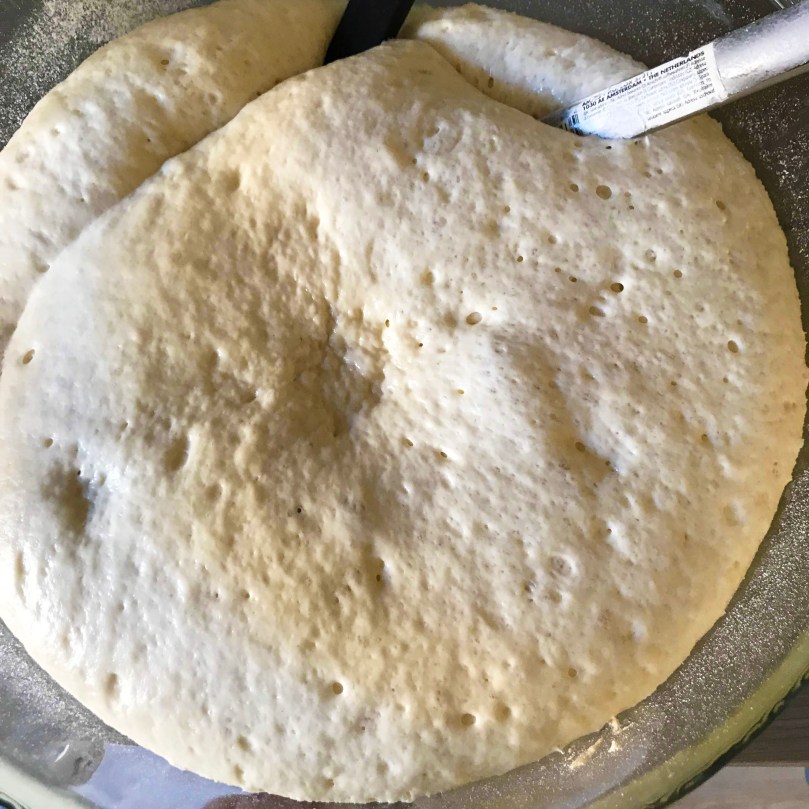
    4. Cover the bowl with a clean cloth or kitchen towel, put it in a warm place and have it rest for 30 to 45 minutes. (Don’t ventilate the kitchen.)
    5. As the dough was sufficiently inflamed, add the salt, cardamom (which I didn’t use), melted butter and whisked eggs and mix them.
    6. Add the rest half of the flour (400g) and mix them.
    7. The dough is not liquid anymore so keep kneading for 10 to 15 minutes. (I kept using the rubber spatula to knead.)
    8. When the dough gets shiny and not sticky to the bowl, cover the bowl with the cloth or towel again and put it in the warm place for 45 to 60 minutes.
    9. Knock the dough in the bowl and have it rest for additionally 30 minutes.
    10. Take an egg-size dough and roll it like using a computer mouse.
    11. Leave the rounded buns for 30 minutes again. (I preheated the oven at this timing.)
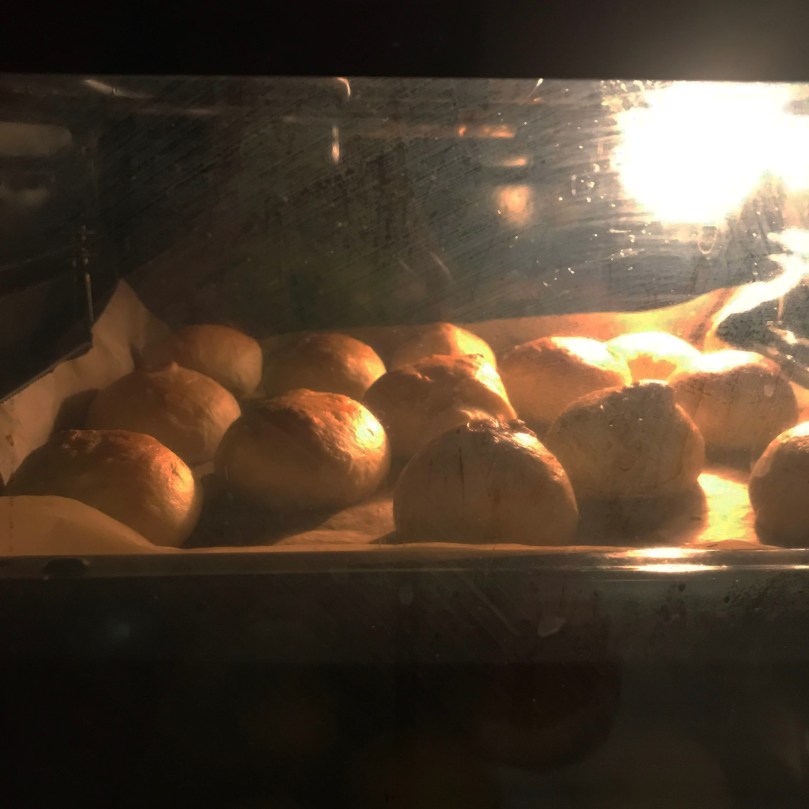
    12. Coat the surface of the buns with milk or whisked egg and bake them in the oven at 200 to 225°C for 15 to 20 minutes.
  • Filling
    1. Have some water with ice in the bowl or something and place another bowl on that, where add the heavy cream, sugar and lemon juice and whip it until it gets 80% thickened.
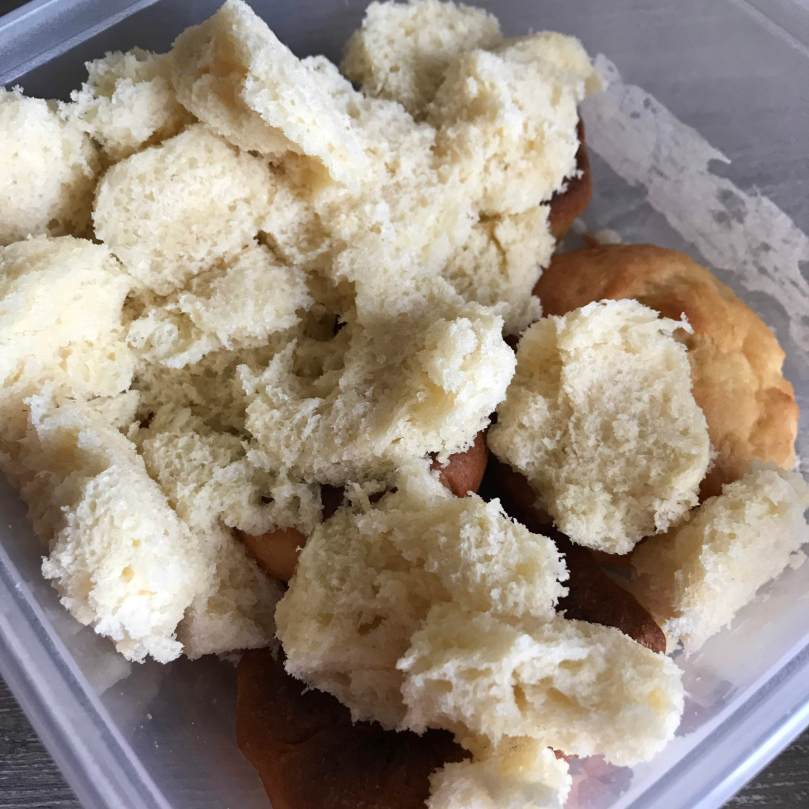
    2. Cut the top of the bun like a lid and scoop out the inside of the bun.
    3. Squeeze the cream in the bun until it slightly has “too much” cream and then place the “lid” on the top.

I forgot to do but you may also add powder sugar on them as decoration.

I also referred to a few Japanese recipes regarding the cream so probably my kukkel is less sweet than the ones available in Estonia. Moreover, the original recipe about the kukkel buns said there would be around 24 buns but

actually I got around 33 buns in the end.

My hands are relatively big among other Japanese girls but I guess the baker who originally made this recipe that I referred to may have bigger hands than mine.

Not sure though.

After all I gave two buns to my flatmates and more than 20 buns to my colleagues.

They seemed happy!
This recipe takes almost a whole day but the ingredients are quite simple so try to bake kukkel in your countries and enjoy Estonian (Swedish?) culture.

But I still believe cream-puffs are tastier.

Maybe next I’ll bake them.

Aitäh! 🙂
Zooks Completes Keeleklikk in 2 Months.

Tere!

One day in 2020 there was a conversation before the general meeting in the office:

Me: Mine…
CTO: Mine?
Me: Toasse! Toasse? Tubasse?
CEO: I don’t think we say “tubasse” (but she could understand what I meant)
Me: How do you say (“to the room” in Estonian)?
CTO: Tuppa

I dashed to the developers room and said:


Mine tuppa!!!


One developer: We heard. lol


It’s a very good circumstance to learn a language, isn’t it?

As you might have guessed, it’s Estonian. I couldn’t register a public language course in January because too many people accessed, which led a server error. Then I (re)started learning Estonian online by myself and I tried to use what I learnt in the office as a practical lesson.

This time the article is about the online Estonian language learning. I completed the Estonian language learning platform called Keeleklikk, so I summarise here how it was. (If you read this article you will figure out but just in case you won’t misunderstand – it does not mean that I acquire the Estonian language in two months.)


What is Keeleklikk?

Keeleklikk is an online Estonian language learning platform. It’s easy to register by using facebook, Google or simply email address. As of the 24th of February 2020, Keeleklikk has two versions: the older version and the newer one. It totally depends on you which one you want to use. Here are my viewpoints on both versions for those who have slightly difficulties to choose:

The older Keeleklikk

  • Advantage
    • No system error (as far as I experienced).
  • Disadvantages
    • Tacky design.
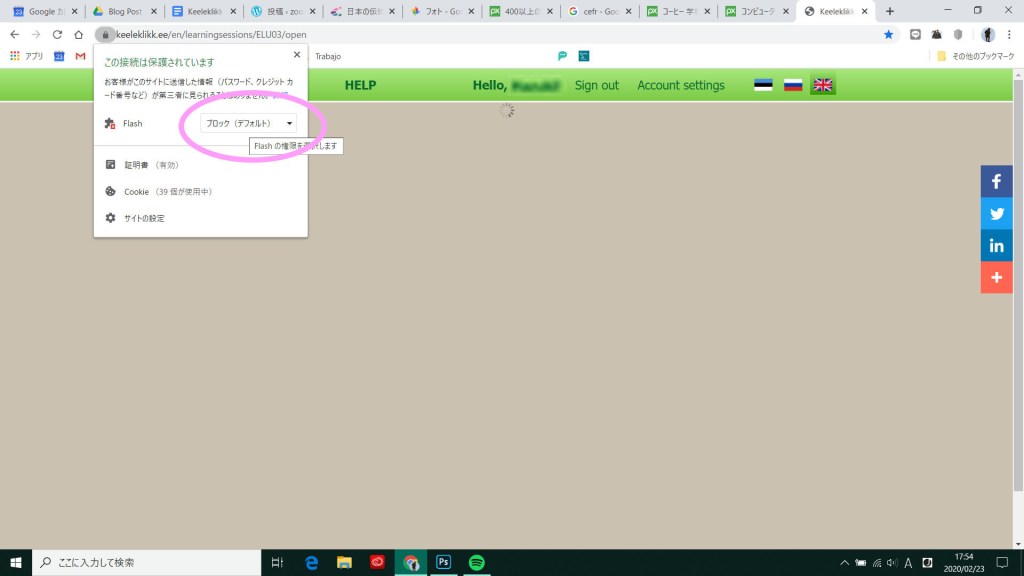
    • Since it uses Flash, Google Chrome users (probably) get automatically blocked so whenever they log in, they need to “permit” the Flash.

The newer version

  • Advantage
    • Stylish and minimalistic trendy design.
    • Since it doesn’t use Flash it’s easier and smoother to start lessons
    • It keeps you logging in.
  • Disadvantages
    • There are frequent system errors.
    • Even after the final exam, it doesn’t completely show the result, which means it doesn’t produce the result in PDF (but I’ve been asking so if there are any progress on it I will add it).
    • The animation videos sometimes (deliberately?) doesn’t have subtitles.

However, personally I preferred the newer version so when the animation video didn’t have subtitles, I just had one more tab on the browser and read the English translation of the script in the following lesson, listening to the dialogs. To sum up, it is possible to make up for the disadvantage in the newer version!

If you want to continue to learn Estonian on Keeleklikk, according to your progress you may decide which version is more suitable for you.

Keeleklikk itself has advantages!

I’m not sure how people learn foreign languages in your countries but in Japan they tend to buy some text books when they want to learn English, for instance. If it’s going to be their skill, I think it’s good to “invest” money on themselves. However, there is nothing better than something free with fine quality.

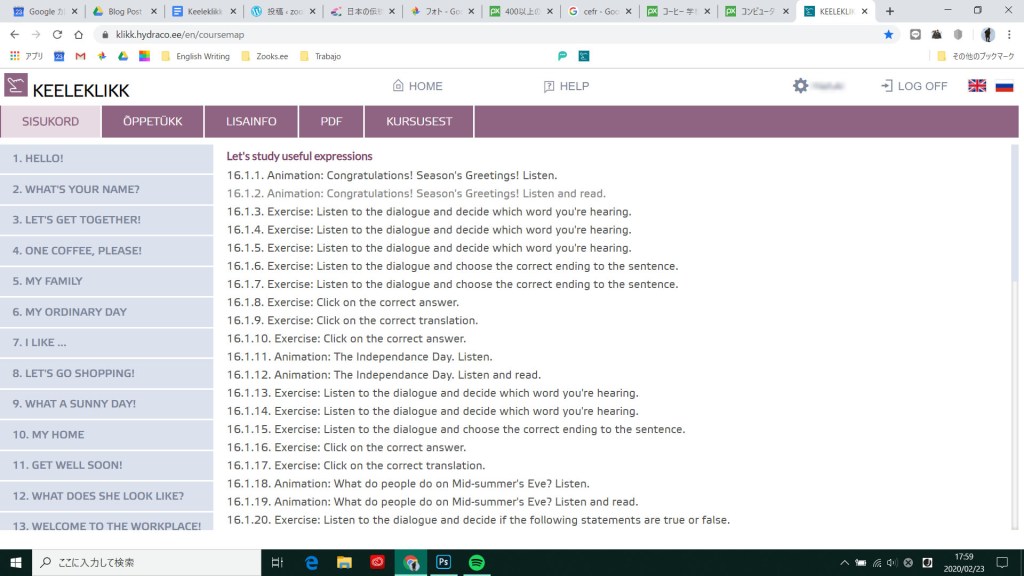
Keeleklikk is an online Estonian language learning platform as mentioned, everything there is free of charge. There are around 16 chapters and each chapter consists of three to five lessons.

One lesson usually includes: animation videos with English subtitles, the transcripts of the videos (which provides the English subtitles as additional options), quizzes, grammar tutorials (which usually lasts one to four minutes), grammar quizzes, speaking practices with the computer by translating English sentences and email writing to the teacher about the lesson topic.

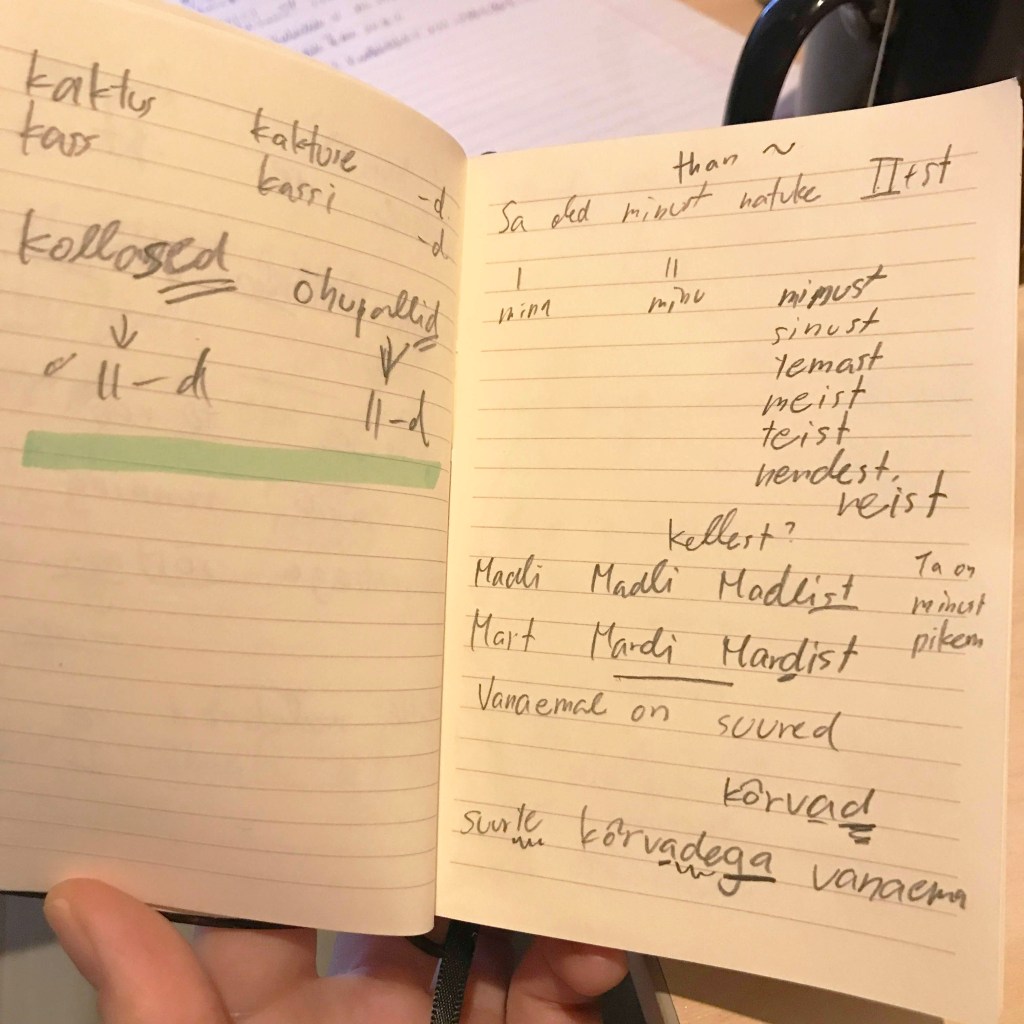
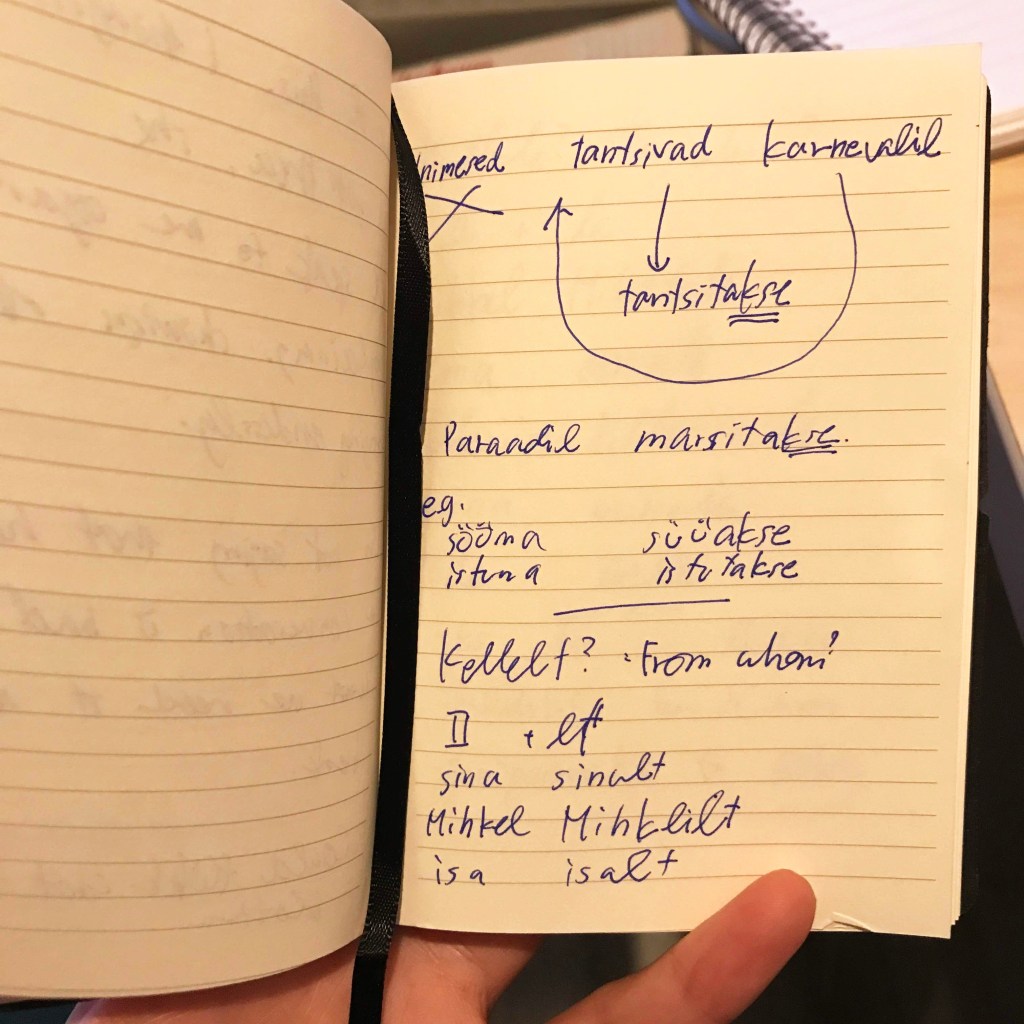
When it came to the grammar tutorials, I just had notes on thephysical memo pad and summarised and organised what I learnt on Evernote where I created a “notebook” for Keeleklikk after each lesson.

The reason why I had notes on only the right side is because it was faster to take notes on the single side on this notebook. No worries, I’ll use the other side later. No waste.

I personally think that any language learning platforms (especially available in Japan) should “mimic” one of the styles of Keeleklikk, which is the speaking practice with the laptop and email writing. It is difficult to practice these skills but it’s more difficult to improve those skills by using textbooks. Also, usually a lot of similar online language learning platforms like Keeleklikk are liable not to reply or correct learners’ texts by email even though they say “Let’s write an email!”. 

However, Keeleklikk does.

In addition the teacher usually replies with corrections within 20 – 30 minutes.

I don’t have much vocabulary so it was really exhausting and I didn’t write for the last three chapters but I did when I had energy to do. It’s always important to continue.


Keeleklikk aims A1 to A2 (for beginners)

In Japan we don’t have clear levels for language learning unlike Europe. Normally the range is beginner-intermediate-expert. However Europe has CEFR (even though it seems some schools have similar systems of level cetegorisation).

As repeated Keeleklikk is an online Estonian language learning platform for beginners, that is, until the A2 level. (There seems to be another platform for Estonian language learning from B1 but let’s just keep it in mind and talk about it sometime in the future.)


After finishing all the lessons you may take an exam there. (Oh, it doesn’t mean that you must complete every lesson one by one. You may skip some if you wish and may take the exam right after the registration but you need learning first of all, don’t you?)


I actually took the exam twice but still haven’t got the certificate.


Keeleklikk provides you with the certificate after the exam!

Maybe because I took the exam in the newer version but not sure. Anyway I couldn’t download my result in PDF even after the exam and clicked everywhere but it always just went to the first blank page of the exam.


(Sigh.)


Moreover, the newer version of Keeleklikk had a contact form but the “I’m not a robot” button was broken so I couldn’t send the message. I went to the older version and found the email address in a tiny font below the webpage and finally emailed.

As of the 24th of February 2020 I still haven’t got any reply but probably because I sent the email on Saturday. If there’s any progress I will renew the article. 

Since we don’t have good Estonian language learning books or equivalents in Japan(ese), learning it in English is the (only) way and yet I personally believe that it may be easier to learn it from Japanese. Anyway, you can access Keeleklikk no matter where you are as long as you have the internet. If you are enough fluent at English, why don’t you try to learn Estonian?

★Addition on 29th March 2020

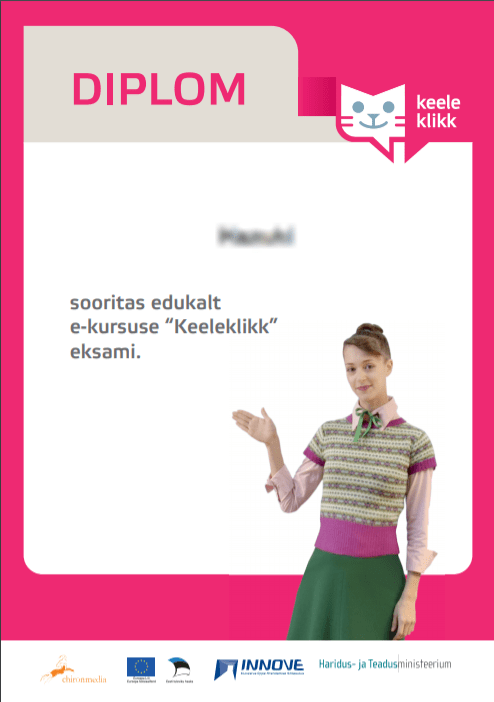
Since I sent an email to Keeleklikk, we had communicated approximately once a week and three times in total. On the 29th of March I finally could get the diploma on Keeleklikk.

I took the exam around five times in total.

Yeah I didn’t expect that I would take the same exam five times due to the errors… Now you can get the diploma on the new version of Keeleklikk and I also reported them some errors so you may not see any errors while learning the language.

Aitäh! 🙂
About

Tere!

Heya, my (nick)name is Zooks. This is my official Irish nickname though I’m not Irish but Japanese. This is my self-introduction page so I’d like to introduce myself and talk about this website.

First of all, let me explain what the first line of this page means. It’s Estonian and means “Hello”. Easy-peasy to remember isn’t it? From today you may use it at the casher, pub or to your Estonian colleagues and friends. Make them happy with this easy start.

Next you may wonder why I’m in Estonia. I have lived in Tallinn for over two years as of January 2020 and I was a postgraduate student at Tallinn University. Almost when turning to be a second-year aka final-year student, I started working at an Estonian start-up company. As finishing my degree programme and graduating from the university, I have beeing working there. This is my brief histroy in Estonia.

You also might wonder about me. I was born and raised in Japan and my hometown is in Wakayama which is located in the south of Kansai area and just below Osaka on the map. I spent 18 years there and moved to Kyoto for univeristy. (It’s impossible to commute there from my hometown so it’s quite normal for people in my home prefecture to live by ourselves.) When I was a third-year student in the university in Kyoto, I went to Dublin, Ireland as an exchange student for one year. Then my Irish friend gave me that nick name based on my given name. Usually the universities in Japan have four-year programmes so after spending three years in Japan and one year in Ireland I graduated. I spent extra about six months in Kyoto working, I came to here Estonia.
The official Instagram of my hometown, Wakayama is pretty great so please follow and go “into the unknown”:

The purporse of this website is to show how my life in Estonia is such as experiences in Estonia, how I handle my culture (not merely Japanese culture!) here, tips to live and important procedures for living as well as trips in the world (but mostly in Europe). This website was created because many non-Japanese people have got interested in when I said “I have my own website” but it was available only in Japanese. (The Google translate was available but it didn’t make any sense since my texts are full of my dialect.) The Japanese website is the main one so this website may not have the same information but you may contact me in case you have questions and comments from the contact page by choosing the one on the top.

Finally, I have some social media accounts so please follow me, get annoucement of the newest blog articles on Facebook and enjoy my lovely photos on Instagram!

Hope you have fun with my website.

Aitäh!/Thank you 🙂