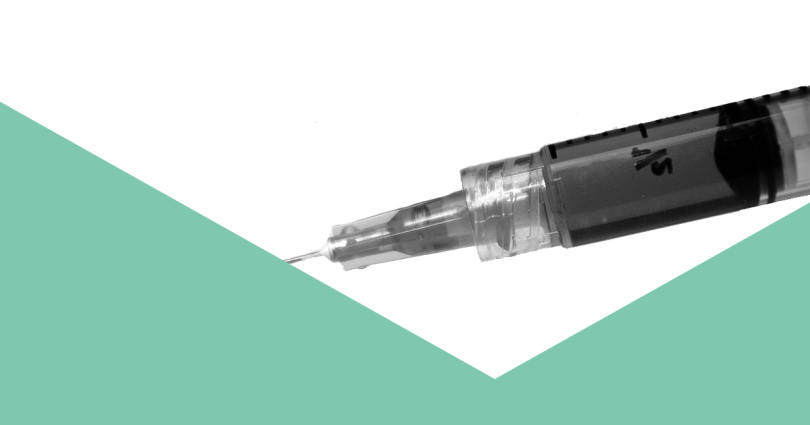
Zooks Got Vaccination for COVID-19 in Estonia.

Tere!

It seems in Japan, citizens can’t predict when they can get a vaccine for COVID-19. On the other hand, as some of you may know, vaccination in Estonia started for medical and education people or people in the high-risk group a long time ago. After that eligible people groups expanded to those who are in their 50s, 40s and on the 15 May people in their 30s were eligible to book vaccination.

Considering the access to the portal site, I thought it might take a long time to finish the process of getting vaccines, so I will finish this article little by little.

Contents
★17/May/2021
★18/May/2021
★28/May/2021
★Appendix
★29/May/2021

★17/May/2021

On the 17th May, finally our (people at age 16 and over) turn came to book vaccination for COVID-19. To book the vaccination, you need to register from digilugu. The booking started at 7 pm on the 17th. I had something to do at 6 pm for one hour, so I knew that I would be too late for that, and when accessing the site at around 8 pm, there were too many people ahead of me as expected.

★18/May/2021

There were around 10000 people ahead of me at 8 am.

I also read in some article that we couldn’t book a vaccination with Smart-ID, so I was already ready for that (disappointment or the reality that I couldn’t do it with Smart-ID), but I could access it with Smart-ID without any trouble. Who wrote such information.

The image above shows that there were 10000 people ahead of me. However, the process seemed to have gone fast, so I had been waiting for only two hours. As written in the yellow box, you have only 20 minutes to finish the booking process. Otherwise you have to start from the beginning again.

Due to the given time I don’t have any screenshots, but I didn’t notice they had an English page, and I was processing the booking in Estonian! (I could do it because I could understand it a bit.)

You can search the type of vaccines, the place to get a vaccine, or county, but I couldn’t choose Pfizer or Moderna in Tallinn, so Janssen was the only option at that time. I preferred Pfizer, but I booked Janssen’s vaccine since it’s better than nothing.

The place is East-Tallinn Central Hospital in Mustamäe. I’ll get it on the 28th of May.

★28/May/2021

I got a vaccine — Janssen. (I had thought I would need to get vaccinated twice even with Janssen, but my friend told me Janssen requires only one shot. I had preferred Pfizer so I was ready for two shots, but then I was lucky in a sense — no need to get two shots.) The vaccination location was a hall in Lasnamäe, which is known as a Russian area in Tallinn. There is an ice skate hall.

There was a queue in front of the entrance so I was one of them, and after a while I became the first person in the queue. Then the receptionist asked me my booking time. If your booking time is not too early or too late, he will let you progress. (My booking was 14.10, and I arrived there around 13.50, waiting for less than 10 minutes, but he let me proceed.)
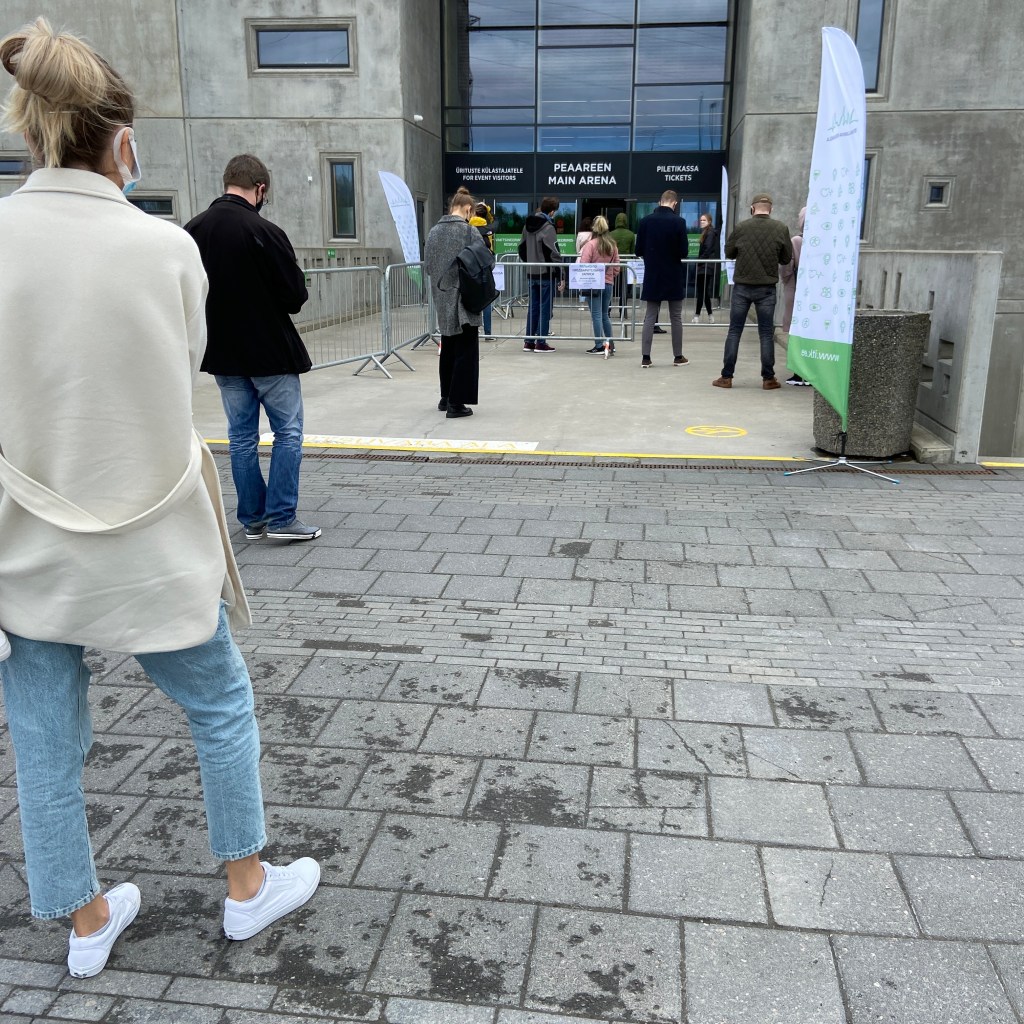
After getting OK from the receptionist, a nurse gave me a new mask and asked me to sanitise the hands. 

There are six registration booths, and I was told to go to the fourth one. After waiting for my turn, two nurses asked me about my current physical condition, history of COVID-19 infection, allergies and medication. I have taken several medicines so I showed them notes that I always use at a pharmacy when buying them. Then one of the nurses went somewhere to ask if those are okay with the vaccine. She told me everything was alright, so I finally went to the vaccination booth.

At the booth there was only one nurse. After putting my stuff on the chair, she vaccinated me.

It was too quick to think about how painful the injection is usually.

After vaccination, I was told to sit on a chair, and had to wait for 15 minutes. If there is nothing, people can go home. I didn’t see anything so I went home too.

★Appendix

I got vaccinated on 28th May, and was told not to drink alcohol for two days. My birthday is on the 30th. I wanted to have cooked ajillo and celebrated with wine…

★29/May/2021

Today I forced myself to go to a supermarket which is 10 minutes away by foot to buy milk.

After that I spent most of my time in bed.

Yes, I had fever.

I don’t know how high the fever was but maybe 38 degrees. Some people are said to have 41 degrees, and sent to the hospital, but in my case in the beginning the fever was slight, and while talking with my friends in Japan on the phone, the fever got more serious.

The good thing was, although I had a fever for the whole day, the next day I was completely fine.

I asked my 35-year-old friends who also got Janssen about how the side effect was, and he said he was tired only. It’s also said that younger people tend to have heavier side effects so it’s convincing enough.

I got three masks from my mum, but it seems I will hardly use them…

Aitäh! 🙂

Pollen Allergy in Estonia 2021.

Tere!

I was 10 years old when I remarkably saw the symptoms of a pollen allergy. I used all the tissues that I had so I was trying to stop the runny nose with a thin hand towel. It happened during a test or something and my teacher was so worried about me. Since then, I had a box of tissues in my desk drawer to spend spring.

Then every spring I got the best friend: a mask. No matter how many times I blew my nose, I had a runny nose, so I put tissues in my nose and wore a mask to hide it. (I did this sometimes because no one could see the inside of the mask and it was better to have a runny nose.)

I think I started taking medication for pollen allergy since I became a university student. I believe if I had started taking medication earlier, I would have comfortably spent spring. However, it doesn’t mean that I have a bad memory. It’s just a past moment.

As a university student, my work colleague recommended a medicine that we could buy without prescription at a pharmacy, but it wasn’t effective for me at all. So I went to see an ENT doctor in my hometown, and he said that type of medicine is not necessarily effective for everyone.

The pollen allergy medicine that you can buy without a prescription at a pharmacy in Japan. (Reference)

I don’t remember when exactly, but I was running out of the pollen allergy medicines that I got in my hometown, so I went to the ENT hospital near my flat in Kyoto. The doctor said we couldn’t see the effect unless I started taking the medication before the pollen allergy started (like from January as the pollen allergy starts in March or something in Japan). I also got medication for when the symptoms are more awful, which is instantly effective, but in terms of the daily pollen allergy medication, it requires time.

Then, I went to Ireland as an exchange student. Before going there I didn’t think of the pollen allergy at all, but when it was getting warmer in Dublin, I felt I slightly had a runny nose. In the beginning I wondered about regular sickness, but I didn’t see other symptoms like a sore throat, so I realised that I had the pollen allergy in Ireland too.

However, I didn’t take any medication in Ireland because it wasn’t that awful, and a small pack of tissues helped me enough.

But it was different in Northern Europe.

In Estonia (and Finland too), there are lots of birch trees. Since there was not so much information about Estonia before going there, I referred to information about Finland, and found the fact that the Finnish have the pollen allergy owing to birch.

But it was information on Finland, not Estonia, so I contacted someone in Estonia, and he said

I’ve never heard of pollen allergy in Estonia. I don’t think there is.

I thought “That’s probably because you don’t have the pollen allergy”.  (I was pretty sure that Estonia had a pollen allergy, but I needed someone’s real voice.)

Then I contacted another person, and he said if I asked for the pollen allergy medication at a pharmacy, they would give me the medicine.

Glad to know!!!

I tried two types of pollen allergy medicines in Estonia, and found Claritin in a blue box seemed effective for me. Since then, I start taking it every January. It costs 10 to 13 euro per package which contains 30 tablets, so if I keep taking it until June, around 60 euro is gone in total, but it’s  a good investment for my health and comfortable life. 

However, it was different in 2021.

Reference

I think I started taking the pollen allergy medication a bit later than usual this year, and Claritin doesn’t work well (occasionally)!

I brought medicines for an awful case from Japan, and I was forced to take it too. Otherwise, even if I take Claritin, I have a huge runny nose.

Every year, it was fine as long as I took the pollen allergy medicines, but this year (in 2021) I had itchy eyes too!

My eyes are awfully itchy!

I couldn’t bear it, so after wondering if I should buy an eye drop at a pharmacy or book an appointment at the ENT hospital, I eventually decided to try the eye drop from the pharmacy. I asked two of my Estonian friends, and they told how to say the eye drop in Estonian:

õietolmuallergia silmatilgad.

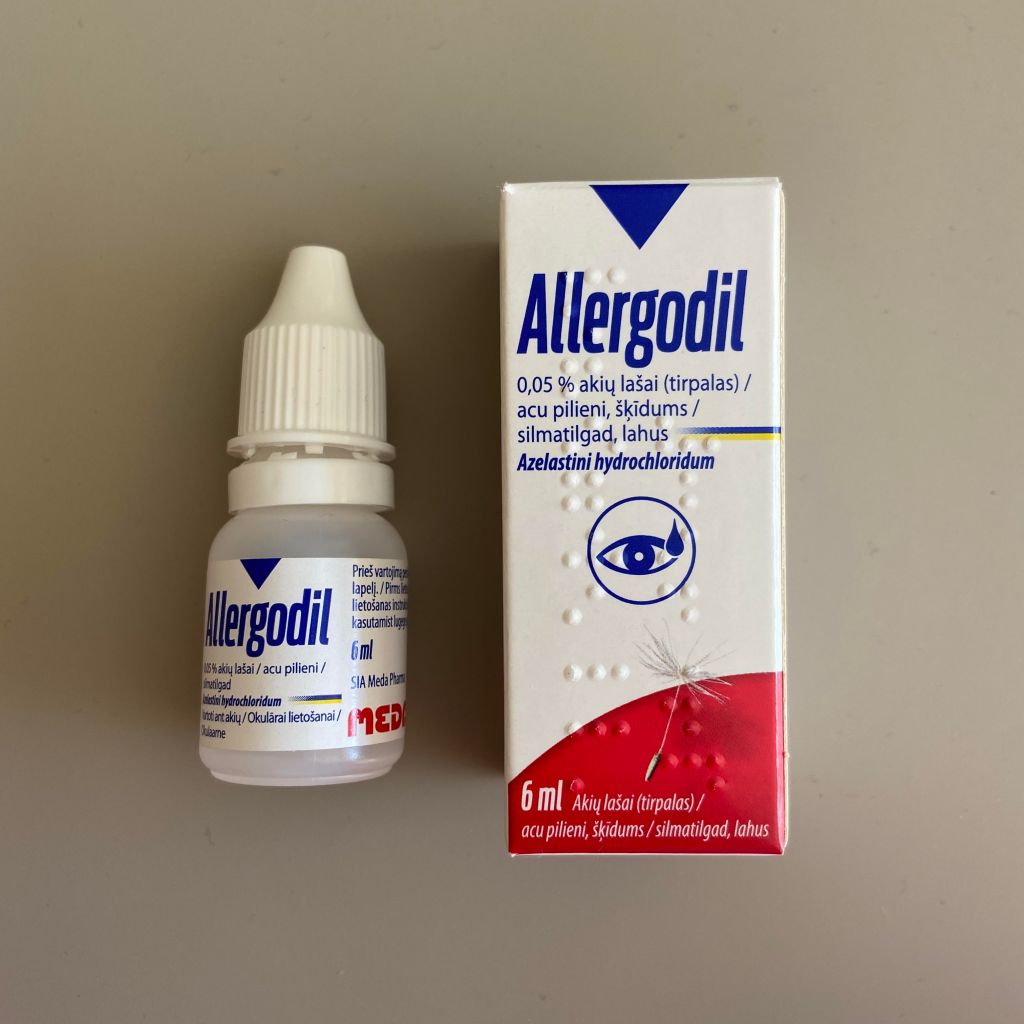
One of them told me “Allergodiil” usually works well, so I went to the pharmacy near my place, and found only one left! It cost around 6 euro.

On purchasing the eye drop, I applied it, and it seemed it was instantly effective. After that, I didn’t have itchy eyes.

I still don’t know why this year the pollen allergy is so awful, but anyways for the future reference, I decided to write it down as maybe I will need the eye drops again next year (although I’m not sure if I’ll still be here).

Aitäh! 🙂
P.S.

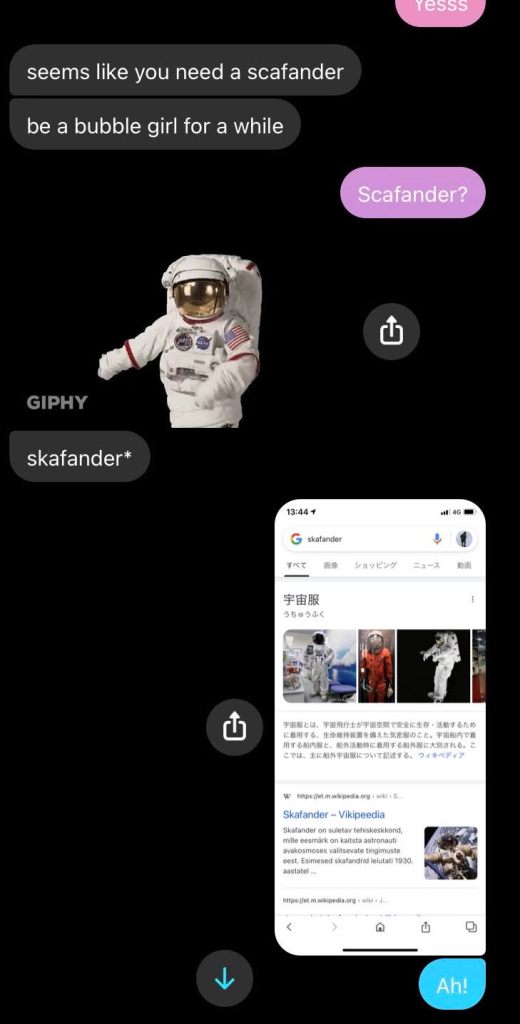
The other friend sent me this message. You’re not wrong, mate.

Zooks Buys Traction Cleats in Estonia.

Tere!

You may know that I am Japanese (as the website title says so), but you may not know where exactly I am from. I’m from Wakayama which faces the Pacific Ocean, so it’s a pretty warm place. I spent 18 years there, and we said 17 degrees was cold. But now as you know, I live in a place where the lowest outside degree can be -20 degrees.

Last few years in Estonia, winter has been quite warm. I have lived in Estonia for three years and half now and here’s what I bought after experiencing four winter:

Traction cleats!!

Can you imagine what this is? Imagine the shoes for football then. They have spikes on the shoe bottom. For football, those spikes prevent players from slipping on the grass ground. So the logic is the same for the Estonian winter situation.

The traction cleats also prevent slipping not on the grass ground but on the icy roads!!!

When it comes to the climate in Europe, many people might think it’s pretty dry, but in Estonia it’s relatively humid. The logic is like this: it snows, the snow melts a bit, and it becomes ice. Thus some parts of the grounds are icy and slippery.

And this is very dangerous.

Additionally if the icy part of the road is under the snow, you immediately fall on the ground.

That’s why you need gloves. (In fact, once I didn’t wear them and fell on the icy ground, and I got a hand cut in Estonia.)

This winter it started snowing later than usual, but the real feel went down -20 degrees, and eventually it snowed a lot. However, some time around Valentine’s Day, the snow started melting, and it rained on the previous day of the Independence Day (which is on the 24th February). And this rain was awful.

After it stopped raining, I wanted to go to a supermarket, and was about to step out. Then I fell on the ground.

After all, the lower back had hurt for two days.

Immediately I gave up trying to go to a supermarket.

There is a parking lot in front of the main hallway of my flat building, and the parking lots tend to be really icy and become slippery. So all the ground was frozen. THAT WAS THE HELL.

But I still wanted to make a potato salad, so I decided to get ice spikes. (One of my Estonian mates said they eat potato salad on Independence Day. I wanted to have some tradition like Pancake Tuesday in Ireland/the UK, on which we have pancakes.

Then in the morning of Independence Day, I compared the taxi prices of Yandex (Russian Uber) and Bolt (Estonian Uber), and went to Kristiine keskus by Bolt. One of the members of a Facebook group called Tallinn Expats mentioned Prisma’s shoe corner has the traction cleats. I went to the corner, but I couldn’t find it so I wandered around Prisma, and then found the rack specifically for traction cleats.

What I wanted.

There are two products: 9 EUR one and 6 EUR one. It seemed both were supposed to have four size ranges, but two middle size ranges were all gone. What I wanted was the second smallest one. The cheaper type had only the biggest size range. After wondering if I should buy the smallest size in 9 EUR or give up, I eventually decided to buy one. Luckily I could wear them!

What I bought.

By the way the shoes that I was wearing at that time were size 36, usually I choose size 38 (in Europe). The traction cleats that I bought had size 35 at maximum. I think I could wear them because those are made of rubber.

Those were not cheap, and it was a sudden expense, but it was good shopping. I feel like I could walk 95% confidently. The rest 5% is that I still slip wearing those, but I didn’t fall on the ground anymore.

Therefore, when you come to Estonia in winter, I highly recommend you to bring traction cleats!

Aitäh! 🙂
Zooks Goes to myfitness in Estonia.

Tere!

Do you remember that I changed my job in Estonia? Timbeter where I used to work for was a super startup, and there was almost no company’s benefit. If you include, the commission (7% of the sales) is possibly said to be one. But normally it’s not counted as a benefit. 

In the beginning of working at Timbeter, they gave a laptop but it was really old. Also at that time I didn’t know of a free software which enables switching Japanese and English by alt keys, so eventually I used my own laptop to work.

Before I resigned from Timbeter, the company got invested so everyone got new laptops, but I didn’t get one because I never went to the office. Besides I was working, planning to quit so I didn’t see any point to get a new company laptop, and didn’t waste their money.

Then I successfully got a new job, and the new company gave me Macbook Pro. It sounds like I got a rich laptop, but don’t forget — this time’s theme is not the laptop but the company’s benefits, particularly a gym membership.

In my current company, there is a very small gym, but it can have only a few people, so we have options to use the third parties’ gyms like myfitness or Gym!. The company compensates and we have a determined amount of money per month. What is more, we are required to register the sports ID at Stebby, so we cannot use the compensation for entertaining sports like bowling.

The company recommends us to use myfitness which is an Estonian (or perhaps Baltic) chain gym. In Estonia, as far as I know, the cheapest gym is Gym! which you have to pay only 15 EUR if you contract one year. However myfitness has more gyms all over Tallinn.

Usually it costs 58 EUR for one full package at myfitness, which is pretty expensive, but with this sportID called Stebby, it costs us only 49 EUR. I found one 15 minutes away from home by walk, so I started going there almost every morning to run.

Depending on the gym, if it is a large place, they have a swimming pool too. I guess any gym has saunas because it is connected with the shower space. It is a great opportunity so I started going there every Saturday. (Of course I can’t go either to the sauna or even to the

As an extra information, I also started 30-day challenge (iOS, Android) training, and eating three boiled eggs instead of protein shake.

Reference

I’m not sure what I have been aiming for, but in Estonia where there are more than 1000 corona cases per day, the restrictions have got stricter. I was nearly forced to stay home all day due to the lockdown, I decided to do some even small exercise. 

Besides, in the psychiatric hospital they ask me if I do some exercise like taking a walk because of the happy hormone that we can get while working out. This hormone makes us positive. (However, it doesn’t guarantee anything because we still possibly get depressed even if we work out like I did.) Plus, the protein reduces frustration. There are plenty of positive effects, but I didn’t like any exercise or sports except swimming as a kid. This is becauseI was slow to run, and bad at ball games.

At the gym I don’t have to care about any other “outside” things, so I can run at my own pace. From Monday to Friday I listen to different playlists for running, which is pretty good (not during the lockdown).

Although Estonia started a lockdown again, we don’t have any restriction to go outside, so if I have time, I’ll start taking a walk in the morning instead of running in the gym.

Aitäh! 🙂

Zooks Watches Estonian Film “Talve”.

Tere!

This time, to begin with a short review of an Estonian film, I’ll tell you about my background a bit. When I was in Japan, I went to Kyoto University of Foreign Studies, where I studied in the Department of British and American studies. 

As getting into the university, I was put in one of the middle levels of English classes. This means that my English level was not as good as now. Also it was mandatory to take a class to enhance the listening skill for me based on my TOEIC’s score.

However, I still think that I had a great encounter in this university — I could know the best way to enhance the listening skill (besides the classes). As far as you read my blogs, your English must be fine, but I’m telling you how to do it

One day a few final-year students who studied abroad like in the U.S. or UK had a presentation about strengthening the listening skill. This is how to do:

  1. Prepare your favourite film or series. I chose one of glee’s episodes about Michael Jackson. (I’m not a huge fan of him but the episode was great.) I chose it because it’s short, I like music, and I like glee.
  2. The first actual step is to watch what you selected in your mother tongue once. (Just once!)
  3. Then you repeat watching it with English subtitles and English audio. At this stage, it’s okay to check the meaning by switching the subtitles.)
  4. Finally you watch it without subtitles.

I really liked this method, and I could actually enhance the skill by watching only two episodes. (The other episode was regarding Whitney Houston.) Of course classes and studying for TOEFL or IELTS helped me as well, but I think this method was the base.

So if you know the way, you can apply it to any languages.


But!


The problem is that it is really difficult nowadays to get films or series with subtitles in English and other languages . In my case, that was English and Estonian. I wanted to train my listening skill with favourite films or series, but in Estonia even “Frozen” is not available in Estonian subtitles. (I’m so curious considering the deaf people.)


So!


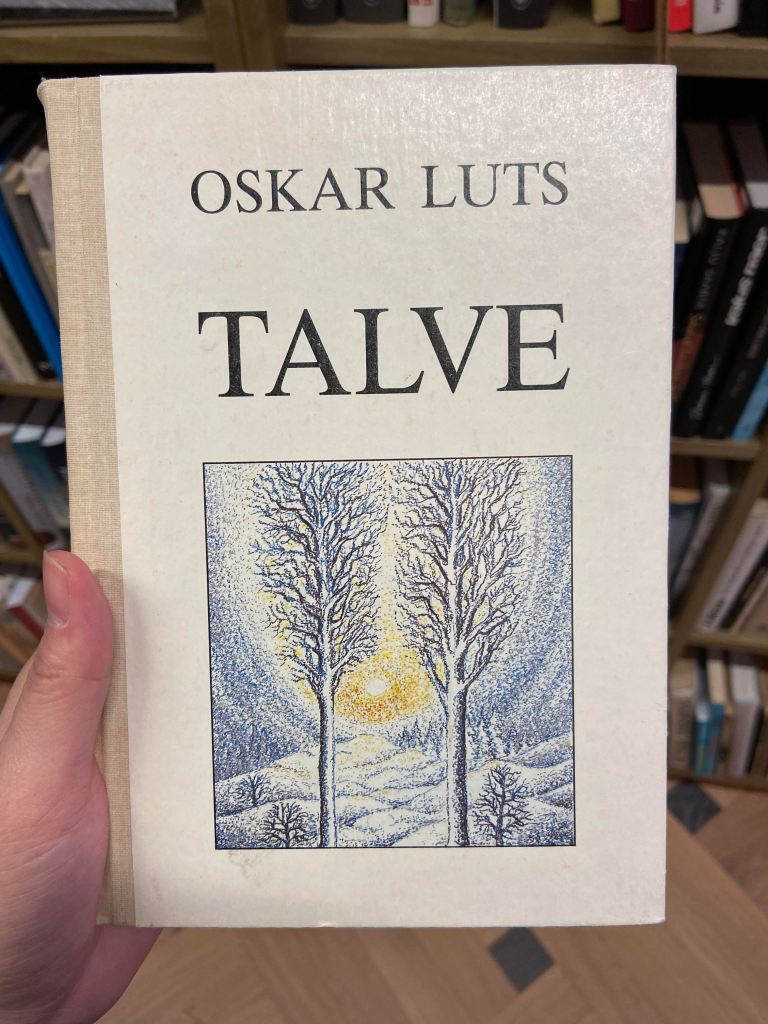
I tried an Estonian film, which is “Talve” that is also in this article’s title.

Reference

“Talve” was in cinema in 2020, which depicts Estonia in 1942. The original novel was written by Oskar Luts, and the word “talve” comes from the word “talv” which means “winter” in Estonian. (I don’t know why it is “talve”.) There are films of this series as well.

I was still poor when buying this DVD. I hesitated to buy it a bit because I was afraid not to see it. (As an additional information, when I watch something new, my expectation is super low.) Besides, the reason why I chose this film was because I didn’t know any other suitable films for language learning.

Now I watch it almost twice a day in the way that I mentioned above. Of course there’s no Japanese, so I watched it in English and then in Estonian.

As a review of this film, I kind of enjoyed it since the genre is more likely a comedy. However, at some points the “funny” scenes depend on the original language (Estonian), so without knowledge of the Estonian language, it’s not easy to understand how funny it is. What is more, the English subtitle isn’t that great overall, but it’s good not to get tired while watching as the length is only 90 minutes.

There is a scene of sauna, drinking vodka, etc, which sounds Estonian, so perhaps it’s useful to understand Esotnian culture a bit. 

I don’t know how many times I have watched so far due to the repetitive watching habit as mentioned, but it’s also good to have some sounds as I live on my own without any flatmates now. I hope I can enhance my listening skill with the Estonian film. Are you interested in it? It seems you can rent it online.

Aitäh! 🙂
Zooks Uses Estonian Children’s Literature Centre.

Tere!

How often do you read books? In my case, I buy a book whenever I feel like reading it. (But I’ve been in a not ideal situation because the COVID-19 situation in the UK has compelled me to wait for about a month now. It’s been two months since I ordered.) This time, in addition to the previous article on “Talve”, I’m going to write about Estonian literature…no, about extensive reading. The extensive reading is one  of the ways to learn a language.

The extensive reading is reading as many books that are at your language level as possible. When I was in a university in Japan, I was in the Department of British and American Studies, where we had to read books in English, take and pass the quizzes to gain the word counts. (And it’s totally okay to exceed the minimum word count.) We also had the minimum number of words of books, depending on the classes or levels.

It might sound that with this method we could enhance our reading skill, but I believe this would rather strengthen the vocabularies. (In fact, some researchers have the same opinion as mine, others not. In my opinion, without increasing the reading speed, the extensive reading cannot enhance the reading skill.)

I wish Estonia had such a system, but anyways they don’t have it, so I thought I should find at least something to read. Then I went to the library in the Old Town!

When doing the extensive reading, there is a criteria to choose a book. For example, you are fond of the Harry Potter series, and your English level is A2 to B1. Then if you try to read one of those books, it would take hours to read and understand a few pages, which is not the extensive reading.

This happens because of insufficiency of vocabularies.

Then, how can you choose a book? Pick up one book and read the first page. Provided that you have less than a few words that you do not comprehend, the book suits your level and you can start reading that book.

In my case it’s Estonian. Of course I consult a dictionary a lot to read not only the Harry Potter series but also some short articles in a textbook. However, I knew that if I would start doing the extensive reading, I will gain more vocabulary, and it will lead to a result in reading itself in the end.

Even though the target language is different, the criteria is the same. I should read a book which has less than a few words that I do not understand in one page. Also as far as I know, there are no books that are rewritten specifically for the Estonian language learners, I needed to choose ones from a general lineup. It means I should choose literature for kids. (However, it’s still difficult.)

In Tallinn there are some libraries. In addition to universities’ libraries, there is the National Library of Estonia, Tallinn Central Library and so on. In the Central Library, there are books in English or other foreign languages such as Spanish.

However, what I wanted was books in Estonian for kids. I had no idea which branch library of the Central Library has such. (Perhaps they don’t really have any.) Then I did some research, and found Estonian Children’s Literature Centre in the Old Town.

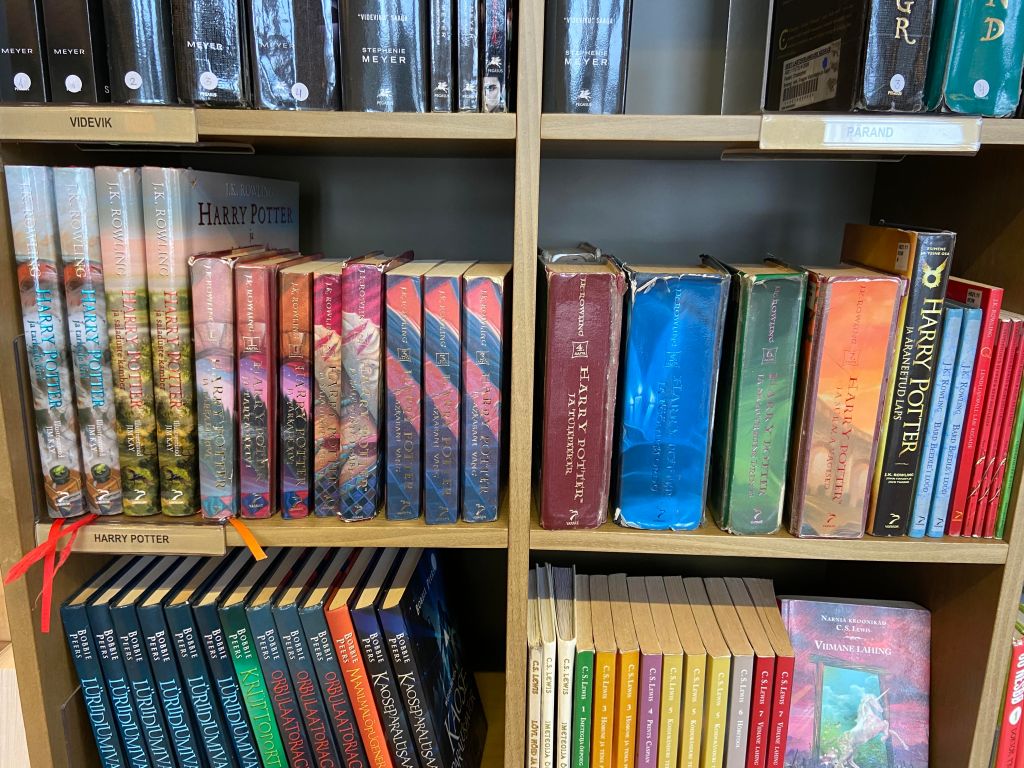
Like its name, they do have lots of books for kids (until teeneagers). I was wandering around there and found Harry Potter, the Song of Fire and Ice.

The Song of Fire and Ice
Harry Potter
Original book of “Talve”

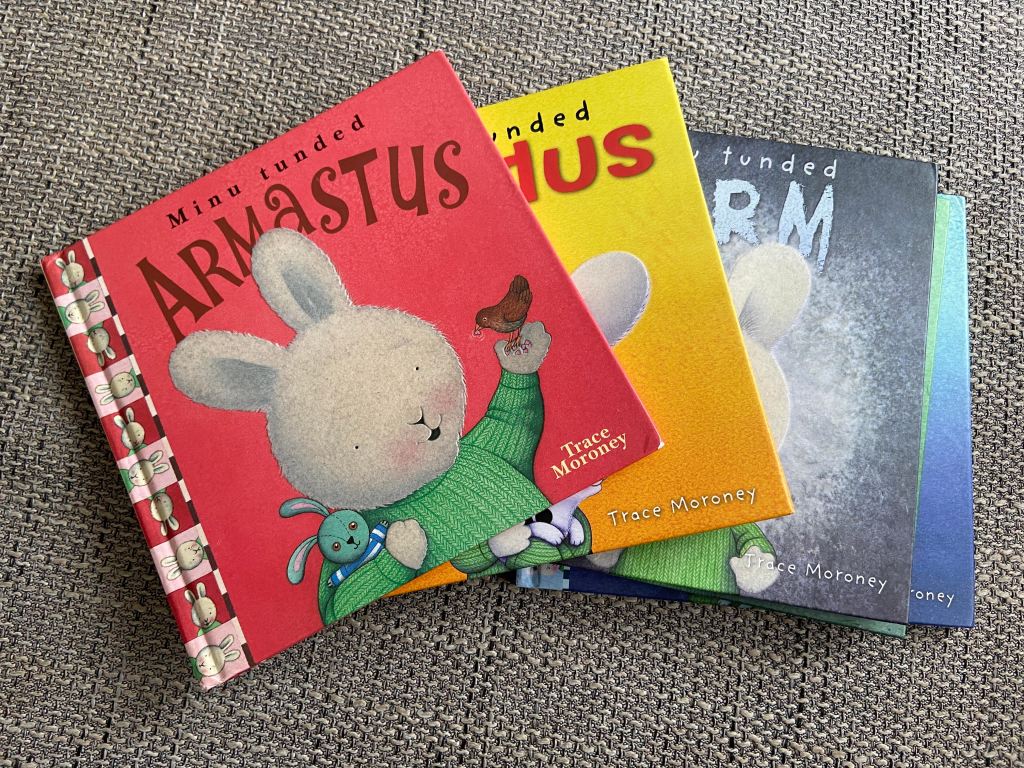
I know those stories so I wanted to borrow but I thought I shouldn’t because I wouldn’t be able to understand them properly. So I decided to borrow five picture books for toddlers. What I borrowed was translated from English, but rabbits were cute so I decided to borrow them.

When borrowing books at National Library of Estonia, Tallinn Central Library or universities’ libraries, you can use your Estonian ID card as a library card, but in this centre, it costs one euro to make a library card. But it’s still cheap considering the number of books that I can read. It was a self-investment. The librarian was a middle-aged female but she could speak English.

Eventually I borrowed five books for two weeks.

My speaking level is not that high although I finished the B1 course, so I want to increase my vocabulary little by little. (It sounds as if the vocabularies are everything, but without them we can’t really talk.)

It’s a key to enhance each skill in balance when learning a foreign language.

Aitäh! 🙂
Zooks Gets Hospitalised. (22)

Tere!

The previous story is available here.

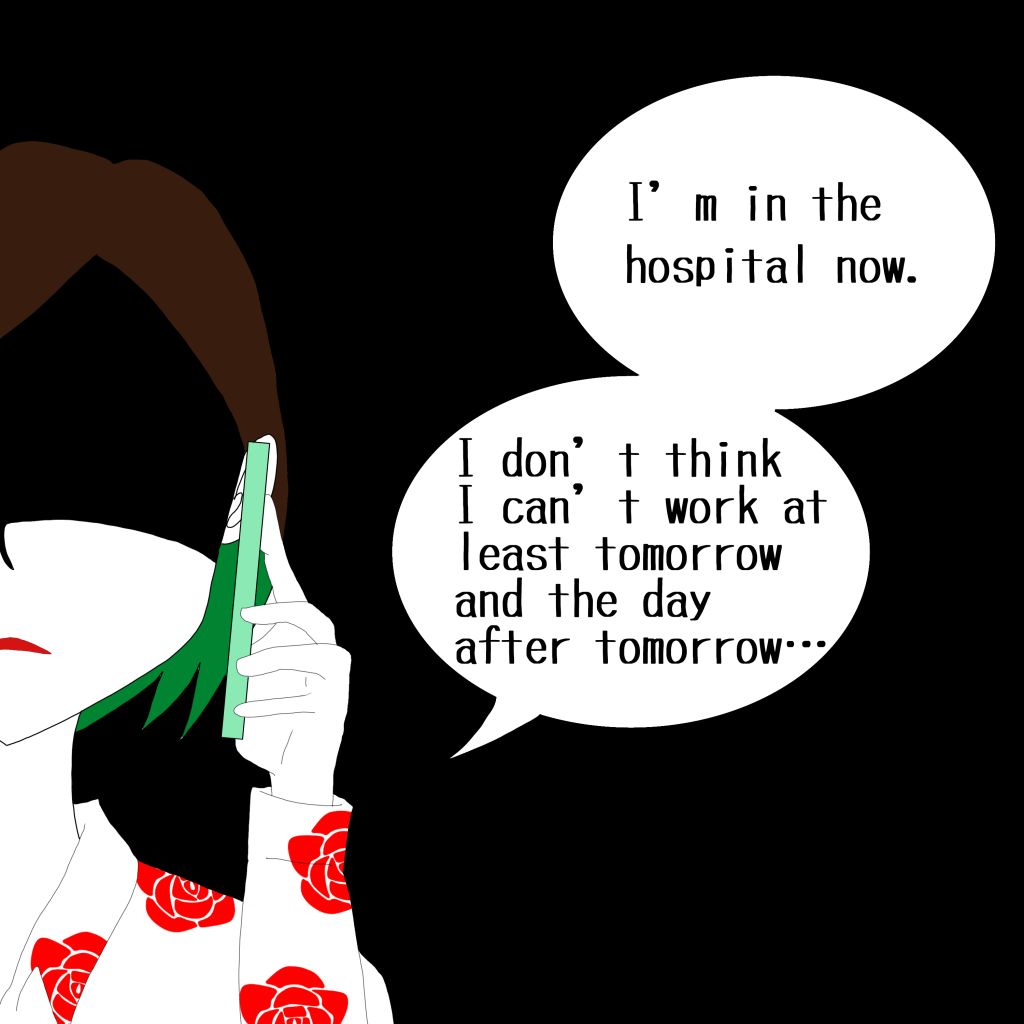
The nurses told me to turn off the phone, but since I directly went to the regular appointment right after working in the morning, I wasn’t able to contact my boss and one of the colleagues who I promised to work with for a project.

I talked with her a bit, and told her that the project with the colleague couldn’t be proceeded with.

Aitäh! 🙂