Tere!
The previous story is available here.


Aitäh! 🙂


The previous story is available here.
I explained what happened in more detail.
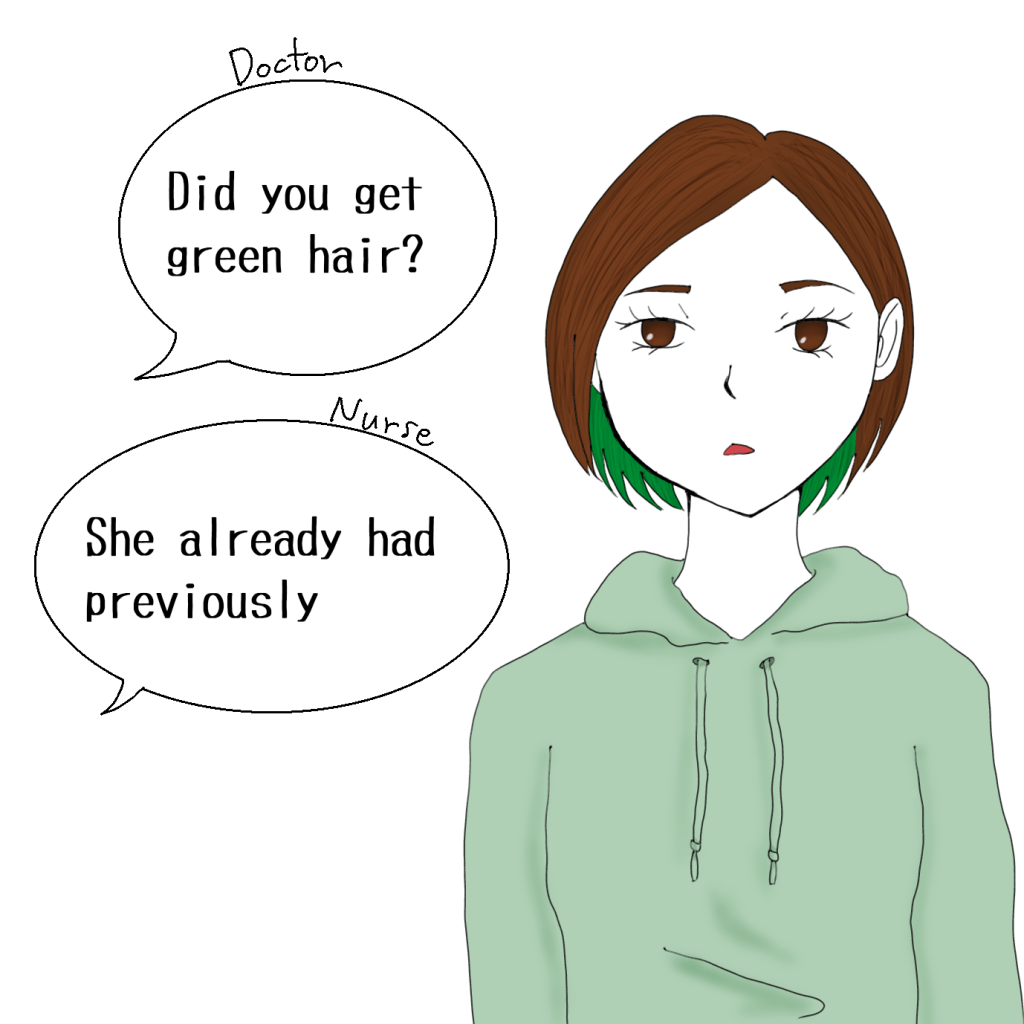
The talk seemed to be taking a longer time than before. When I was about to leave the doctor’s room, he said

Aitäh! 🙂

The previous story is available here.
My doctor asked me for the details.
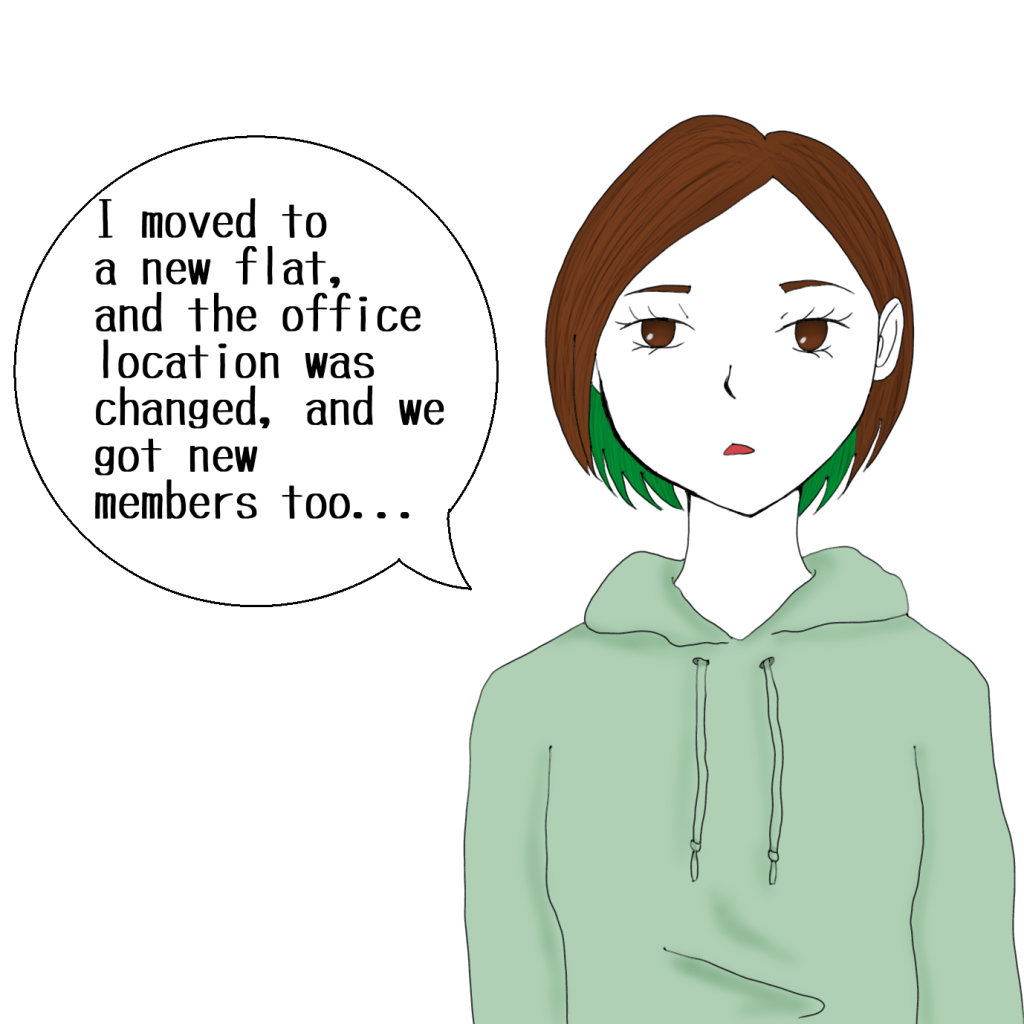
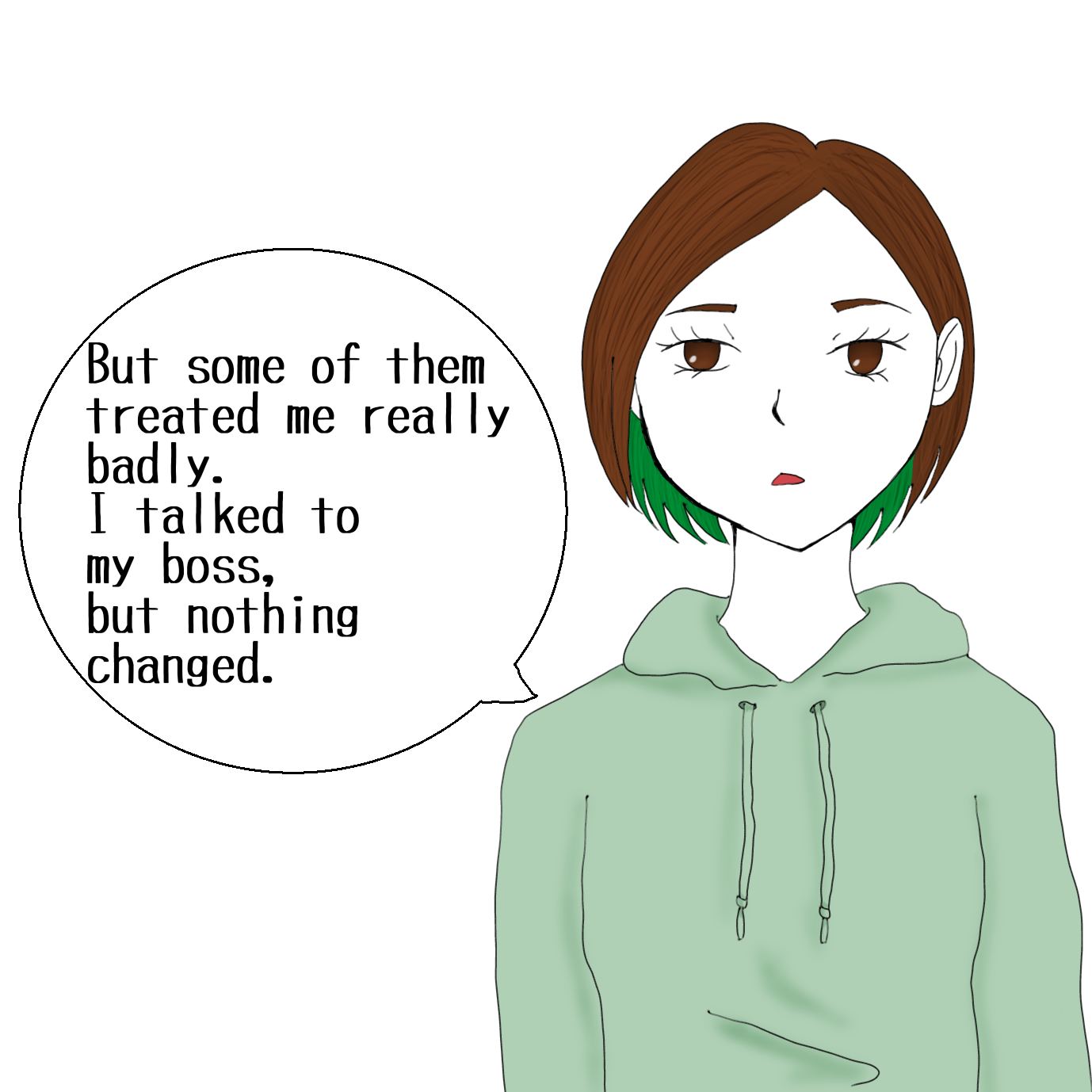
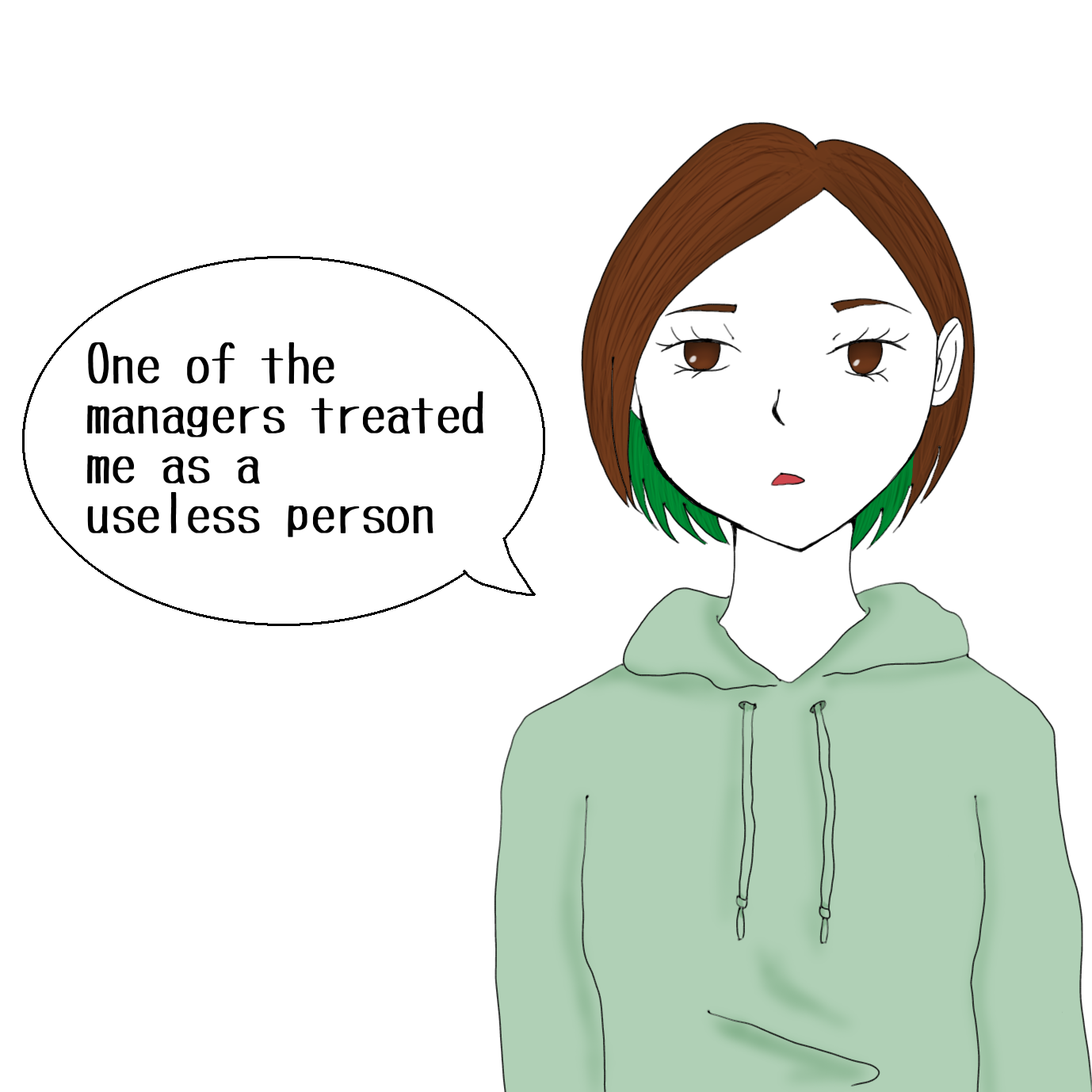
I explained, crying

Aitäh! 🙂


On 22 of July 2021, I visited a small town in the south of Estonia called Viljandi!
From Tallinn you can go there by train. (Maybe there are busses, but I didn’t consider it at all this time.)
Recently I got a card called Work Ability Card issued. I will write the details about it in the future though. (I didn’t spontaneously issue one, and I didn’t know that such a card existed until I got one.) The card indicates my work ability; either I can work partially or not at all.
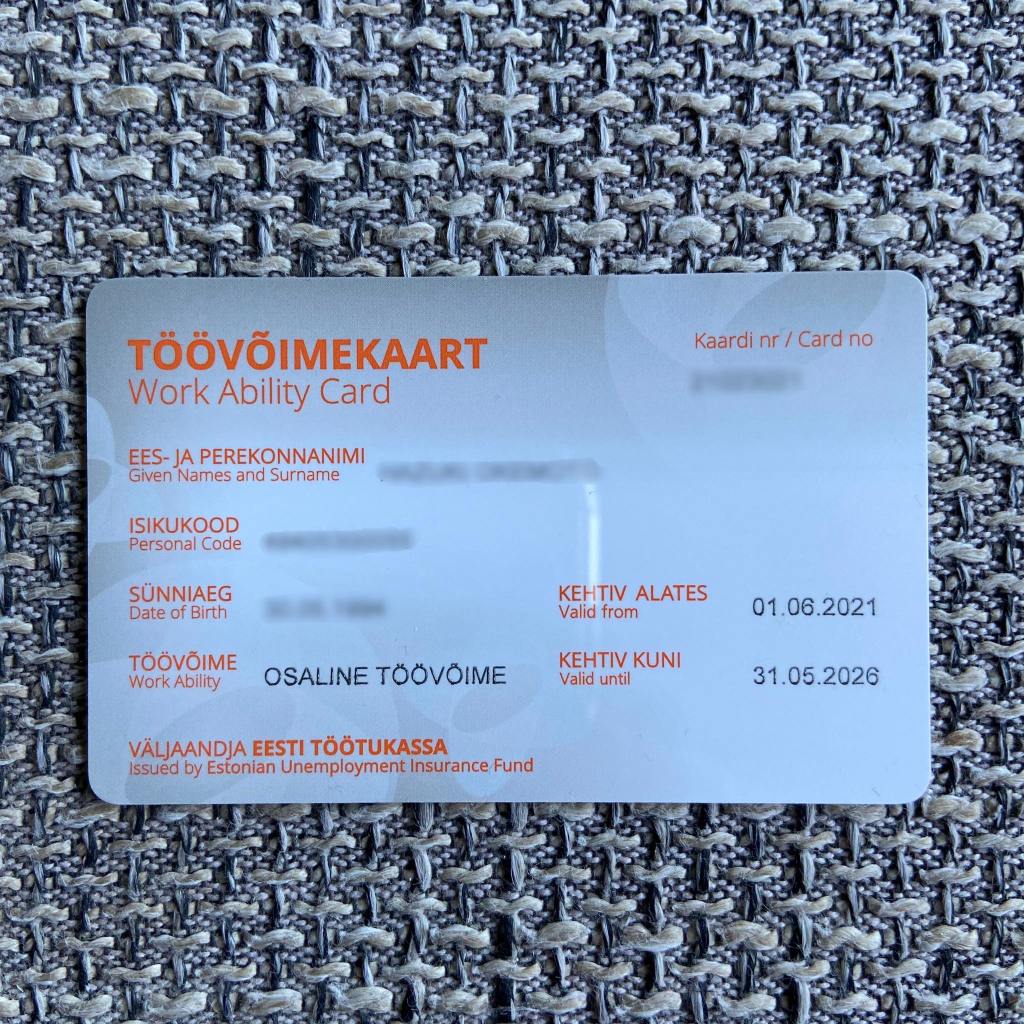
Then I found that I can use that card when buying a train ticket on Elron which is an Estonian railroad. I usually bought regular tickets on Elron so far, but this time I bought discounted tickets.
This discount is applied to pensioners, those who are disabled, and someone who can work partially or not at all. If you buy such a ticket, you need to show the certificate on the train. In my case I would need to show my Work Ability Card. (You can read more about it here.)
It takes a couple of hours from Tallinn to Viljandi. However, Viljandi doesn’t have many sightseeing places, due to which I bought round tickets, selecting the time when I could arrive in Tallinn in the pre-evening. A regular one-way ticket costs 7 euro, and yet my discount ticket cost about 5 euro, so 10 euro in total.
Table of Contents
Arrival in Viljandi
To the Main Destinations
Cafe Viljandi
Legend
Others
I planned to go to some sightseeing places, have lunch, take some break, and go home after spending approximately two hours on the train.
One of the surprising facts about Viljandi is that there are (relatively) more slopes. Compared to my hometown, those were just hills, but in contrast to Tallinn there were a few more steep slopes in Viljandi.
The first destination was Kondase Keskus. This is an art museum, but this time I wasn’t that interested in it, so I took a photo of the statue of the strawberry in front of the entrance.
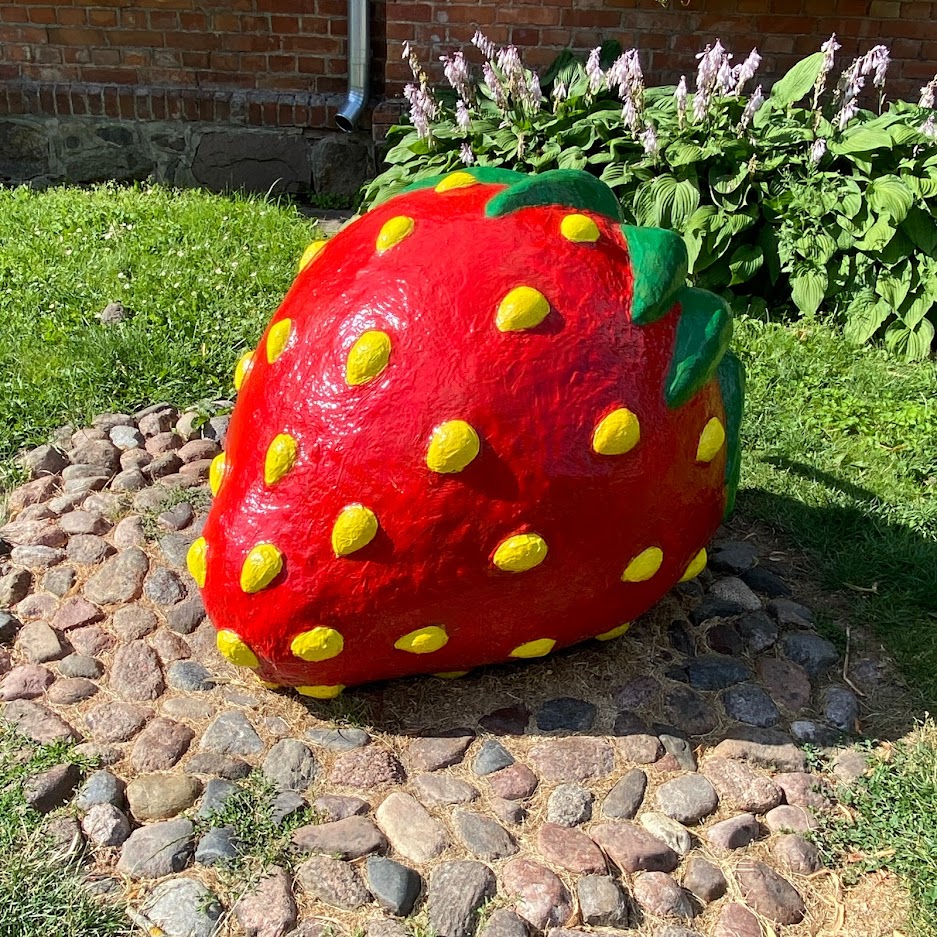
To be honest, I went there just because I wanted to see this strawberry. In fact, such strawberries are here and there in Viljandi, and as far as I know, there was one in the station and near a hotel.
I don’t know what its concept is.
In Viljandi, there is an abandoned castle as well as a bridge on a hill. I wanted to go there, but I couldn’t because there was a festival on the hill.
Just in case, I asked a festival staff at one of the entrances whether the castle and the bridge are in the festival area. She said yes, and I thought:
Why did I freaking come to Viljandi…?
I was so shocked.
This is because those were my main purposes, I like castles, and the bridge seemed beautiful.
It was still 10.30ish, so many cafes and restaurants around the hill were still closed. Thus it wasn’t straightforward to find an open cafe.
Then I managed to find one called Cafe Viljandi. That day I had freelance work, which had to be done on the train, so I had my laptop.
I changed my plan; I would drink something and do some work on my computer.
The inside was so empty (of course), so I got a huge table just for me. I looked up the menu and found “Viljandi Beer”.
I want to try it!
Then I ordered.
Sorry no.
I think she meant that they couldn’t serve alcohol owing to the time.
That day I woke up at 6.00 for the first time in a while, and I was already hungry, so I forgot but it wasn’t even 11 am at that time.
I couldn’t go to the hill, and couldn’t order a beer…
I was shocked and even more shocked.
Anyway I needed to order something, wondering about what to get, and I found Irish coffee for only 4 euro!
This is really cheap. Even in Tallinn Irish coffee costs at least 6 euro. What is more, in Ireland it should cost at least 6-7 euro.
So Irish coffee in Viljandi is really cheap!
It was a great opportunity though other types of coffee were cheaper, I ordered Irish coffee.
My review is:
There was little whiskey in it.
I think it was cheap as they didn’t use much whiskey.
Then I was about to work on my laptop, asking a staff about WiFi, and she said:
We don’t have WiFi.
No way!
For the first time ever, I heard there was no WiFi in a cafe in Estonia…
I think this is not good as a town in Estonia…
They should have WiFi in a cafe if they have WiFi in the woods.
My review on Viljandi was getting so low.
I gave up working online, so I wrote a draft of this article on Word.
Then in my mind I thought:
I would never come to Vlijandi again.
This is because this trip was the worst ever. (Poland is also a travel destination that I would never go again except for the purpose of necessity or Auschwitz.)
By the way, I have been to Tartu, Pärnu. Rakvere, and Narva in terms of destinations in Estonia. Rakvere and Tartu were the best ones.
Of course Viljandi is the worst one.
After spending some time in the cafe, I went to a restaurant called Legend as I was hungry.
They have terrace seats, but it seemed those were somewhere slightly far from the restaurant, and I wasn’t aware of it, getting a seat inside.
I wanted WiFi anyway.
I went to the counter and checked the menu, but it seemed available only in Estonian. However, I could understand at least the menu, so it wasn’t problematic for me.
I chose a burger that shouldn’t be untasty. Here’s some fact; in Estonia there are so many burger shops. If you want to eat out, burgers are available pretty anywhere.
Considering that, I thought I was lucky to be Japanese because there are a lot of types of dishes, with which we can enjoy different cultures. We can do this only in Japan. (But perhaps so is China.)
Then the burger was served; it had an ordinary look.
The taste was ordinary too. No good, but no bad. The ingredients were ordinary as well.
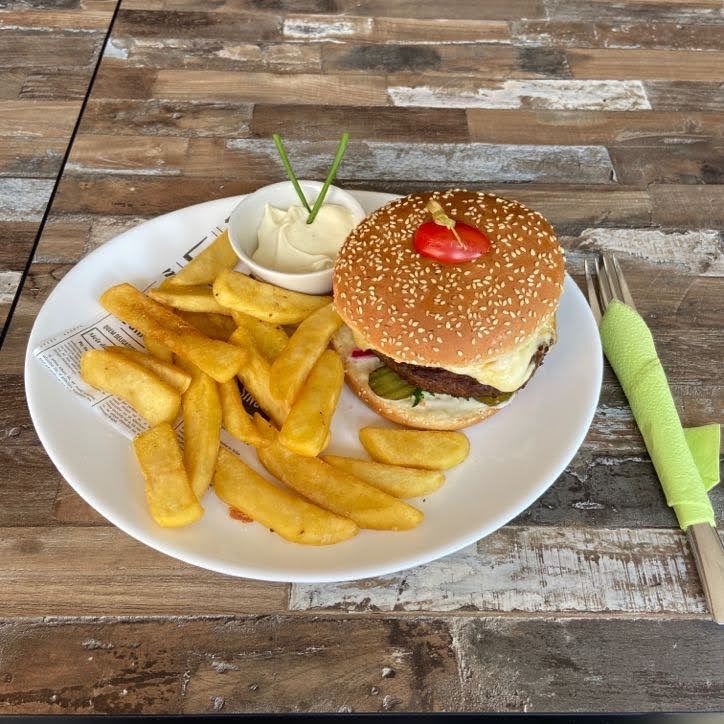
I can’t make any more comments about it.
There were chips aside, and a cup of mayonnaise for them.
I know the Estonians love mayonnaise.
It’s not rare to have mayonnaise as a default sauce for appetizers everywhere.
However I don’t like mayonnaise.
It’s said that the Western people like Japanese mayonnaise, but personally the Japanese mayonnaise is the worst. For me European mayonnaise is better. But still I can’t take it unless it’s used for egg salad sandwiches, tuna sandwiches or sauce for a burger.
Anyway, I dipped a few chips with mayonnaise, but not more than that. The chips were salty enough.
After spending one hour at the restaurant, I went to Coop which is a supermarket usually in relatively rural areas. I looked for Viljandi beer but there was nothing.
I didn’t have anything to do, so I headed to the station.
I was walking, thinking:
I don’t want to live in such a countryside.
Though I’m from the countryside.
Maybe this is because I don’t have local friends there, and just didn’t know about fun places.
Besides, when I was walking, following the Google map, I found the main road was under construction, and got a cloud of dust. What a bad day.
I stayed in Viljandi for about five hours, which was long enough.
If you are interested in Viljandi, just try. For me a day trip was satisfactory enough.
I rather want to go abroad.
あー外国へ行きたい。
Aitäh! 😊

The previous story is available here.
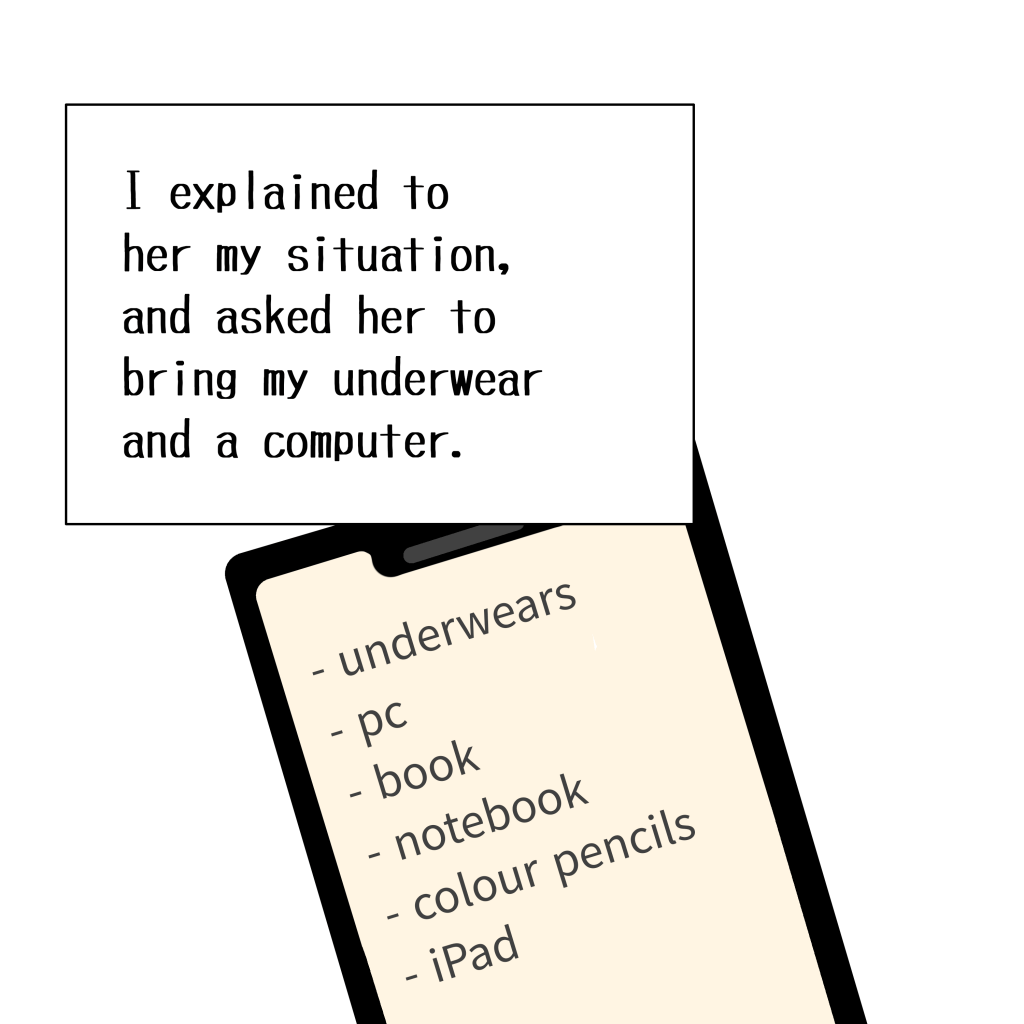
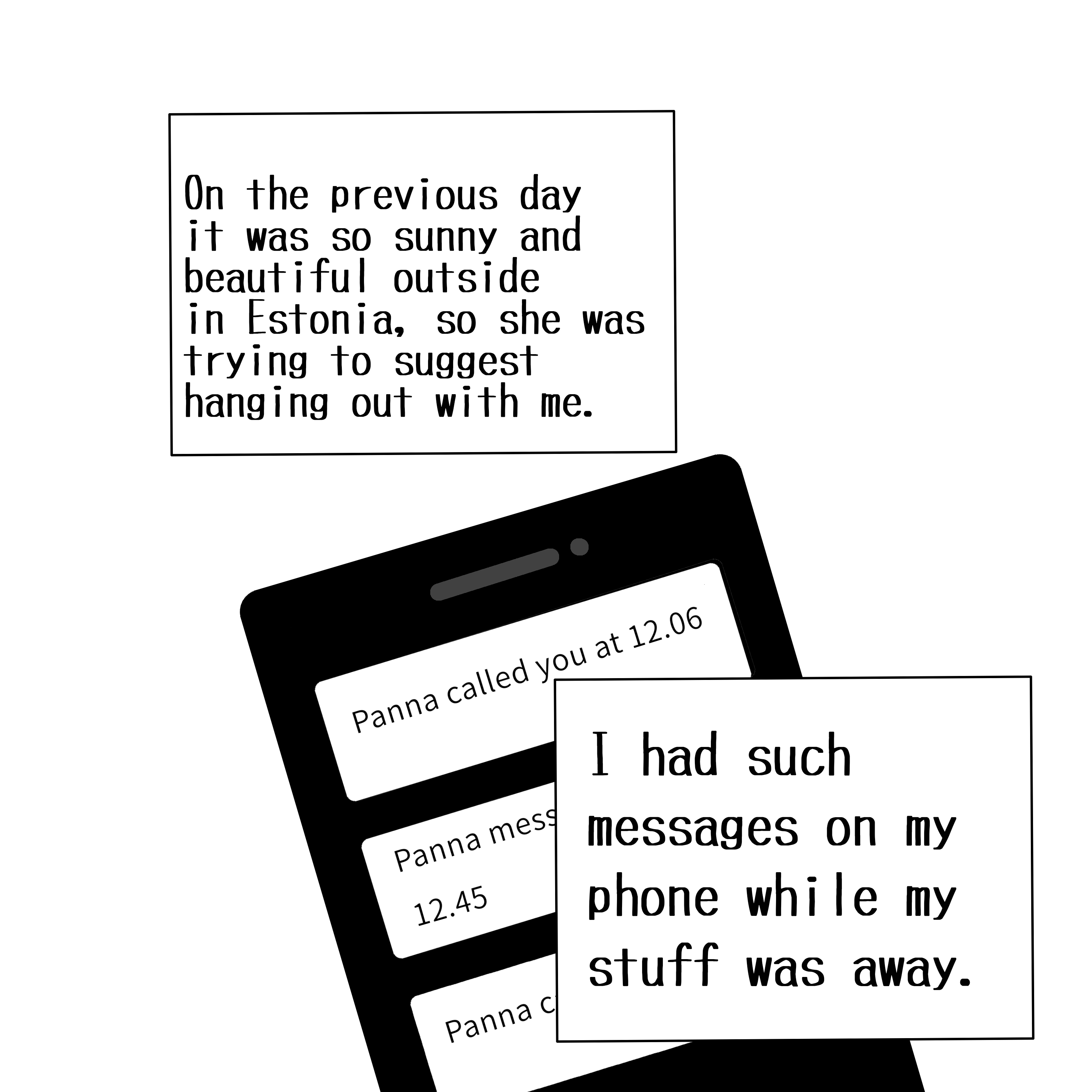
I replied to Panna for the first time in more than 24 hours.

Aitäh! 🙂

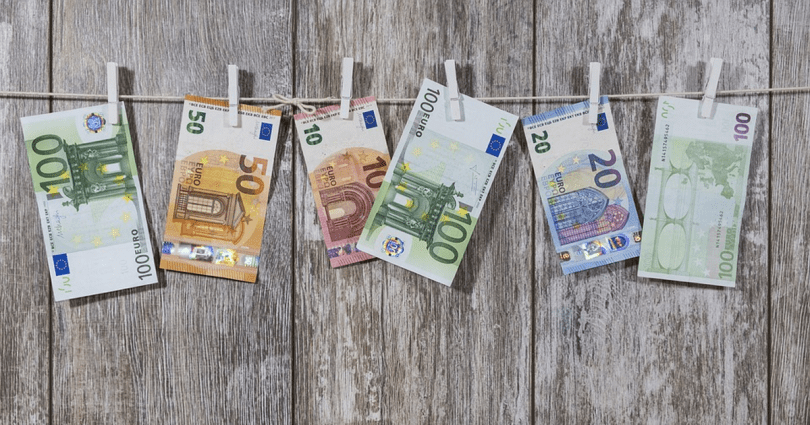
Since the 1st of July 2021, regulations about VAT on parcels to Estonia (or maybe I should say the EU) have changed. Before that, we didn’t have to declare and pay for VAT if a parcel’s value was under a certain amount. However, from the 1st of July 2021, we came to have to declare parcels from outside of the EU. (Yet, regulations for gifts from family members or friends are exceptional.)
In the latter half of July 2021, I strongly wanted to learn Swedish from the beginning in addition to Estonian. Then I looked for a Swedish learning textbook at Rahva Raamat (an Estonian book store chain), and found one book called “The Swedish Girl” (because I searched with the word “Swedish”). Reading the overview, it seemed to be a detective story which I like, so I searched for the same book on Amazon DE so that I could buy it more cheaply.
Then I found a second-hand book. The book itself cost only 4 euro, and the delivery fee was around 3 euro. I’m not sure if it was because of the COVID-19, but it said the book would arrive in a couple of weeks. (Considering the geography, the delivery is pretty slow.)
One day in August, I checked my mailbox which I hardly checked, I found two letters from Omniva (an Estonian postal company). One of them was delivered at the end of July, and the other one arrived at the beginning of August. (I thought both were the same contents though.)
Opening the letters, it was written in Estonian, but I roughly understood that
I had to declare the book that I bought on Amazon DE the other day.
However, I still couldn’t believe it because the sender’s country was the UK. (I thought it should come from Germany as I ordered it on Amazon DE.)
Therefore, this time I’m talking about the declaration of the VAT on the book from the UK (or maybe I rather should say this is how to declare parcels).
Table of Contents
★How to Declare
1) Check the letter from Omniva
2) Access MTA
3) Log in EMTA
4) Specify the Parcel
5) Enter Items
6) Error Occured
7) Payment
8) Finishing
★Arrival of the Book
★In Case of Gifts
First of all, roughly check the contents of the letter from Omniva. There are two sections in the letter.
In fact there are two ways to declare: one is to do it on your own, and the other one is to ask Omniva to do it. The latter costs, so I did it by myself. (Later I noticed that the order of the sections seemed random.)
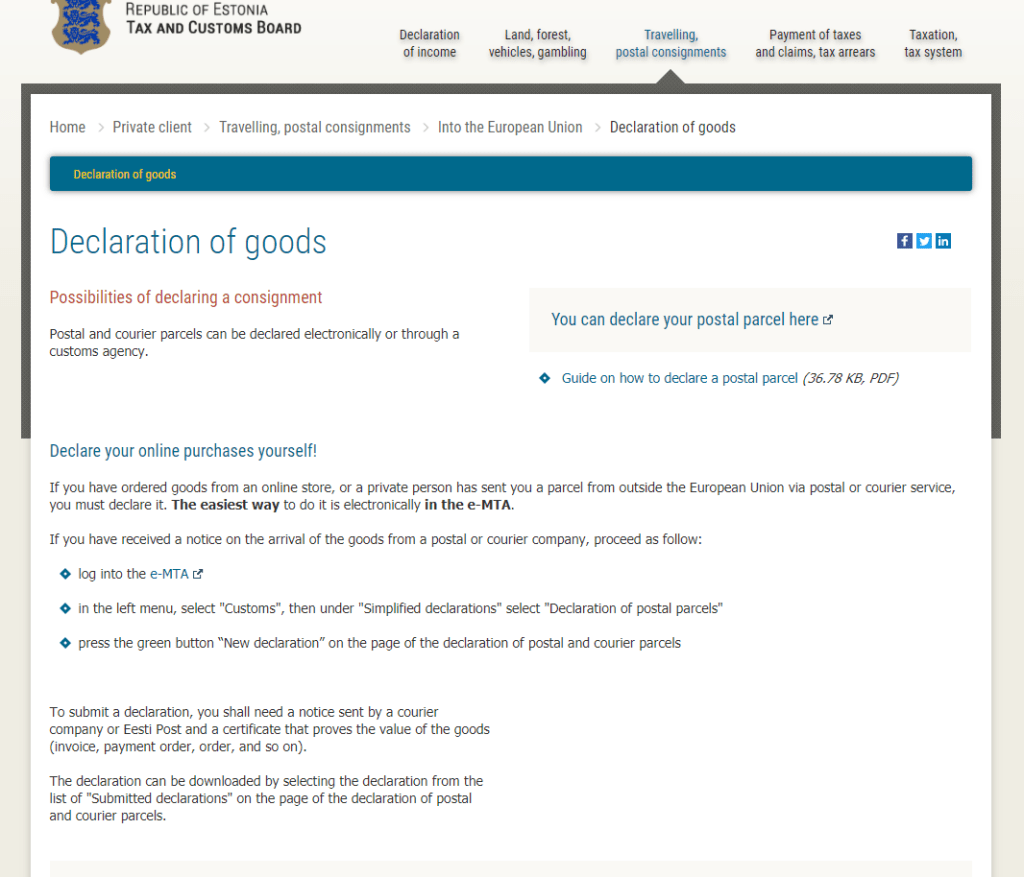
In my case section 1 had a link to access the MTA to know how to declare, so I did.
EMTA is an Estonian tax portal. In the page that I accessed above, it was written how to do it (briefly), so I followed.
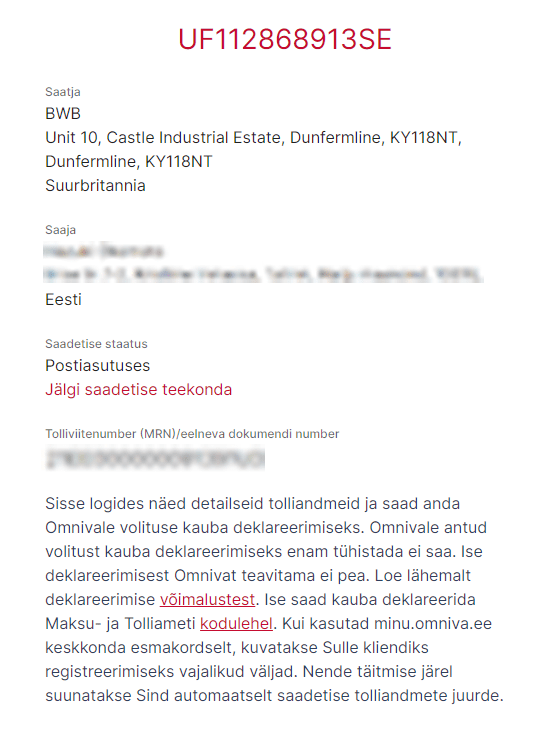
On EMTA, firstly, you need to specify the parcel that you are supposed to obtain. The tracking number is the one in the letter from Omniva, which starts ”Saadetise nr”.
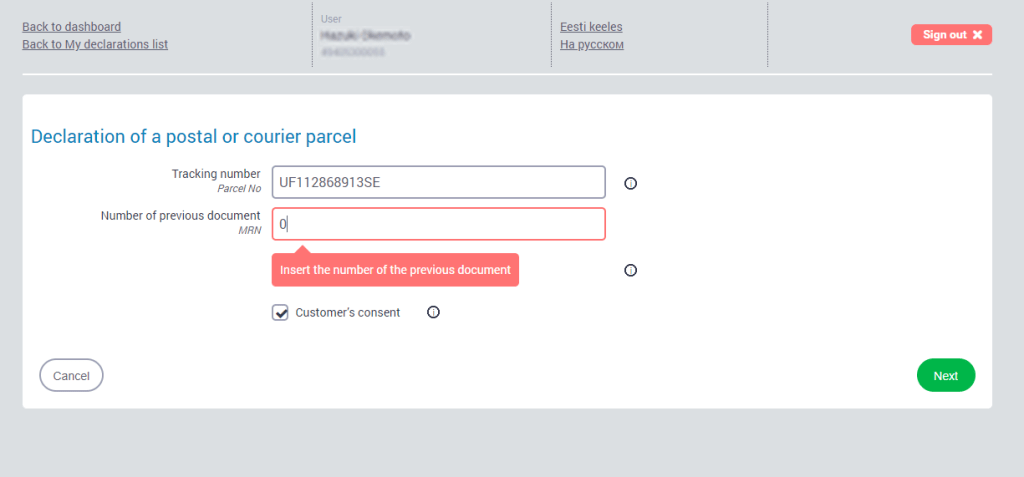
Number of previous documents (MRN) is available from the link in the other section in the letter from Omniva. (At this point, I didn’t know what MRN was, so I randomly wrote “0”.)
There are several items that you need to enter.
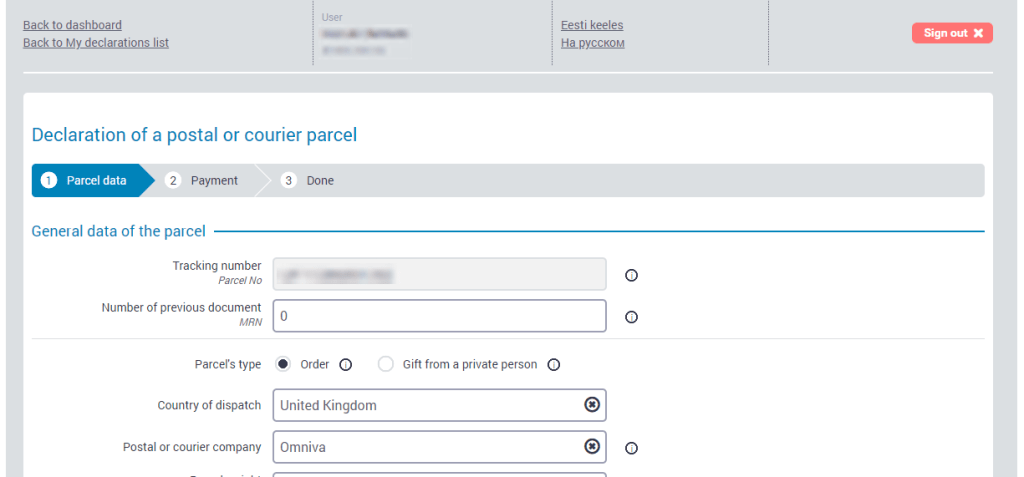
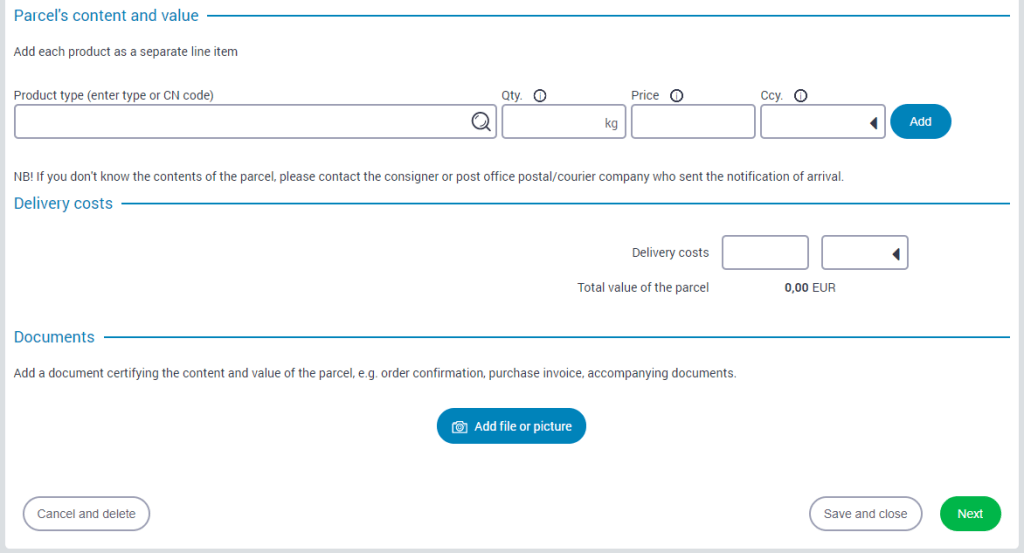
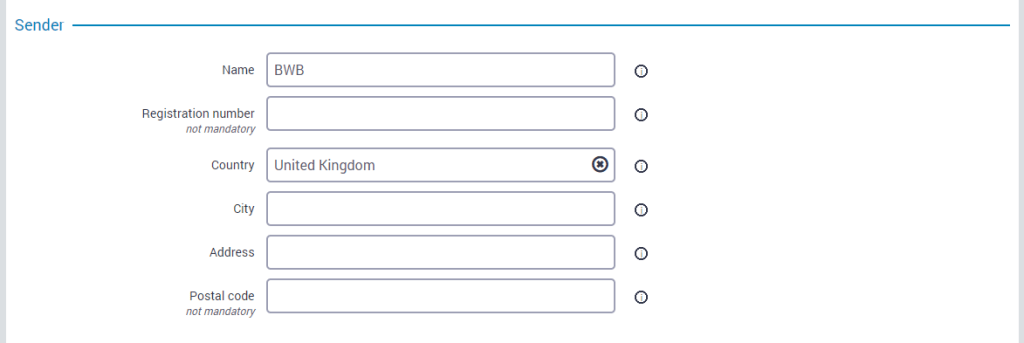
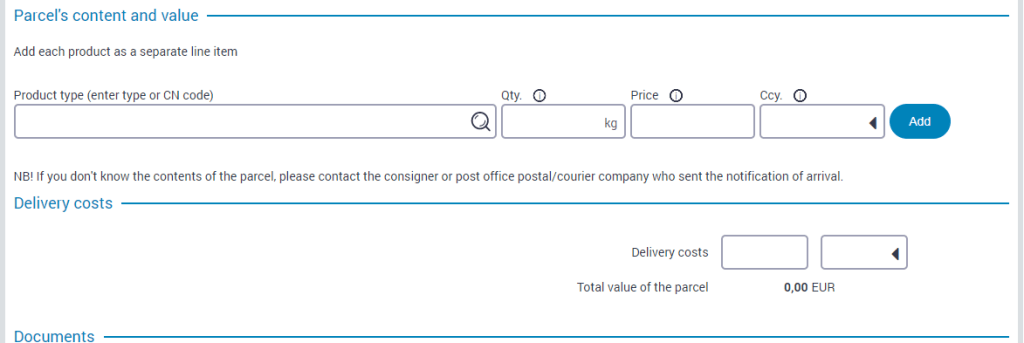

As mentioned, I thought the other link in the letter was the one to ask Omniva to declare, and I randomly wrote “0”, so I encountered an error. If you enter the information from the link in the letter, you can go next.
Once entering the items, you go to the payment page.
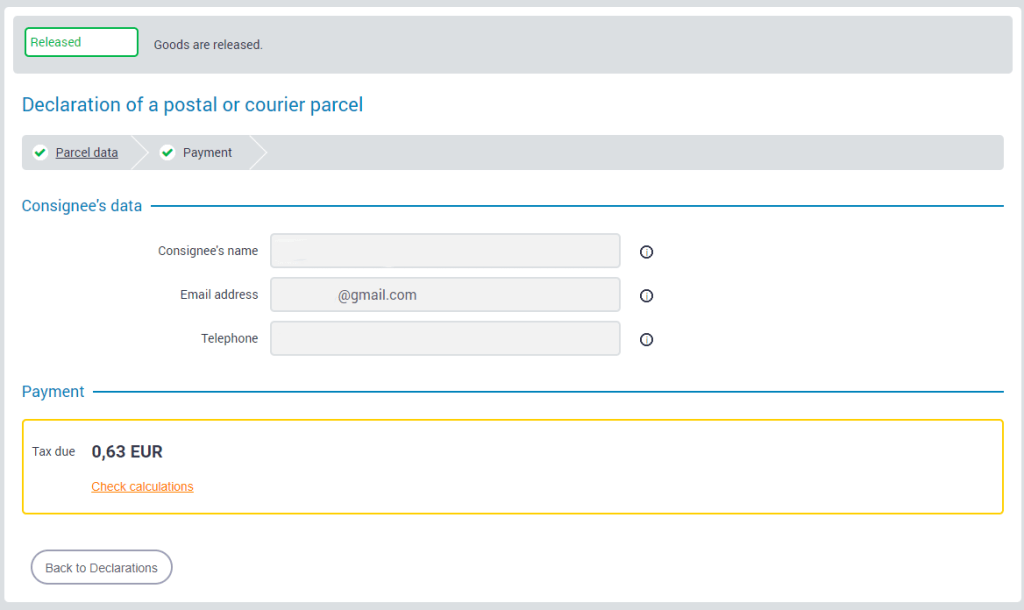
In my case I paid only 0.63 euro.
Considering the price of the book and the delivery fee, it was understandable, but I thought:
Do I really need to pay for such a small amount?
Anyway, without the payment, I wouldn’t have gotten the parcel so I paid.
If you complete the declaration, the completion message will pop up.
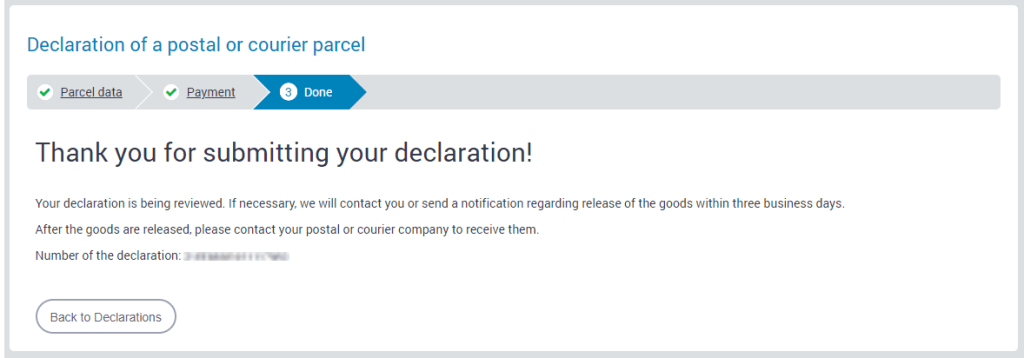
All you need to do is to just wait for the parcel to arrive.
After several days, the book arrived.
It wasn’t a paperback but a hard-cover. I opened the book, and found something that it was used in the library.
I thought someone sold the book that they borrowed from the library, but I paid so I just started reading.
Also, after that, my friend in Japan sent me a super belated birthday gift, which value was less than 22 euro.
Therefore, I thought I could get like before, but the system had changed, and even though it was a gift, I still had to declare. (Omniva didn’t mention this at all!)
In terms of gifts, you would need the sender’s information, so when your family member or friends send you something, ask them to keep the receipts as well as other paper or digital information.
You may think:
But we can enter random information, can’t we?
You will need to upload proofs of the contents and their values. I didn’t know it either, and my friend already threw her receipt away too.
For this reason, she got the information online, and asked her to give me screenshots of that, and its (machine) translation.
I was still worried, but it went well. After that, I got a parcel from her.
So be careful when you get something from outside of the EU!
Aitäh! 🙂

Technically speaking, I did not bum or was not completely unemployed as I had some other freelance job every other week. (I have a Japanese colleague who lives in the U.S. and we take turns every other week.)
However, even though I worked every other week, the income was not so much, so there was little difference between when I had work and when I didn’t.
Then what have I been doing?
Of course in the beginning, I tried so hard to get a job. I had some savings with which I could live a life for several months, but such savings would run out some day, and in Estonia the unemployment allowance is not so big (which is around 180 EUR or so), so I wanted to get a job as soon as possible.
Table of Contents
Difficult to get a job in summer in Estonia
What I had done during the unemployment
A sudden email
Skill up
Unregistration on Estonian Unemployment
I was fired in May, and sometime in June, I received an email from one of Estonian job search platforms about a job that I saved just in case, so I made a CV and cover letter shortly.
Luckily, I had the second interview, where they said they stopped hiring people, and they wanted to ask me if I would still be available in autumn.
I told this to my friend, he said this was a common way in Estonia because in summer they are on holidays and usually don’t need new people.
After that, I applied for some other jobs since I got offers from Malta or Manchester, the UK, but the interviews and portfolio were not successful. (I’m usually okay with interviews, but as for the job in Malta, they didn’t proceed due to the fact I was fired. However, it was more like failing a probation because the supply and demand didn’t match. I wasn’t that interested in that new job anyway though.)
Therefore, it is up to you whether to quit a job in summer without the next determined destination, but it might be hard to find.
Praying to be hired in autumn, I still continued job hunting, I did many other things. With the tax return in March, I bought a new iPad Air (the one that you can choose a colour) as well as Procreate (which is a drawing app), and I had drawn something for 30 days.
This is harder than it sounds because my drawing skill is quite good but I didn’t have any skill to use such technology. Therefore, it is still difficult for me to use the app. However, I killed time, and completed a project, so all is good.
Simultaneously, I practised human posing using the posing book that I downloaded a long time ago. I did two pages – four angles a day.
This was an easier task than the Procreate challenge, and although it took 10 to 15 minutes at maximum, one book had many poses, so I started in the middle of June and finished on the first of August.
Also I resumed learning coding. I have used an app called Mimo which I used while I was in the hospital.
It looks like a game, and if you don’t purchase anything, then you consume one heart out of five every mistake. It takes four hours to get the next full heart, so with a free mode, I did in the morning, consuming all the hearts, and after one night, I got five full hearts again.
Personally it took 30 minutes to use all the hearts at maximum, and 10 minutes at minimum.
However, even though I did those three activities, everything was done basically in the morning, so I had a lot of time in the afternoon.
Occasionally I made postcards or took a nap because I couldn’t sleep at night. My mental health was not good, so I was quite depressed even though it was summer.
I also learnt Estonian using a platform, but I finished it all in June. At this time I thought I wanted to take an exam someday, so I guessed maybe it was a good idea to start studying for the exam.
I am a person who basically does not like to be bored and have plans all the time, so this unemployed time was like a torture. I also think I relatively have more hobbies than usual people, but depending on the situation, I couldn’t do them all. However, I believe that unhealthy mental conditions were the biggest cause. I was scared to be unemployed for more than half a year.
Then it became July, and on the first Monday in July, I suddenly received an email. I opened it and found that it was from a company who told me to ask me again in autumn.
They mentioned that their business had grown faster than expected, so they changed their mind to hire people now. Of course I accepted. I don’t miss any opportunity.
When I received an email suddenly, I had no idea what to do, and my mood was still down, so I had lots of empty time, but from the following week I got way more active.
Perhaps this was because I could finally buy medicine that I couldn’t buy for a while. (Strictly speaking, I used this medicine of 150 mg, but it was not effective, and requested my doctor to increase it to 300 mg.)
Otherwise, I basically drew manga about my mental condition and situations or wrote some other blog articles. After that week, I got better enough to learn Estonian again. Then one thing came up to my mind strongly:
I want to learn Swedish again!
I might summarise what I have learnt from Estonian and Swedish learning, and make them serieses to upload here so I’m not going to talk about them here now. (Maybe.)
To sum up for three months, I did these different things. I had cried for two days when I lost a job, but now I can think in a way that it was a good experience because losing a job hardly happens to a Japanese person in Estonia.
Once you get a new job, you need to unregister yourself from the Estonian Unemployment Fund.
They emailed me in July to start working in August, but my life supporter said to me not to unregister yet as anything could happen.
Then in August, I thought I needed to unregister but I wanted to receive an allowance so I had not done it until I received it.
I wanted to unregister on Monday because I was told to talk with an Employment Fund’s worker.
Then I received the allowance on Monday, and I completely forgot to unregister (as I got something to do).
On Tuesday while working, I got a phone call from them, and told them that I already got a job which had already started, and just forgot to unregister, and then the Fund worker said he couldn’t confirm that I had already started. After the call, I asked my boss, and she asked the human resources, and they registered me as a worker. (This happened because the person-in-charge was on holiday, so they couldn’t just proceed.)
After unregistering, you will receive an email from the tax board that you have been registered as a worker, by which, my employment status has also been updated, so the Fund’s worker could confirm as well. I told him that, and he unregistered me.
Therefore, I still don’t know how to unregister on my own.
However, now everything is alright.
Aitäh! 🙂

Sorry to be sudden, but I’m going to talk about the Work Ability Card this time. (Though I don’t have much to say.) I’m going to write what kind of card it is, how long it is valid, and if there are any benefits. You won’t experience such a thing as long as you are just normal.
In April 2021, my mental condition was not really good (which I will explain in the future). Around March or April in 2021, due to COVID-19, we couldn’t communicate with people, and had to work remotely.
I believe this was a tough time for everyone, but in my case it was too much. I have shut out most of my friends that I made in the postgraduate school, and didn’t have many friends though I usually have. (However, I often hang out with just a few of them, even in Japan.) So I thought I need to make friends somehow.
Then one day when I had a regular visit at the hospital, my nurse gave me a brochure of Tallinna Vaimse Tervise Keskus. There are some group activities, and she said that maybe some of them could be good for me.
After that, I contacted the Health Centre, and the staff said she wanted to meet me first.
When we met, she told me and determined to:
I omit details about the above here, but someday I will write.
Anyway, when I met a supporter, doing some procedures, we registered to get benefits of incapacity of work.
To proceed with this, it is required to have a talk with a doctor, but in my case I already saw her during the last six months, so we corrected some information, and applied for it.
This is not something that everyone can do, and when proceeding, you need to answer a huge amount of questions. This was the first step. I think it took a few hours to answer all the questions. The questions were all in Estonia, so I was glad that I had an Estonian supporter. I’m not sure if there is an English version, but perhaps there is.
After applying for it, we met the person-in-charge of my application. This process is managed by Töötukassa (the Estonian Unemployment Fund), and they have some offices in Tallinn.My supporter and I chose an office where an English speaker works. (I think it was in Endla street.)
Until I got an appointment, my supporter took care of the communication.
Then at the office of the Fund, she asked me very similar questions a lot. I think it took about one hour. This was the second step.
At the third step, the answers of the questions were received, and we checked it. Then we waited again.
This is the fourth step. When getting a result email, the email has two files: PDF and the file to do a digital signature. I checked the PDF file.
It was all in Estonia, so I used Google translate, but anyway the results were:
The reason why “I am partially capable of working” is because although I have autism, disorders and depression, those don’t significantly affect my living life.
In this PDF file, it also mentioned how much I can get as its benefit. If your result is “completely incapable of working”, the calculation is 15 euro per day, and if it’s “partially incapable of working”, it’s 8 euro per day. More details available at their web page.
Several days after I got a result and completely forgot about it, I suddenly got a letter from the Fund which included the Work Ability Card. The information on the card is:
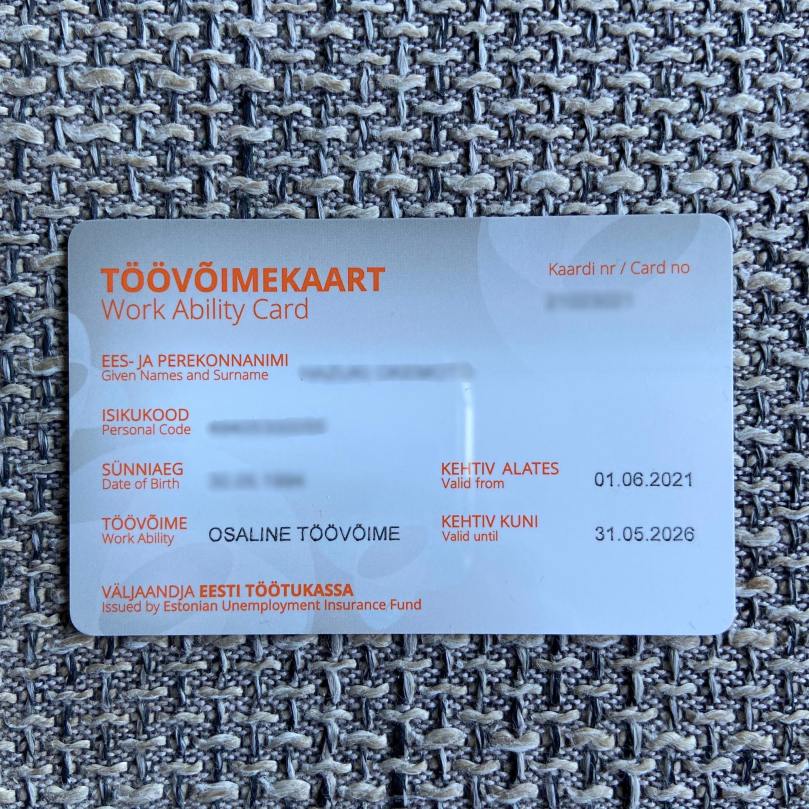
In fact, by having this card, there is a hint of goodness. When I travelled in Viljandi, I could buy discount tickets with the card.
Lucky!
However I had concerns about the valid period and the condition of work.
It’s not easy for foreigners to find part-time jobs in Estonia. It is very difficult. Timbeter where I used to work was really flexible, but it was special and exceptional because it was a very start-up company.
So the reality was “the job is full time although the condition is partially capable”..
I thought that might be unfair with that situation, so I asked my supporter, but she said it was okay.
The reason is “we don’t know what will happen/worsen” (the health condition is different).
So it’s like compensating for health conditions with money.
For example, let’s compare two types of people:
Apparently the latter one is “weaker” and handicapped.
And the benefits compensate for it, so it’s fair.
Thus my monthly income is a salary at full time + the benefits.
I did not feel good about getting special money compared to other colleagues in the same position, but considering the differences of the health conditions, it’s not unfair.
In fact, I have paid for the medicines and the psychological therapies.
I have this Work Ability Card in my wallet with the Estonian ID card as they ask me to show the Estonian ID card when using the Work Ability Card.
It’s literally a card, so it’s not like a disability certificate which looks like a thin notebook issued in Japan.
In Japan and until I got the Work Ability Card, I had never had a disability certificate. I didn’t make one because the services in Japan for the holders were basically available for the physically disabled people. (I wasn’t depressed when I was in Japan, but autism and mental disorders could be considered.)
However, although I live in Estonia, anyway I won’t use the card that often.
So here was my story about getting the Work Ability Card.
Aitäh! 🙂



 zooks.ee