
Tere!
This time, to begin with a short review of an Estonian film, I’ll tell you about my background a bit. When I was in Japan, I went to Kyoto University of Foreign Studies, where I studied in the Department of British and American studies.
As getting into the university, I was put in one of the middle levels of English classes. This means that my English level was not as good as now. Also it was mandatory to take a class to enhance the listening skill for me based on my TOEIC’s score.
However, I still think that I had a great encounter in this university — I could know the best way to enhance the listening skill (besides the classes). As far as you read my blogs, your English must be fine, but I’m telling you how to do it
One day a few final-year students who studied abroad like in the U.S. or UK had a presentation about strengthening the listening skill. This is how to do:
- Prepare your favourite film or series. I chose one of glee’s episodes about Michael Jackson. (I’m not a huge fan of him but the episode was great.) I chose it because it’s short, I like music, and I like glee.
- The first actual step is to watch what you selected in your mother tongue once. (Just once!)
- Then you repeat watching it with English subtitles and English audio. At this stage, it’s okay to check the meaning by switching the subtitles.)
- Finally you watch it without subtitles.
I really liked this method, and I could actually enhance the skill by watching only two episodes. (The other episode was regarding Whitney Houston.) Of course classes and studying for TOEFL or IELTS helped me as well, but I think this method was the base.
So if you know the way, you can apply it to any languages.
But!
The problem is that it is really difficult nowadays to get films or series with subtitles in English and other languages . In my case, that was English and Estonian. I wanted to train my listening skill with favourite films or series, but in Estonia even “Frozen” is not available in Estonian subtitles. (I’m so curious considering the deaf people.)
So!
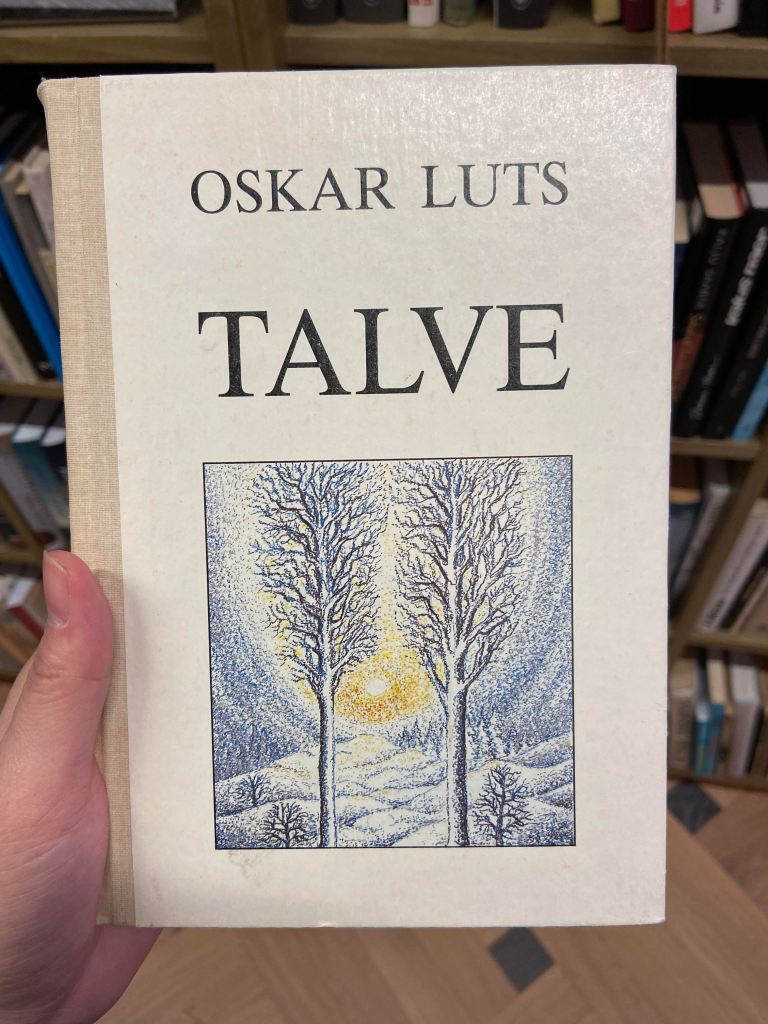
I tried an Estonian film, which is “Talve” that is also in this article’s title.

“Talve” was in cinema in 2020, which depicts Estonia in 1942. The original novel was written by Oskar Luts, and the word “talve” comes from the word “talv” which means “winter” in Estonian. (I don’t know why it is “talve”.) There are films of this series as well.
I was still poor when buying this DVD. I hesitated to buy it a bit because I was afraid not to see it. (As an additional information, when I watch something new, my expectation is super low.) Besides, the reason why I chose this film was because I didn’t know any other suitable films for language learning.
Now I watch it almost twice a day in the way that I mentioned above. Of course there’s no Japanese, so I watched it in English and then in Estonian.
As a review of this film, I kind of enjoyed it since the genre is more likely a comedy. However, at some points the “funny” scenes depend on the original language (Estonian), so without knowledge of the Estonian language, it’s not easy to understand how funny it is. What is more, the English subtitle isn’t that great overall, but it’s good not to get tired while watching as the length is only 90 minutes.
There is a scene of sauna, drinking vodka, etc, which sounds Estonian, so perhaps it’s useful to understand Esotnian culture a bit.
I don’t know how many times I have watched so far due to the repetitive watching habit as mentioned, but it’s also good to have some sounds as I live on my own without any flatmates now. I hope I can enhance my listening skill with the Estonian film. Are you interested in it? It seems you can rent it online.
Aitäh! 🙂


















































































 zooks.ee