One day in December 2021, I was thinking about something.
Where should I get photo frames?
This is because our company team decided to do a secret Santa, and I was thinking about that. There is a secret Santa generator, and with it, you can send your wishlist to your secret Santa.
I received a wishlist which was
Photo frames
Travel souvenir
I still don’t understand what “travel souvenir” means, so I did not include it. However, they wished photo frames, so I decided to look for one or a few. For this reason, I was looking for shops that sell nice photo frames.
Firstly, I asked Google.
They can answer quite basically anything.
Then they suggested a shop called Järsi which is in Kristiine district. However, geographically that area has lots of offices, so I was not sure if the shop was really open.
But I needed to get on or a few, so I went and the shop was open. The customer was only me. Other people seemed like employees.
Maybe I can get photo frames easily if I go to Flying Tiger, but I didn’t want to give products from Flying Tiger, so I chose this shop.
Looking at the shop’s website, it seemed even one photo frame was quite costly, but if you go to the actual shop, then you will find photo frames at a reasonable price.
Smallest one (A6?) cost 2 EUR, A5 size is 3 EUR, and A4 size was 4 EUR approximately.
The budget was up to 15 EUR. Those altogether cost only 10 EUR, so I chose one from each size.
I still had some budget with which I could buy a gift bag, but I still had an unnecessary gift bag at home, and I was too lazy to buy it by going to another shop, so I reused it.
As a result, the bottom of the bag partially got open. (I hid it.)
On the day we exchanged the gifts, I could give them the gift as a secret Santa, but what I got was something that was not in my wishlist at all, which was a walter filter.
Pretty long time ago, I talked about an Estonian language learning platform called Keeleklikk which I completed in two months. In fact there is a next-level platform called Keeletee. This time I spent six months completing it.
★Course Structure
The course structure of Keeletee is almost the same as Keeleklikk. However, the videos were not tacky animation where kid characters have a fully grown man voice but authentic interviews with real people. There are a couple of animations but the quality is better than the ones in Keeleklikk.
One chapter consists of interviews or animation videos, phrase quizzes, grammar tutorials and word quizzes.
★Grammar
In terms of the Estonian language grammar, you complete the basics by the A2 level, so when I started Keeletee I was wondering about what I would learn as a grammar.
In fact, I felt there were more like how to use some particular verbs. This is probably because in Estonian some verbs need objectives in the second form but others require the third form. Other than that, I learnt the form of verbs to say “it is reported” or idioms. (Actually I quite forget what I learnt in the beginning as I spent six months this time…)
While learning on Keeletee, I took notes on Evernote because the data will not possibly disappear by saving online, and each note can be compiled as a notebook. (More strictly speaking, I took notes on paper while watching the grammar tutorials or finding new words, and after learning I summarised them on Evernote. It’s good for me because I can think about the layout of the learning results later.)
★Certificate
On Keeleklikk, after completing all the chapters you can take a final exam, and if you passed, you can get a digital certificate. However, Keeletee doesn’t have such a system. (There are tests after each chapter though. Personally I set the minimum score which was eight out of ten.)
This is my guess, but the reason why Keeletee doesn’t have such a certificate is that even the certificate from Keeleklikk is not official. (Some people might try to use it as an official certificate which is not accepted, so they may have assumed the questions regarding that and wanted to avoid immigrants’ confusion.) If you want to get an official language certificate, you need to take an official exam by the government.
It seems this exam is held every month and the fee is free. Since I graduated from the postgraduate school in Estonia, I’m not required to acquire the language, but the regular people may need it on the B2 level or something within five years.
However, I completely have no idea as it doesn’t matter to me.
★From Now
As the COVID-19 situation has gotten better, the bars and shopping centres are open, and it’s not mandatory to wear masks for the face-to-face meeting, I assume that the Estonian language courses will open in autumn again. If I’m not too busy at work, I want to register for it.
But still I have a few months by then, so I will learn it again at my own pace. (On the contrary, I want to focus on learning CSS now, personally.)
Thus, learn the Estonian language at your own pace and enjoy your Estonian/foreign language learning life!
I was 10 years old when I remarkably saw the symptoms of a pollen allergy. I used all the tissues that I had so I was trying to stop the runny nose with a thin hand towel. It happened during a test or something and my teacher was so worried about me. Since then, I had a box of tissues in my desk drawer to spend spring.
Then every spring I got the best friend: a mask. No matter how many times I blew my nose, I had a runny nose, so I put tissues in my nose and wore a mask to hide it. (I did this sometimes because no one could see the inside of the mask and it was better to have a runny nose.)
I think I started taking medication for pollen allergy since I became a university student. I believe if I had started taking medication earlier, I would have comfortably spent spring. However, it doesn’t mean that I have a bad memory. It’s just a past moment.
As a university student, my work colleague recommended a medicine that we could buy without prescription at a pharmacy, but it wasn’t effective for me at all. So I went to see an ENT doctor in my hometown, and he said that type of medicine is not necessarily effective for everyone.
The pollen allergy medicine that you can buy without a prescription at a pharmacy in Japan. (Reference)
I don’t remember when exactly, but I was running out of the pollen allergy medicines that I got in my hometown, so I went to the ENT hospital near my flat in Kyoto. The doctor said we couldn’t see the effect unless I started taking the medication before the pollen allergy started (like from January as the pollen allergy starts in March or something in Japan). I also got medication for when the symptoms are more awful, which is instantly effective, but in terms of the daily pollen allergy medication, it requires time.
Then, I went to Ireland as an exchange student. Before going there I didn’t think of the pollen allergy at all, but when it was getting warmer in Dublin, I felt I slightly had a runny nose. In the beginning I wondered about regular sickness, but I didn’t see other symptoms like a sore throat, so I realised that I had the pollen allergy in Ireland too.
However, I didn’t take any medication in Ireland because it wasn’t that awful, and a small pack of tissues helped me enough.
But it was different in Northern Europe.
In Estonia (and Finland too), there are lots of birch trees. Since there was not so much information about Estonia before going there, I referred to information about Finland, and found the fact that the Finnish have the pollen allergy owing to birch.
But it was information on Finland, not Estonia, so I contacted someone in Estonia, and he said
I’ve never heard of pollen allergy in Estonia. I don’t think there is.
I thought “That’s probably because you don’t have the pollen allergy”. (I was pretty sure that Estonia had a pollen allergy, but I needed someone’s real voice.)
Then I contacted another person, and he said if I asked for the pollen allergy medication at a pharmacy, they would give me the medicine.
Glad to know!!!
I tried two types of pollen allergy medicines in Estonia, and found Claritin in a blue box seemed effective for me. Since then, I start taking it every January. It costs 10 to 13 euro per package which contains 30 tablets, so if I keep taking it until June, around 60 euro is gone in total, but it’s a good investment for my health and comfortable life.
I think I started taking the pollen allergy medication a bit later than usual this year, and Claritin doesn’t work well (occasionally)!
I brought medicines for an awful case from Japan, and I was forced to take it too. Otherwise, even if I take Claritin, I have a huge runny nose.
Every year, it was fine as long as I took the pollen allergy medicines, but this year (in 2021) I had itchy eyes too!
My eyes are awfully itchy!
I couldn’t bear it, so after wondering if I should buy an eye drop at a pharmacy or book an appointment at the ENT hospital, I eventually decided to try the eye drop from the pharmacy. I asked two of my Estonian friends, and they told how to say the eye drop in Estonian:
õietolmuallergia silmatilgad.
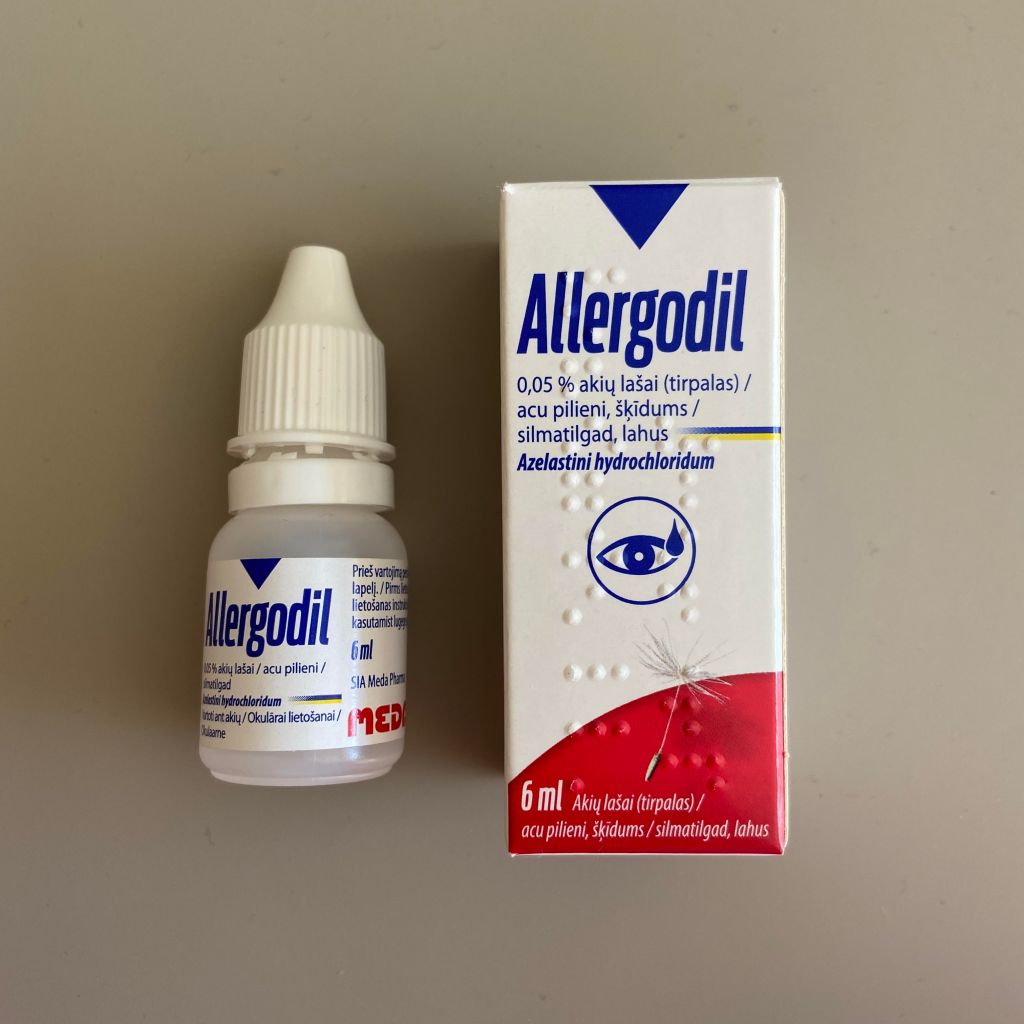
One of them told me “Allergodiil” usually works well, so I went to the pharmacy near my place, and found only one left! It cost around 6 euro.
On purchasing the eye drop, I applied it, and it seemed it was instantly effective. After that, I didn’t have itchy eyes.
I still don’t know why this year the pollen allergy is so awful, but anyways for the future reference, I decided to write it down as maybe I will need the eye drops again next year (although I’m not sure if I’ll still be here).
Aitäh! 🙂
P.S.
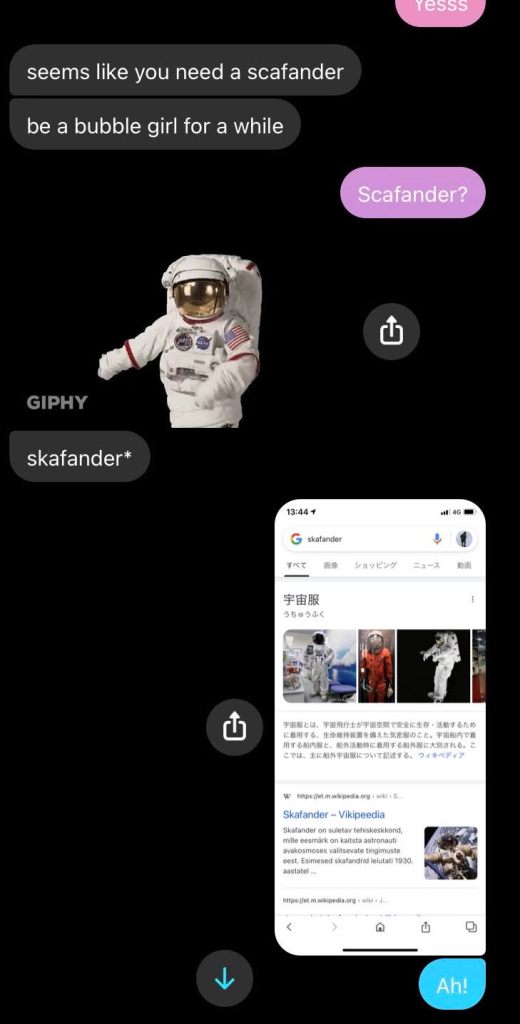
The other friend sent me this message. You’re not wrong, mate.
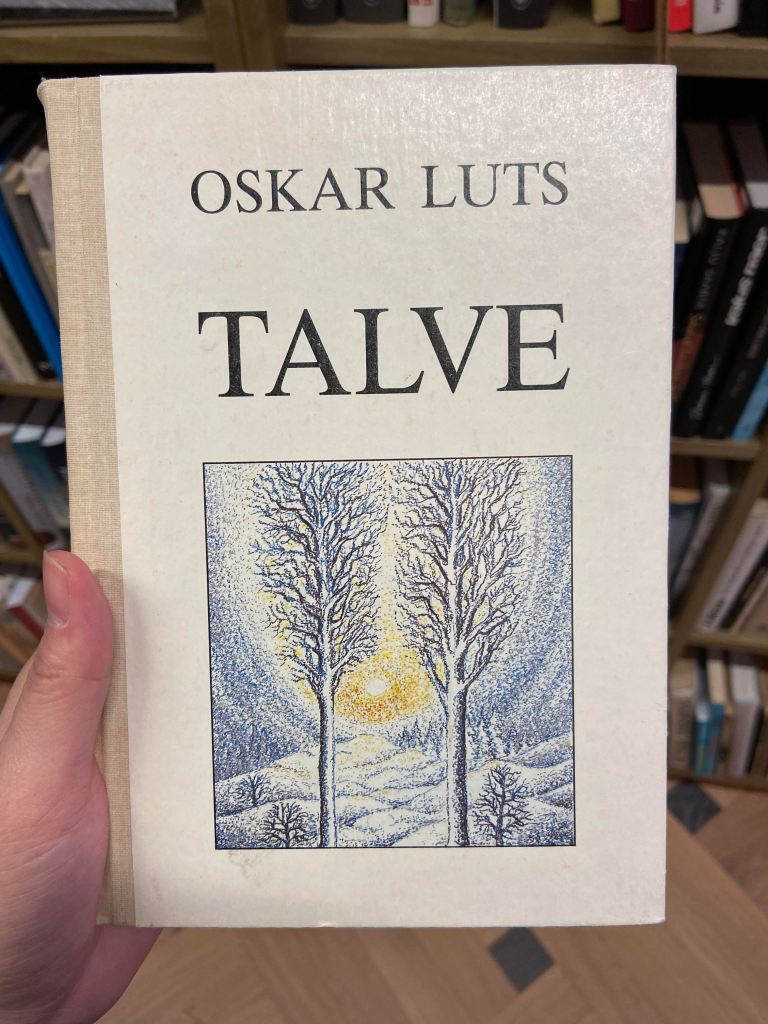
How often do you read books? In my case, I buy a book whenever I feel like reading it. (But I’ve been in a not ideal situation because the COVID-19 situation in the UK has compelled me to wait for about a month now. It’s been two months since I ordered.) This time, in addition to the previous article on “Talve”, I’m going to write about Estonian literature…no, about extensive reading. The extensive reading is one of the ways to learn a language.
The extensive reading is reading as many books that are at your language level as possible. When I was in a university in Japan, I was in the Department of British and American Studies, where we had to read books in English, take and pass the quizzes to gain the word counts. (And it’s totally okay to exceed the minimum word count.) We also had the minimum number of words of books, depending on the classes or levels.
It might sound that with this method we could enhance our reading skill, but I believe this would rather strengthen the vocabularies. (In fact, some researchers have the same opinion as mine, others not. In my opinion, without increasing the reading speed, the extensive reading cannot enhance the reading skill.)
I wish Estonia had such a system, but anyways they don’t have it, so I thought I should find at least something to read. Then I went to the library in the Old Town!
When doing the extensive reading, there is a criteria to choose a book. For example, you are fond of the Harry Potter series, and your English level is A2 to B1. Then if you try to read one of those books, it would take hours to read and understand a few pages, which is not the extensive reading.
This happens because of insufficiency of vocabularies.
Then, how can you choose a book? Pick up one book and read the first page. Provided that you have less than a few words that you do not comprehend, the book suits your level and you can start reading that book.
In my case it’s Estonian. Of course I consult a dictionary a lot to read not only the Harry Potter series but also some short articles in a textbook. However, I knew that if I would start doing the extensive reading, I will gain more vocabulary, and it will lead to a result in reading itself in the end.
Even though the target language is different, the criteria is the same. I should read a book which has less than a few words that I do not understand in one page. Also as far as I know, there are no books that are rewritten specifically for the Estonian language learners, I needed to choose ones from a general lineup. It means I should choose literature for kids. (However, it’s still difficult.)
In Tallinn there are some libraries. In addition to universities’ libraries, there is the National Library of Estonia, Tallinn Central Library and so on. In the Central Library, there are books in English or other foreign languages such as Spanish.
However, what I wanted was books in Estonian for kids. I had no idea which branch library of the Central Library has such. (Perhaps they don’t really have any.) Then I did some research, and found Estonian Children’s Literature Centre in the Old Town.
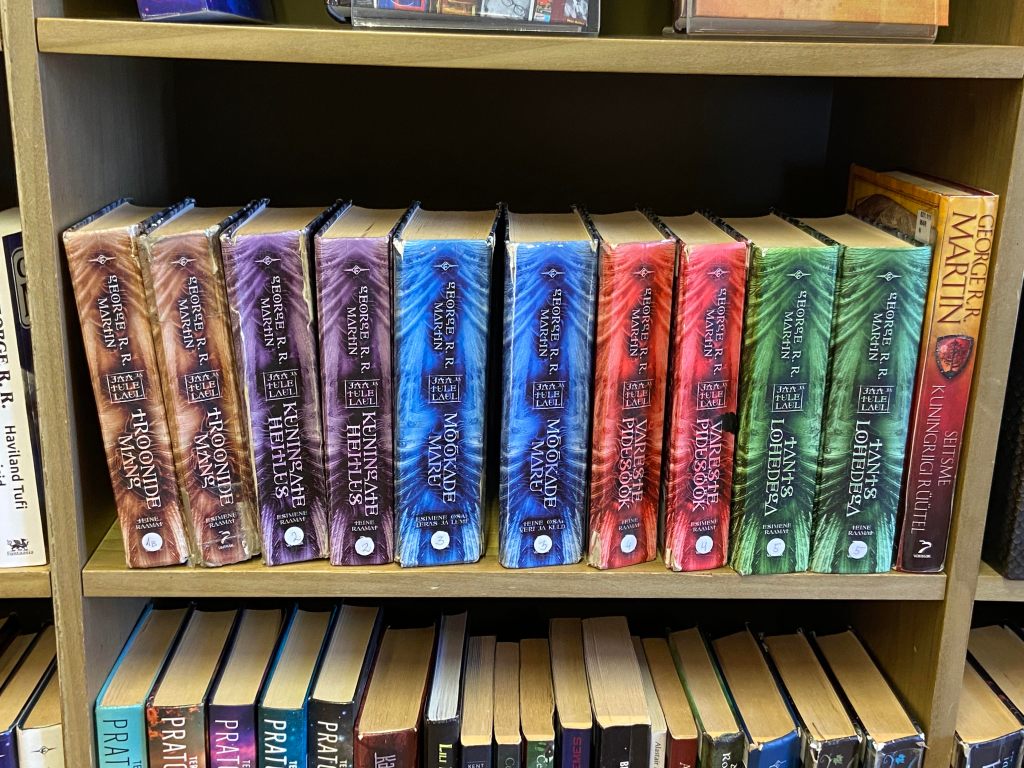
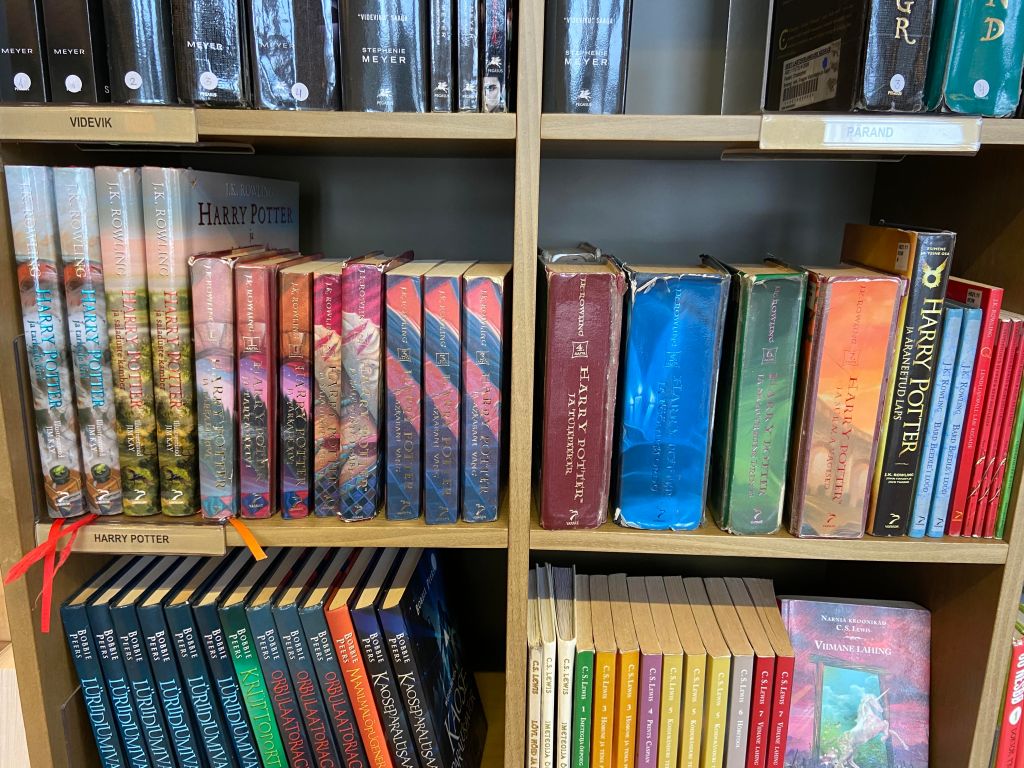
Like its name, they do have lots of books for kids (until teeneagers). I was wandering around there and found Harry Potter, the Song of Fire and Ice.
The Song of Fire and IceHarry PotterOriginal book of “Talve”
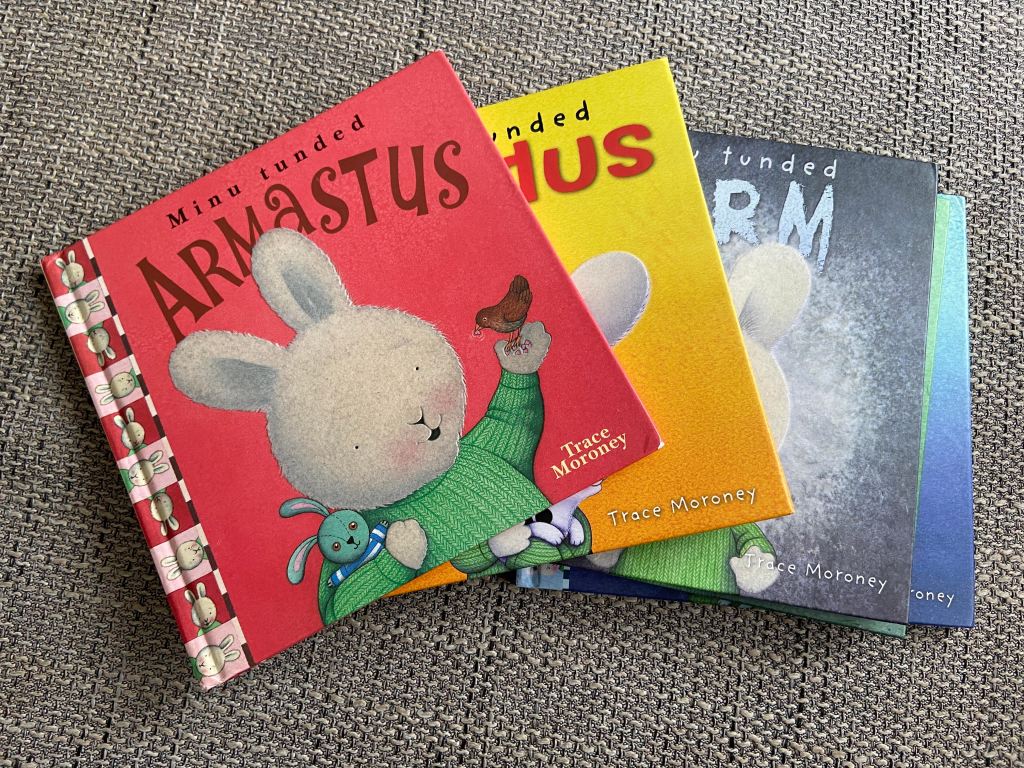
I know those stories so I wanted to borrow but I thought I shouldn’t because I wouldn’t be able to understand them properly. So I decided to borrow five picture books for toddlers. What I borrowed was translated from English, but rabbits were cute so I decided to borrow them.
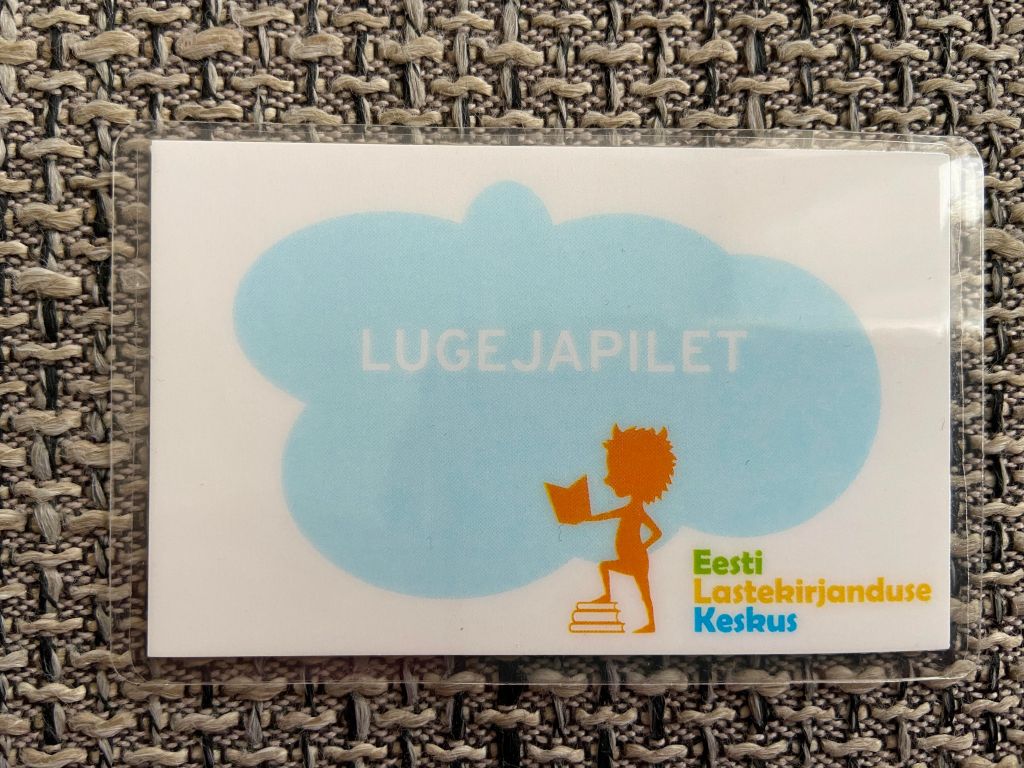
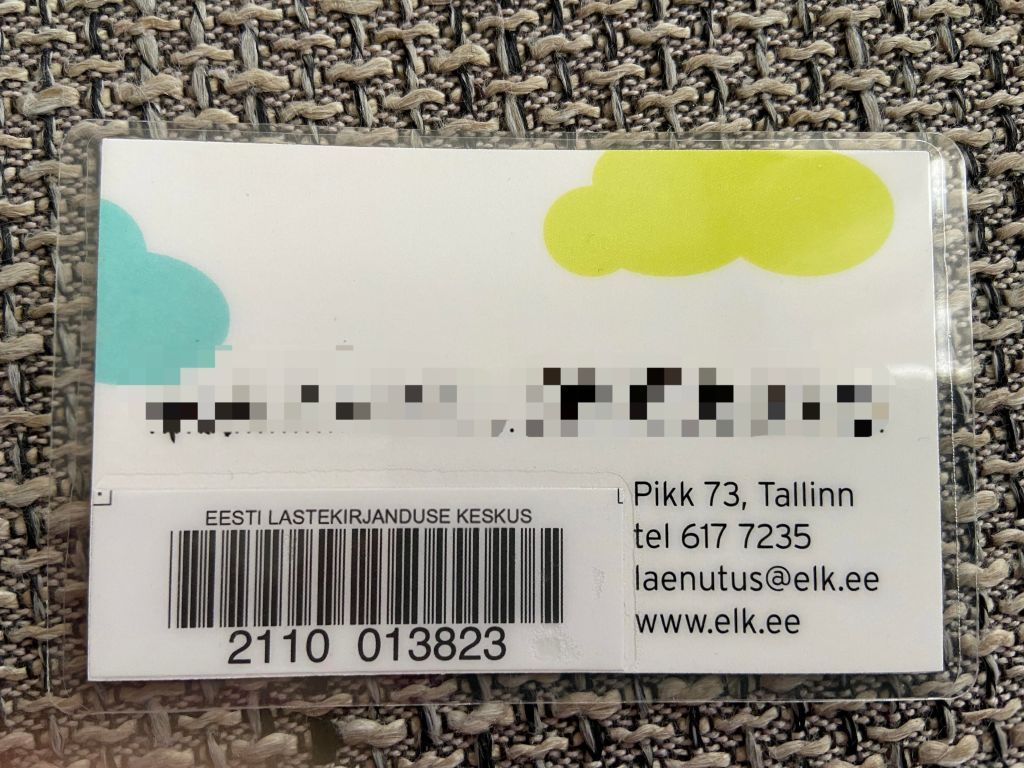
When borrowing books at National Library of Estonia, Tallinn Central Library or universities’ libraries, you can use your Estonian ID card as a library card, but in this centre, it costs one euro to make a library card. But it’s still cheap considering the number of books that I can read. It was a self-investment. The librarian was a middle-aged female but she could speak English.
Library card
Eventually I borrowed five books for two weeks.
My speaking level is not that high although I finished the B1 course, so I want to increase my vocabulary little by little. (It sounds as if the vocabularies are everything, but without them we can’t really talk.)
It’s a key to enhance each skill in balance when learning a foreign language.




 zooks.ee

