Tere!
Would you prefer a checkout with a cashier or self-checkout (SCO) when you buy groceries at a supermarket? Some of my Japanese friends don’t like the SCO thought it’s quite convenient.
(Well, as I moved to Kyoto from Wakayama, my hometown, I thought “Why don’t they have SCOs though here’s way more urban!” There is one shopping centre which was not close to my flat had some SCOs but the closest shopping centre which had an enough big supermarket didn’t have them. I don’t think I have seen SCOs anywhere but at the former shopping centre.)

On the other hand, supermarkets in Estonia seem to have both types usually. You have to go to the regular checkouts if you want to pay in cash, for example, at Rimi, Selver and Prisma but at Maxima some SCOs can accept both cash and cards.
When it comes to huge supermarkets such as Hyper Rimi, they have another type of checkouts with which it seems to possible to steal the products in addition to those two types of checkouts.
Seriously, it seems it’s possible steal products at a supermarket.
In Estonian it’s called “puldikassa”. “Pult” means “remote” and “kassa” implies “checkout” in Estonian, which are connected and became “puldikassa” (remote checkout).
As for the former term, I searched the meaning online so probably only its nuance is correct but still I believe that it’s enough understandable.
This is because the machine itself works as a checkout.
In order to use this remote checkout, you must have an account in Rimi. (If you have one, you can get discounts and get “money” that you can use at Rimi so why not register? There’s an article about it on my older website but it’s all in Japanese so just please ask me if you want to know more. The issuing fee is only 1€ as of 2018 or 2019.)
Since I have Rimi’s card, I tried the “puldikassa”! In the beginning you may wonder how to use it but once you used it, you’d get used to it. However, probably some of you don’t want to look like a foreign weirdo because of the unfamiliar system that has an introduction in a non-understandable language so I intentionally went to the supermarket to be a weirdo who was wondering how to use it. The texts below are my outcomes of the challenge and how to.
1. Unlock the puldikassa
There is a box that keeps the remote checkouts locked at the entrance of Rimi and a small screen like a TV beside the box. First of all, you need to swipe or tap your Rimi card with the card reader attached the screen or under the screen.
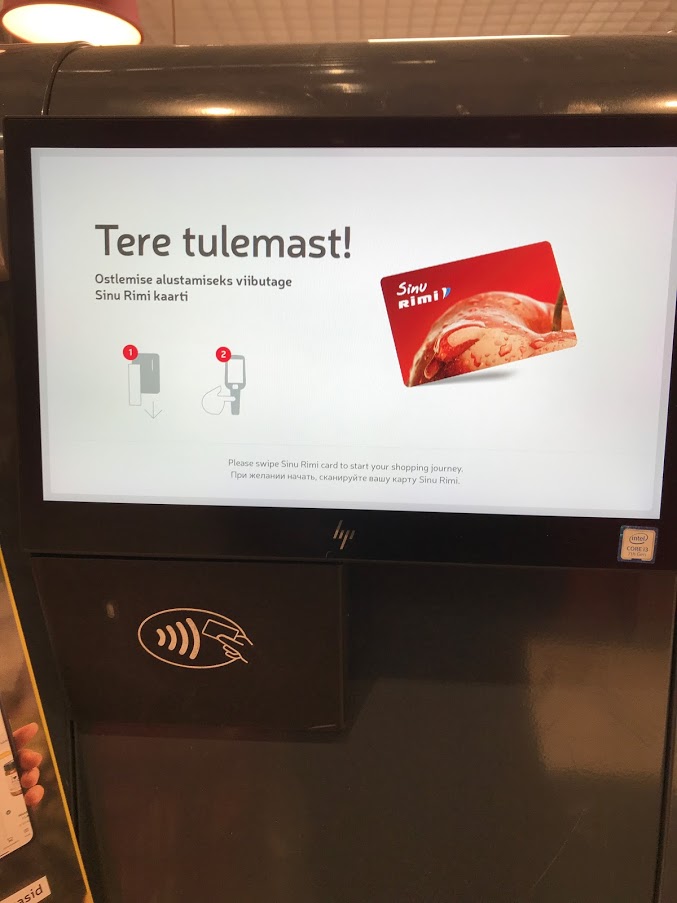
It seems from time to time the screen doesn’t read the card information by swiping so I recommend you to tap it. (Yeah, I already experienced.)
2. Get your puldikassa
After tapping (swiping) your Rimi card, find the puldikassa that has your name from the box. When the puldikassa is locked it shows Rimi’s red logo and once it’s unlocked it turns a white screen having your name on. Also the individual box that unlocked the puldikassa has a green light so it’s pretty easy to find your machine.
3. Scan the products
Alright, now let’s scan what you want to buy. Take the product and scan the barcode that is attached to the product.
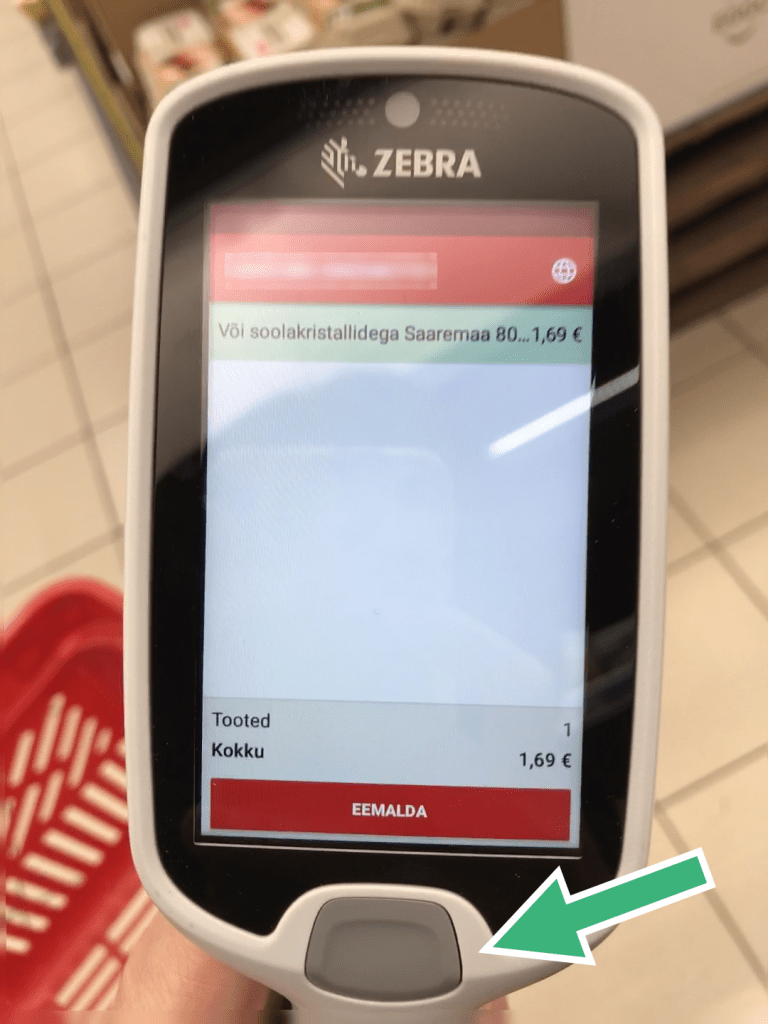
To read the barcode press the button of the puldikassa and light up the barcode.

When I was working in Japan I once in a while used similar checkouts that had red lights. So I expected the same thing with the puldikassa, but it had a white light. Perhaps because that red light is actually said to be harmful for humans.
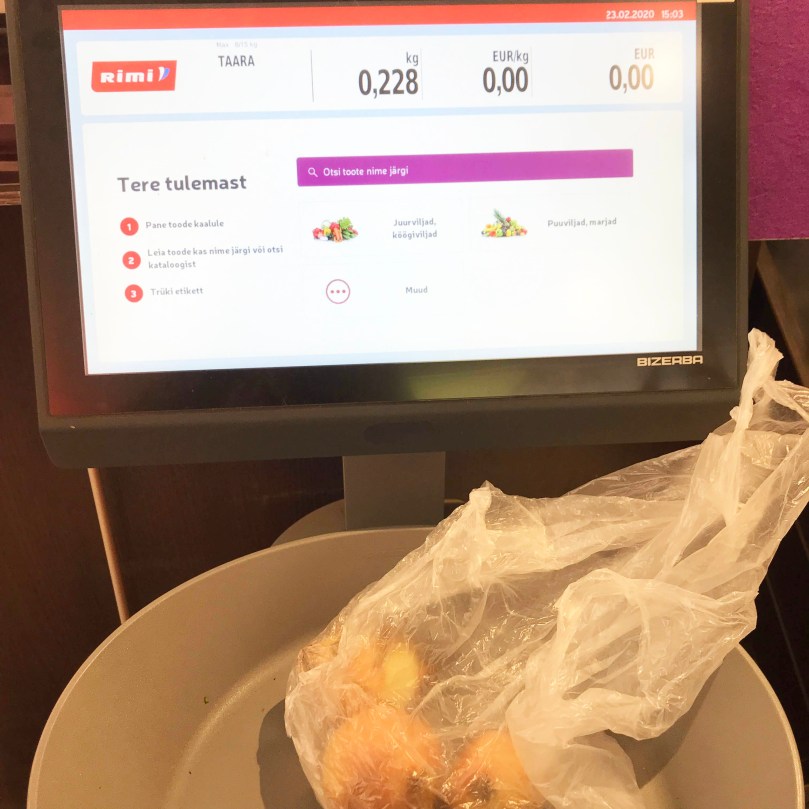
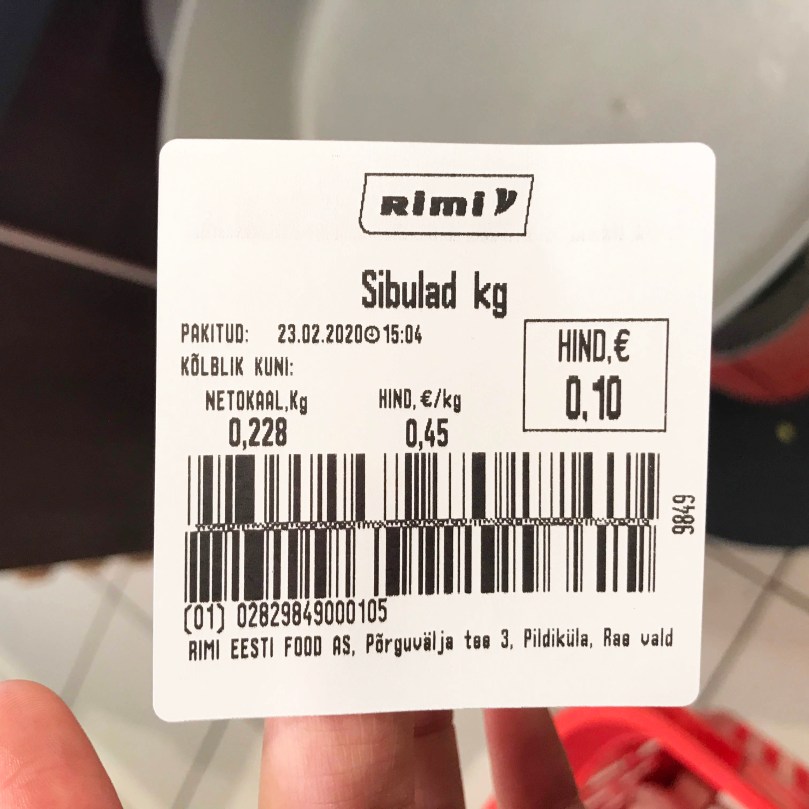
By the way, although it is normal to buy vegetables and fruits based on their weights in Europe but in Japan everything has the same size so they have only fixed prices. If you’re unfamiliar with weighing the products, no worries. Just prepare for or take a small bag and put one type of vegetables or fruits as many as you wish in the bag.
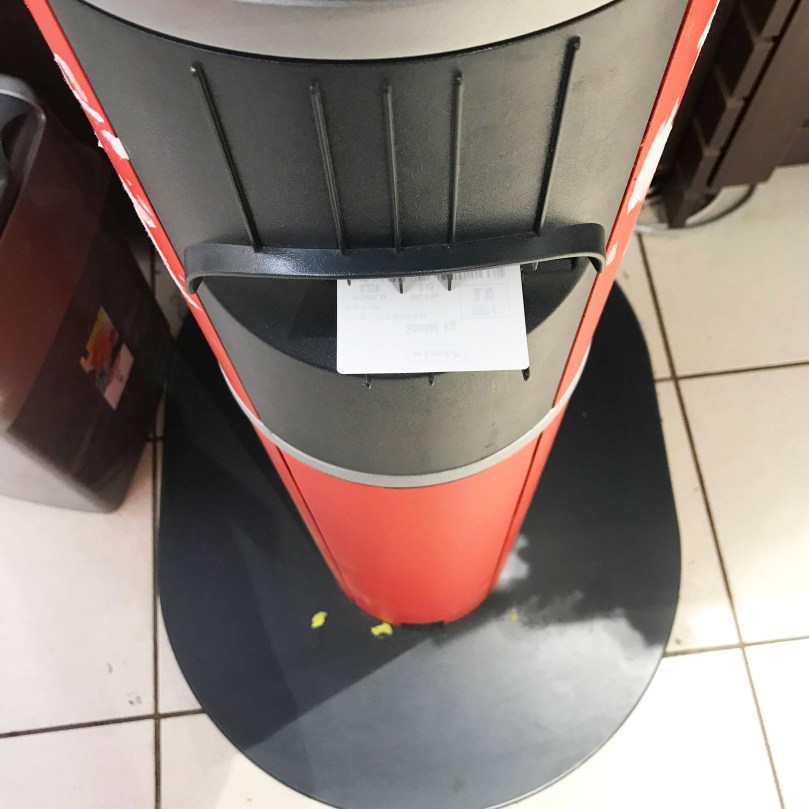
Then, place the bag on the scale in the vegetable and fruit section at Rimi and choose the right product from the screen and then the scale gives you a barcode sticker. Finally read the barcode and that’s it.
4. Pay for the products read with the puldikassa
If you’re done with your shopping, go to the checkout area that is not the regular checkout with a cashier or the regular SCO but the most simple checkout section. There is another box that you can place your puldikassa after scanning all the products that you want to buy.
Just put it there and the box automatically locks yours. (Any empty box is okay.)
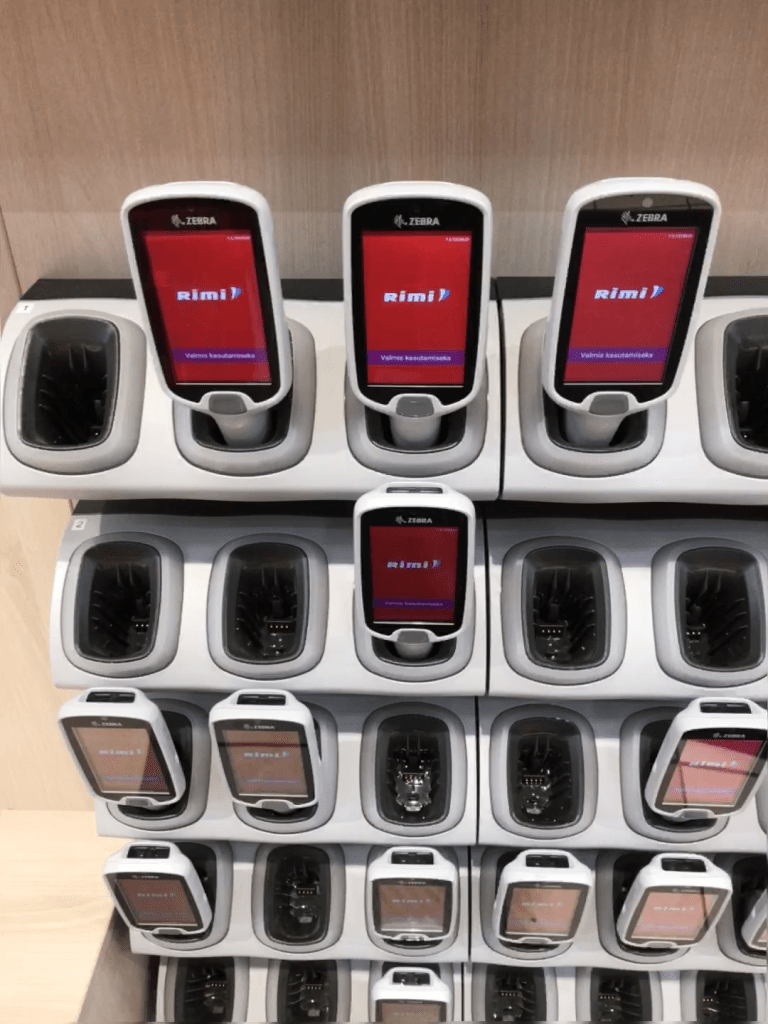
Then go to one of the checkout point available (with green light). At the checkout point, tap your Rimi card on the credit card reader.
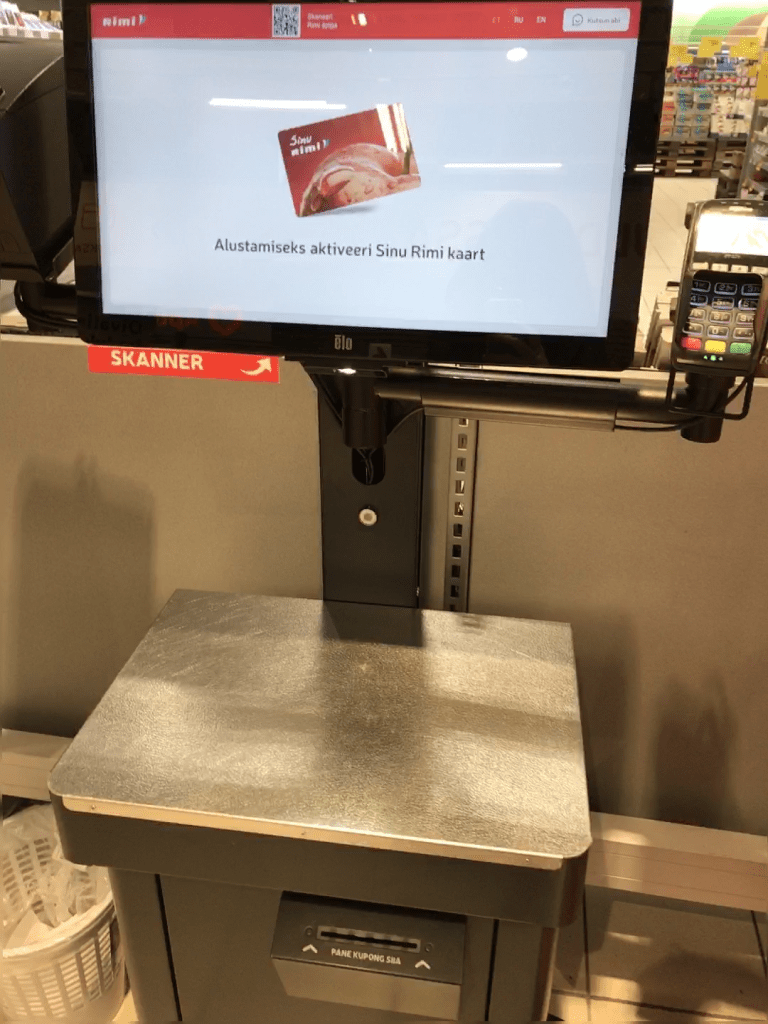
If you have used Rimi’s SCO machines, it may sound more familiar with you. After reading the Rimi card, the screen asks you whether you scanned all the products with the puldikassa so just go to the next step.
Then it turns the payment screen so pay by card. Be careful, you cannot use cash. If you have vouchers maybe you can use them only at the regular checkouts with the cashiers. (I’m not 100% sure about it so better to go to avoid troubles.
After the payment, keep or dispose or leave (!) the receipt and put the products that you bought in your bag. (If you don’t have your own bag you still can buy a bag with the puldikassa, no worries. I personally have never bought any bags in any occasion.) Finally you can leave Rimi with what you bought.
Easy-peasy-lemon squeezy, wasn’t it?
By the way, I recently noticed that (as far as I know) you can choose whether you will get the paper receipt or not. There is a tick box of unnecessity of the paper receipt on the right side of the screen at the regular SCO machines, so if you tick there you can dedicate to save resources.

If you’re worried about your budget management, I think it better to get the paper one. However, if you use banks such as Swedbank or N26, depending on your setting you are notified by the app when the money was used so it totally depends on your specifics and lifestyle.
In my opinion, the puldikassa is useful when I don’t have many things to buy. Given that there are lots of products in your basket, I think the regular checkouts with the cashiers or SCOs are better. In the order of my preference, I like:
- the regular SCOs
- the remote checkouts (puldikassa)
- the regular checkouts with cashiers.
As I usually have lots of things to buy, I feel some kind of pressure from the behind if I choose the regular checkouts with cashiers and I personally don’t want to communicate strangers so I prefer the regular SCOs. (This is a very good system for those who have a communication disorder.)
Oh, but I have worked as a seller at the event merchandising for around five years in Japan. Work is work, private life is private life. I was probably just good at switching the modes in a sense.
If you come to Estonia, go to Hyper Rimi, get Rimi card and try the puldikassa. The puldikassa has English and the clerks help you if necessary.
Aitäh! 🙂
 zooks.ee