Tere!
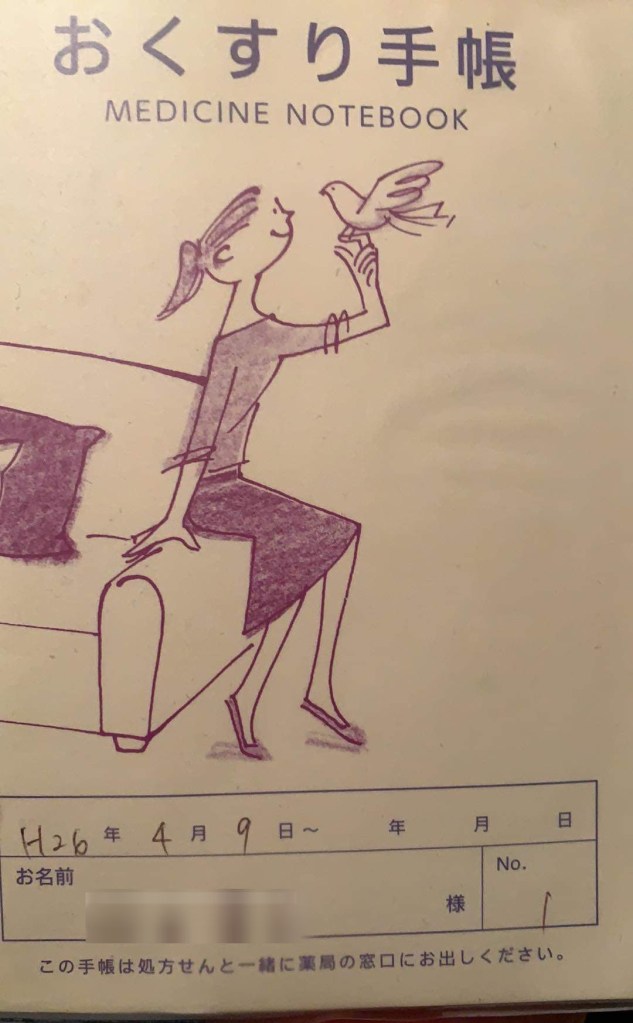
Do you have anything like a medicine handbook in yoru country? In Japan, more specifically as in Wakayama (my hometown) I didn’t have such a thing but I got one when I started my college life and got prescription in Kyoto.
So far I didn’t even think that it was a convenient or incovenient thing but whenever my doctors asked my medicines that I was taking I couldn’t answer at all.
When I got my first medical handbook/notebook it was literally sometihng physical with papers. Of course in Estonia you won’t get such a thing. Then, would they make a card like a consultation ticket (the hospitals in Japan usually make this for you)? Of course not. Here is Estonia, mate. I have once written about the use of this Estonian ID card as a library card in Japanese and the logic is the same; if the Estonian ID card works as a library card, it works as a medical handbook/notebook.
This time the article is about the prescriptions.
Don’t get surprised even though you didn’t know but I stayed in the hospital for a month. (Maybe I’ll write this story in the future.) On the 31st of December 2019, at around 10am I had the final talk with my doctor and my nurse.
We talked about the side effects of the medicines, the minimum period of taking them and the next appointment with another nurse and doctor. My doctor told me to take two kinds of medicines that I had been taking since I was in the hospital as well as vitamin D. He also said that I could buy the medicines not in the hospital but in a pharmacy though I didn’t know anything so he gave me a printed-out document of the prescription. Besides, I was told to keep taking them for at least six months.
Before leaving the hospital, I asked my nurse and she said I could buy the medicines in any pharmacy – like a normal one that you go to when you want to buy, for example, plasters.
Is it really okay to sell such medicines that need prescriptions?
I thought. However, it doesn’t mean you can “pick up” from the shelf in the pharmacy and buy them.
Anyway, I went home and headed to the closest pharmacy. In Estonia a supermarket that is more than medium-size tends to have a pharmacy. (It doesn’t mean that the pharmacy is in the supermarket but it is in the same building.)
I had no idea how to buy the medicines so I made a queue in front of the casher. Then I showed the paper that the doctor gave me and the shop clerk asked me:
Do you have a prescription?
What?
To be honest, I had no idea that my Estonian ID card worked as a medical handbook/notebook at all so I said:
I was staying in the hospital and my doctor gave it to me.
Then the shop clerk asked me if I had the Estonian ID card. I just passed him my card without even wondering about anything. He read the card with a reader and just started picking the medicines from the withdraws behind the casher.
I have used this pharmacy and thought that he was just a shop clerk but (probably) a proper pharmacist. He seemed a polite person and always told me how to take although I always knew it.
Oh, as for the vitamin D, he just got one of the bottles displayed in the shop.
In total I purchased a bottle of 100 tablets of vitamin D, one type of the medicines for 28 days and another one for 30 days, which cost less than 26€.
It’s cheap, isn’t it…?
Usually mental medicines cost more than general medicines like pollen allergy medicines. When I had prescriptions in Japan for something mental, until I applied to the Kyoto city for the special discount, I spent around 80€ (10,000 yen) for two medicines every month. After getting approval of the special discount from Kyoto city, I spent only 10% of the full cost of the medicines, meaning that it reduced 2/3 of the cost that I paid so eventually the total cost was around 28€ (3,000 yen).
From such a experience, I thought “the medicines are cheap in Estonia, aren’t they?” The vitamin would last approximately for three months so I don’t have to pay for it from the next time, meaning that the medical fee wouldn’t exceed 26€.
This made me happy.
After all I got the medicines and the vitamin D and I restarted taking them according to the rule. In order not to forget, I set the alarm that ring at 9 pm every day for the one that I need to take in the evening.
Also at the final talk with the doctor and the nurse, they made the next appointment (as mentioned above) but my new nurse figured out that this initial nurse couldn’t speak English that much so we changed the appointment date and time but I still had the medicines so there was no problem. From my experience I knew how to buy the medicines so there was nothing difficult either. (Additionally, after this appointment I bought the medicines and figured out two medicines for about one month cost only 9€….)
Besides, you can see your prescription on State Portal. The image below is mine.
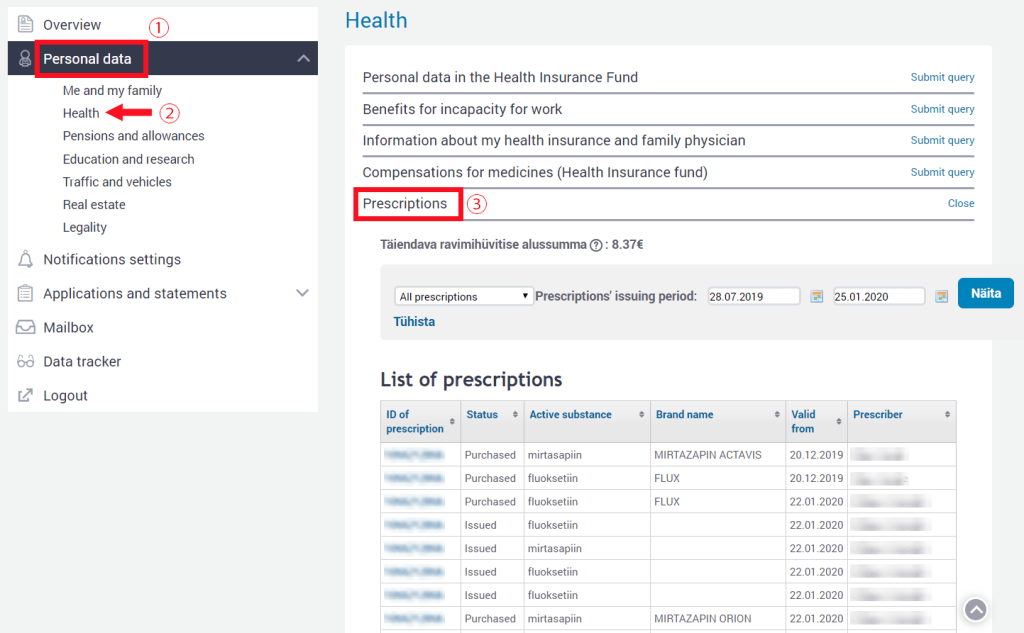
There is clearly the doctor’s name who prescribed the medicies on the most right and the names of the medicines in the third colum from the left of the table in the picture.
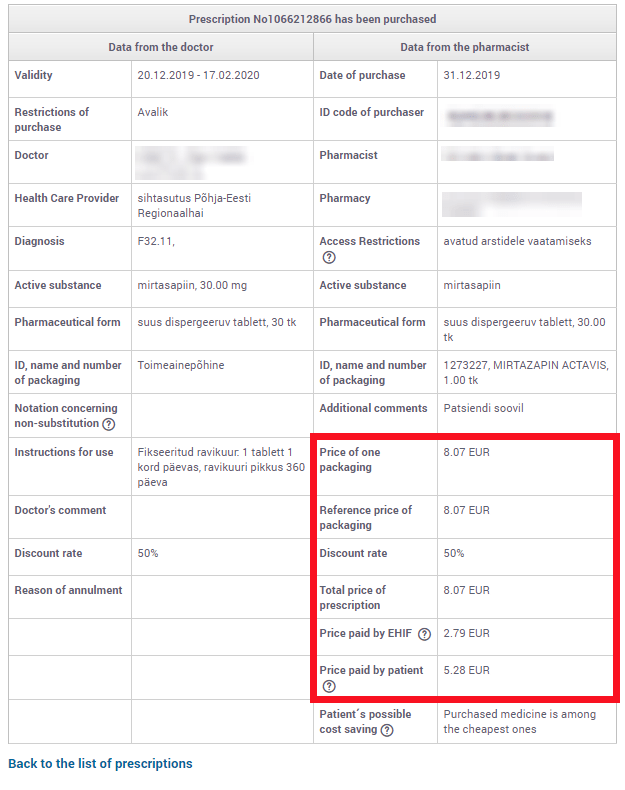
The second image shows the detail after clicking “ID of prescription”. Still cheap isn’t it?
This is the Estonian medical notebook. Huh!
Of course you can buy general medicines at pharmacy without prescriptions. (My Japanese article about it is here.)
That’s all about the story of the prescription in Estonia and the Estonian medical notebook.
Aitäh! 🙂
 zooks.ee